
UK Seasonal Maintenance Checklist for Paths, Patios and Driveways
Outdoor hard surfaces need different care at different times of the year. A patio that becomes slippery in winter may need stain control in summer. A driveway that looks tidy in spring may still need joint checks after heavy rain. A path that keeps turning green in autumn may have a shade, airflow or drainage issue rather than a simple cleaning problem.
A simple seasonal routine helps reduce the chance of larger maintenance jobs later. The aim is not to clean aggressively every few months. The aim is to inspect regularly, remove debris before it breaks down, clean with the lowest effective method, keep joints sound and only seal when the surface is suitable.
Before choosing a cleaner, jointing product, sealer or surface treatment, check the condition of the path, patio or driveway first. The right product depends on the surface material, drainage, joint condition, staining and whether the paving is stable.
If products are needed after inspection, browse our Path, Patio and Driveway range for suitable cleaners, jointing products, sealers, treatments and repair options.
Quick Answer: A Safe Seasonal Routine for Paths, Patios and Driveways
- Safest default: sweep regularly, remove leaves and loose debris, and use brushing before pressure washing or stronger cleaners.
- Spring: inspect for algae, moss, joint issues and winter damage.
- Summer: manage stains, plan sealing and keep up with light maintenance during heavy garden use.
- Autumn: remove leaves, check drainage and stop debris from becoming winter sludge.
- Winter: prioritise slip-risk management, safe access, and avoid heavy cleaning in freezing or saturated conditions.
- Stop if: paving moves, joints are failing, water pools after rain, or a product label does not clearly match the surface.
What This Guide Does Not Solve
This guide does not repair a failed sub-base, correct poor falls, redesign drainage or make unstable paving safe by cleaning it. If slabs rock, blocks sink, driveway edges spread, or water repeatedly stands after rain, surface maintenance may improve appearance, but it will not correct the cause.
This guide also does not replace product labels, technical data sheets or professional advice for specialist surfaces. Cleaners, sealers, jointing compounds, weedkillers and stain removers vary by product. A method that is suitable for one surface may be unsuitable for another.
When to Pause or Escalate
Stop before cleaning, sealing or jointing if the surface moves underfoot, water pools for long periods, joints are empty or crumbling, or you cannot identify the surface material.
These are signs that routine surface care may hide the problem rather than fix it.
Escalate to a professional assessment if you see sinking areas, repeated joint failure, failed previous sealing, oil contamination across a driveway, high-value natural stone you cannot risk damaging, or drainage that directs water towards walls, thresholds, air bricks or garages.
Pause chemical use if the label does not clearly allow use on your surface. This matters around natural stone, sealed paving, pets, planted borders, ponds and drains. Where weedkillers or garden chemicals are used, follow the current product label and refer to the HSE guidance for garden chemical use.
Why Seasonal Maintenance Matters
Paths, patios and driveways collect dirt, organic matter, water, oil, pollen, leaves and general garden debris. These do not create the same problem all year. In damp, shaded periods, algae and moss become more likely. In summer, stains from furniture, barbecues, plant pots and vehicle use become more obvious. In autumn, leaves and silt can block drainage and feed surface growth.
The RHS guidance on moss and algae on hard surfaces supports regular brushing, reducing shade and improving airflow as practical ways to discourage growth. That is the core principle behind this guide: small, regular maintenance beats occasional aggressive cleaning.
Drainage also matters. The RHS permeable paving guidance explains why hard landscaping and rainwater run-off should be considered together. If water sits on the surface or runs towards the wrong place, cleaning and sealing may only give short-term results.
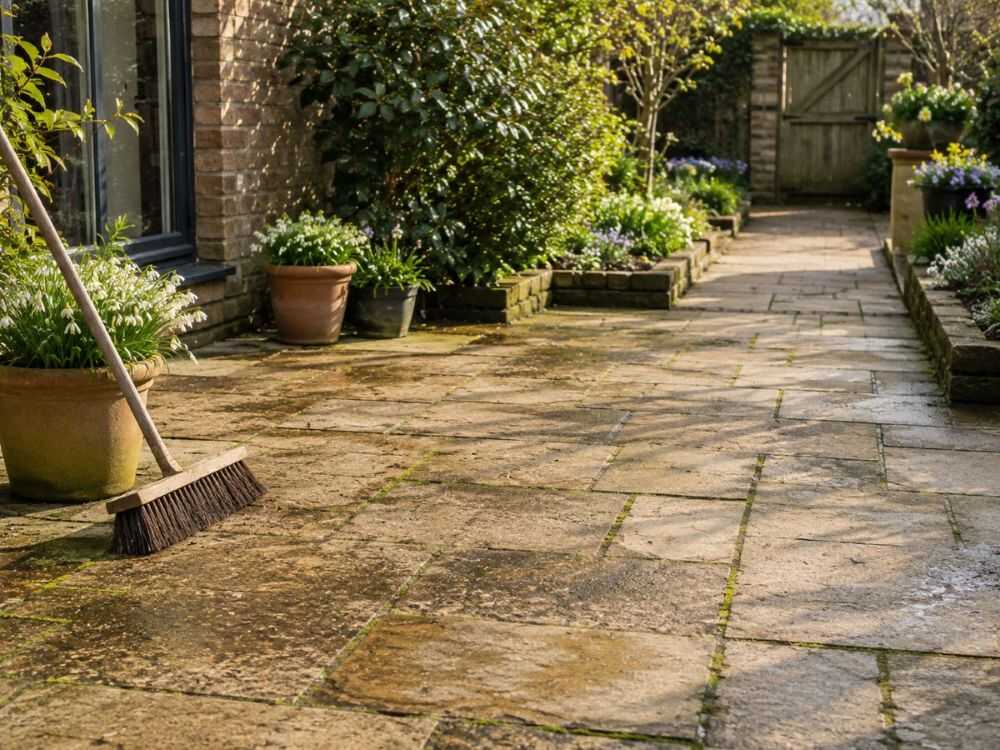
Spring Checklist: Reset After Winter
Inspect the whole surface
Walk the path, patio or driveway slowly. Look for loose slabs, sinking blocks, open joints, cracked pointing, algae, moss, oil marks, damaged edging and blocked drainage. Spring inspection is useful because winter often exposes small problems that were easy to miss in autumn.
Start with sweeping and brushing
Remove leaves, grit, soil, moss clumps and loose surface debris. Use brushing as the first cleaning stage before applying products. This reduces the amount of cleaner needed and makes the real condition of the surface easier to assess.
Treat slippery areas carefully
If the surface is slippery, deal with safety first. Use controlled brushing, scraping and a compatible cleaner where needed. Avoid going straight to high-pressure washing on weak joints or unknown stone. For a detailed method comparison, use How to Clean a Patio Safely.
Check joints after cleaning
Cleaning often reveals joint loss. If joints are cracked, soft, empty or full of dirt, repair them before the next wet spell. Open joints collect debris, hold water and encourage weeds. If jointing work is needed, use patio, path and driveway pointing products once you know the surface and joint requirements.
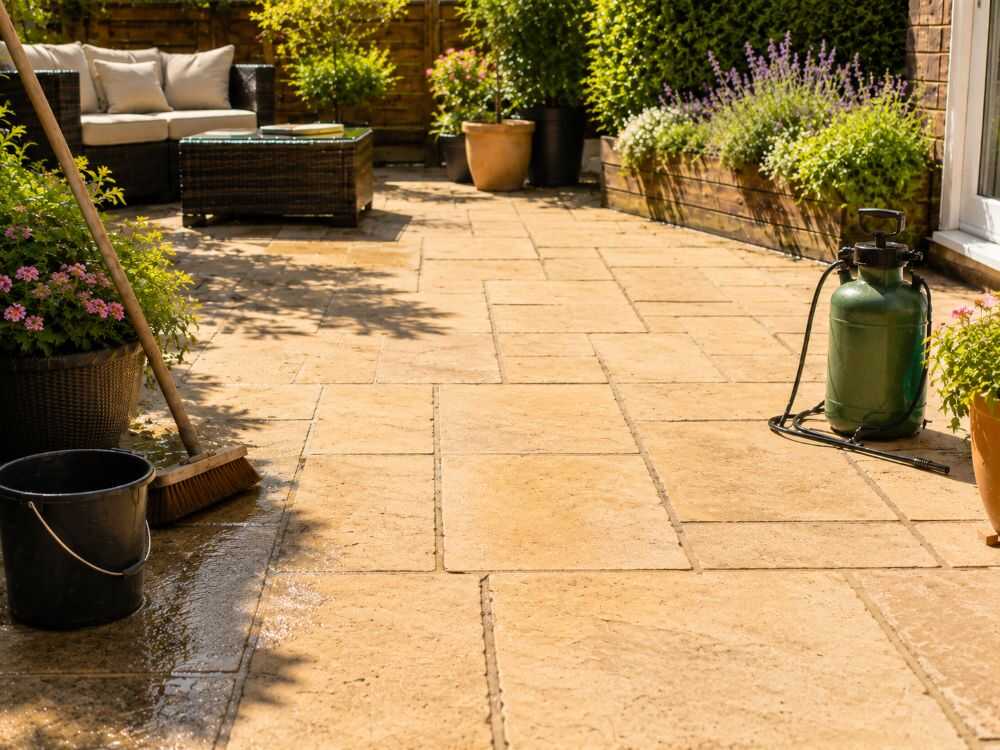
Summer Checklist: Clean, Protect and Use Sensibly
Remove stains early
Summer use can create barbecue grease, drink spills, rust marks from furniture, tyre marks and plant pot staining. Treat stains early with the right method for the stain and the surface. Oil, rust, tannin stains from leaves or timber, and general grime are different problems and may need different approaches.
Plan sealing only when the surface is ready
Summer is usually the most practical time to consider sealing because surfaces are more likely to dry fully. That does not mean every warm day is suitable. Do not seal over damp joints, unresolved staining, failed pointing, loose paving or unknown previous coatings.
If sealing is being considered, choose the sealer type carefully. Use Patio and Driveway Sealers Explained before buying if you are unsure about wet look, matt, breathable, solvent-free or surface-specific options.
Manage heavy-use areas
Move garden furniture carefully. Use suitable feet under planters. Clean food and drink spills promptly. On driveways, deal with oil drips and tyre marks before they become harder to remove. Light summer maintenance is easier than waiting for stains to settle.
Avoid over-cleaning in heat
Very hot surfaces can make some cleaners dry too quickly, leaving uneven results. Work in manageable sections and follow product guidance. If the product needs dwell time, do not apply more area than you can control.
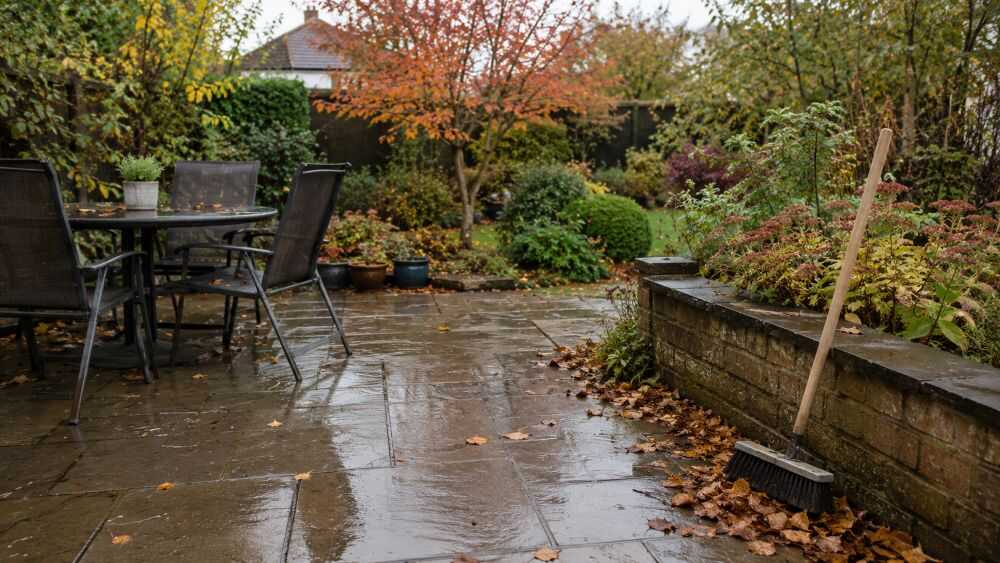
Autumn Checklist: Stop Debris Becoming a Winter Problem
Clear leaves before they break down
Autumn leaves can stain paving, block drainage and feed algae. Sweep regularly during leaf fall, especially near steps, corners, gullies, channel drains and shaded edges. Do not let wet leaves sit until spring.
Clean drainage routes
Check gullies, driveway edges, channel drains and low points. Remove silt, leaves and loose debris. If water cannot leave the surface, winter slip risk and staining risk increase.
Control weeds before winter
Weeds in joints trap moisture and collect debris. Start with hand removal, scraping and brushing. If weeds repeatedly return or roots cannot be removed manually, use Weed Control for Patios and Paths before choosing a chemical method.
Repair small joint problems
Autumn is a good time to deal with small joint gaps before prolonged wet weather. If the same joint areas keep failing, check for movement, poor drainage or product mismatch rather than only topping up the visible gap.
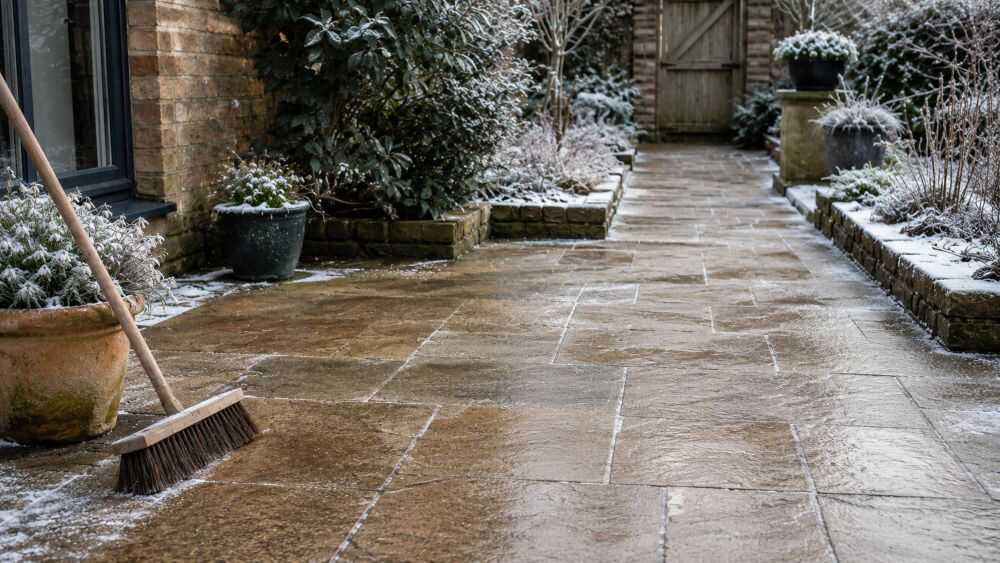
Winter Checklist: Prioritise Safety Over Appearance
Keep access routes clear
Focus on steps, slopes, narrow paths, entrances and high-use areas. Remove loose debris and treat slippery organic growth only when conditions are safe. In winter, a safe route matters more than a perfect finish.
Avoid heavy washing in freezing conditions
Do not flood paths, patios or driveways when freezing temperatures are likely. Water left in low areas, joints or shaded corners can increase slip risk and may contribute to joint damage.
Monitor recurring green or damp areas
If the same area turns green every winter, the cause is often shade, poor airflow, standing water or debris collecting in the same place. Cleaning helps short-term, but prevention may need pruning, drainage checks, joint repair or surface assessment.
Delay sealing and major jointing where conditions are unsuitable
Most sealing and jointing jobs need suitable temperatures, drying and curing conditions. If the surface cannot dry properly, wait. Winter is usually better for inspection, light cleaning, debris control and planning.
Decision Framework: Clean, Repair, Seal or Get Help?
1. Is the surface stable?
Walk the surface and check for movement. If slabs rock, blocks sink or edging moves, do not treat cleaning or sealing as the fix. Movement should be corrected first.
2. Are the joints sound?
Check whether joints are full, firm and clean. Empty or crumbling joints should be repaired before sealing or repeat cleaning. If joints keep failing, look for movement, drainage or product mismatch.
3. Is water draining away?
Check the area after rain. If water sits against walls, thresholds, steps or garage doors, pause before sealing or flooding the surface with cleaning water. Drainage problems can make surface treatments short-lived.
4. Is the surface suitable for the product?
Concrete, sandstone, limestone, porcelain, block paving and tarmac can need different cleaning and sealing choices. If the material is unknown, start with the gentlest method and test before using stronger products.
5. Is DIY still sensible?
Pause and get help if the surface is moving, water will not drain, previous sealing has failed, staining cannot be identified, or the surface is high-value natural stone.
DIY maintenance is best when the surface is stable, and the next step is clear.
Step-by-Step Seasonal Routine
Step 1: Inspect
Check surface movement, drainage, joints, staining and organic growth. Mark recurring problem areas so you can track whether the same issues return.
Step 2: Remove loose debris
Sweep leaves, soil, grit and loose moss. Clear drain covers, gullies and edges. Do this before using water so debris does not turn into sludge.
Step 3: Choose the lowest effective cleaning method
Start with brushing and controlled rinsing. Use compatible cleaners only where brushing is not enough. Avoid aggressive pressure washing where joints are weak or the surface is sensitive.
Step 4: Repair joints where needed
After cleaning and drying, inspect joints again. Refill or repair only when the joint cavity is clean and suitable for the product being used.
Step 5: Consider protection
Sealing can be useful on some surfaces, but it is optional and product-specific. Do not seal damp, dirty, unstable or poorly drained surfaces.
Step 6: Review after weather changes
Check the surface after heavy rain, frost, winter, pressure washing and deep cleaning. Small problems are easier to correct before they spread.
Common Mistakes
Using pressure washing as the first answer
Pressure washing can clean quickly, but it can also strip joints, mark surfaces and move water into places it should not go. Start gentler and escalate only when the surface can take it.
Sealing before the surface is ready
Sealing over damp, dirty or unstable paving can cause patchiness, whitening, peeling or slippery finishes. Preparation and drying are not optional.
Ignoring joints
A clean surface with failed joints is not a finished maintenance job. Open joints collect soil, water and weed seeds, which makes the same problems return.
Leaving leaves and soil over winter
Autumn debris becomes winter staining and spring algae. Regular sweeping is one of the simplest ways to reduce later cleaning.
Using the same method on every surface
Porcelain, sandstone, limestone, concrete, block paving and tarmac do not all respond the same way. Surface identification should come before cleaner or sealer choice.
Maintenance and Prevention Plan
Weekly during active garden use: sweep after mowing, pruning, potting, barbecues and heavy foot traffic.
Monthly: inspect joints, shaded areas, drain channels and high-use routes.
After heavy rain: look for pooling, silt movement and drainage blockages.
After pressure washing: check for joint loss and surface marking before considering the job complete.
Before sealing: confirm the surface is stable, clean, dry and compatible with the chosen sealer.
Your Next Step: DIY or Professional
DIY maintenance is usually suitable when the surface is stable, the issue is light to moderate, the material is known, and the product choice is clear. Start with inspection and low-risk cleaning. Move to joint repair or sealing only when the surface condition supports it.
Choose professional help where paving moves, drainage has failed, previous sealing has gone wrong, high-value stone is involved, contamination is severe, or the work needs lifting, cutting, re-bedding or drainage correction. Product choice should never override safety or surface conditions.
Summary
A good seasonal maintenance routine for paths, patios and driveways is simple: inspect first, sweep often, clean gently, repair joints early and only seal when the surface is ready. Spring is for reset. Summer is for stain control and protection. Autumn is for debris and drainage prevention. Winter is for safe access.
Most larger maintenance jobs start as small, ignored problems: leaves left to rot, joints left open, water left to pool, algae allowed to spread or sealing applied before the surface is ready. A seasonal checklist helps keep those issues manageable.
Frequently Asked Questions
How often should I clean a patio in the UK?
Most patios benefit from regular sweeping and a deeper clean once or twice a year. Shaded, damp or high-use patios may need more frequent brushing to reduce algae and moss build-up.
What is the safest first step in seasonal maintenance?
Start with inspection and sweeping. Check for loose paving, failed joints, pooling water and slippery growth before using cleaners, pressure washers or sealers.
Should I pressure wash my patio every year?
Not automatically. Pressure washing can disturb joints and mark some surfaces. Use it only where the surface is stable, joints are sound, and gentler cleaning is not enough.
When is the best time to seal a patio or driveway?
Late spring or summer is often more practical because surfaces are more likely to dry fully, but conditions matter more than the calendar. Do not seal damp, unstable or dirty surfaces.
Why does moss keep coming back on my path or patio?
Moss often returns where shade, damp, poor airflow or standing water remain. Cleaning removes growth, but prevention needs regular brushing and better drying conditions where possible.
Do I need to repair joints after cleaning?
Sometimes. If cleaning reveals empty, cracked or loose joints, repair them before the next wet period. Open joints collect water, dirt and weed seeds.
Can sealing stop weeds and algae permanently?
No. Sealing may make some surfaces easier to clean, but it does not remove the need for sweeping, drainage checks and joint maintenance.
What should I do if my driveway holds water after rain?
Pause sealing and major surface treatments. Persistent pooling usually points to a level, fall or drainage issue. Cleaning may improve appearance, but it will not correct the cause.

Path & Patio is a UK supplier of paving and landscaping products, sharing practical guidance, product expertise and installation advice for patios, paths and driveway projects.