
Eco-Friendly Path and Patio Cleaning: Low-Chemical and Pet-Safe Options
Many homeowners want cleaner paths and patios without harsh chemicals, strong smells, aggressive pressure washing or unnecessary risk around pets. That is a sensible goal, but it needs careful wording. “Eco-friendly”, “low-chemical” and “pet-safe” do not all mean the same thing, and none of them should be treated as a guarantee that a product is harmless in every situation.
The safest approach is to clean with the lowest effective method first. For many patios, that means sweeping, brushing, scraping moss from joints and using controlled water before moving to a dedicated outdoor cleaner. Where a cleaning product is needed, choose one intended for the surface, follow the label, control runoff and keep pets away until the surface is dry and safe to use again.
For lower-effort outdoor cleaning products in this category, start with Doff outdoor path, patio and decking cleaners. Use the guide below to decide whether a cleaner is actually needed, what kind of cleaner is suitable, and when manual methods are the safer first choice.
Quick Answer: The Safer Default for Patio Cleaning
- Safest default: sweep, brush and remove loose debris before using any chemical cleaner.
- Use low-chemical or pet-aware cleaners only when they match the surface and the problem.
- Keep pets, children and wildlife away during application, dwell time, rinsing and drying.
- Do not assume “pet-safe” means pets can walk on the area while it is wet.
- Avoid mixing products, especially bleach, acids, disinfectants or homemade chemical mixtures.
- Pause if runoff could enter ponds, drains, vegetable beds or areas used by pets.
What This Guide Does Not Solve
This guide does not solve structural patio problems. If paving is loose, rocking, sinking or holding standing water, cleaning may improve appearance but it will not fix the cause. Drainage, joint failure or bedding issues should be dealt with before surface cleaning is treated as the solution.
This guide also does not certify any product as safe for all pets, all surfaces or all gardens. Dogs, cats, rabbits, chickens and other animals behave differently. Some lick paws, some drink from puddles, and some investigate freshly treated areas. A product that is lower-risk when used correctly can still cause problems if over-applied, left wet, mixed with other products or used in the wrong area.
Finally, this guide does not replace the product label or safety data sheet. If the label says to dilute, rinse, avoid certain surfaces, keep pets away or prevent environmental release, that instruction comes first.
When to Pause or Escalate
Stop before cleaning if pets cannot be kept away from the area until it is fully dry, if runoff could reach a pond or watercourse, or if the paving material is unknown and you are considering a stronger cleaner. These are not small details. They affect safety, surface compatibility and environmental risk.
Pause before using any cleaner on limestone, marble, delicate natural stone, sealed paving, newly jointed patios, painted decking or areas around pet housing. Test first and check the product guidance. If the area is used by rabbits, guinea pigs, chickens or dogs that lick surfaces, choose the most conservative method and keep animals away until the area has dried and aired.
Escalate to professional help if you are dealing with heavy black staining, oil contamination, unidentified chemical spills, failed sealers, expensive natural stone, recurring algae caused by drainage or a surface that becomes slippery again shortly after cleaning. In those cases, the problem may not be the cleaner; it may be the surface system.
What “Eco-Friendly” and “Pet-Safe” Should Mean in Practice
Low-chemical does not always mean chemical-free
Low-chemical patio cleaning is about reducing unnecessary chemical exposure, not pretending that every outdoor cleaner is chemical-free. Even water is used as part of a cleaning process, and many outdoor cleaning products rely on active ingredients to break down algae, mould or mildew. The practical goal is to use the least aggressive method that can solve the problem safely.
For light dirt, loose green growth and seasonal debris, manual cleaning may be enough. For established algae, mould or mildew, a dedicated outdoor cleaner may be more effective than repeated aggressive scrubbing or high-pressure washing. The decision should depend on the surface, the level of growth, nearby pets and planting, and whether runoff can be controlled.
Pet-safe should mean controlled exposure
Pet-safe cleaning should not be interpreted as “safe to ignore the label”. A sensible pet-aware approach means keeping animals away while cleaning, preventing them from drinking puddles or licking wet surfaces, rinsing where the product requires it, and allowing the area to dry properly before re-entry.
The safest wording is “suitable for use around pets when used as directed”, not “safe in all pet situations”. That distinction matters for trust, compliance and real-world safety.
Eco-friendly claims need restraint
Eco-friendly claims can be useful, but they should be specific. A product may be biodegradable, bleach-free, lower odour, plant-based, phosphate-free, non-acidic or suitable for controlled use around pets. Those are different claims. Do not treat one as proof of all the others.
If a cleaner is being used outdoors, runoff matters. Cleaning liquid can move into borders, lawns, drains or ponds. Even a lower-risk product should be applied carefully, in the right amount, and only where the label allows.
Low-Chemical Patio Cleaning Options Compared
Manual cleaning: the lowest-risk baseline
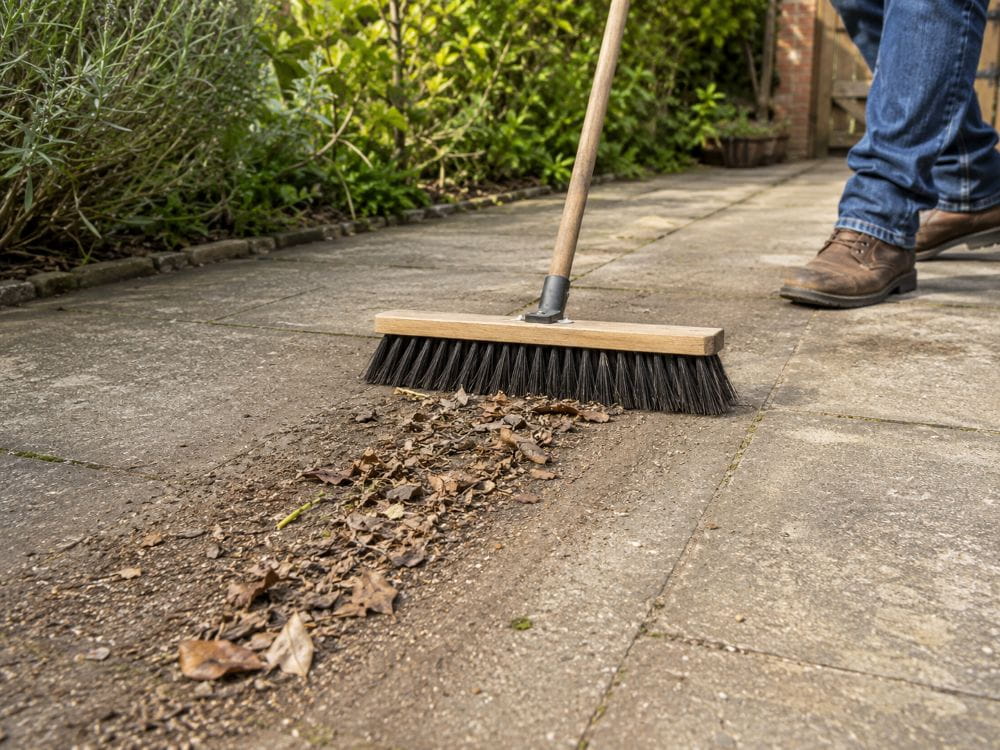
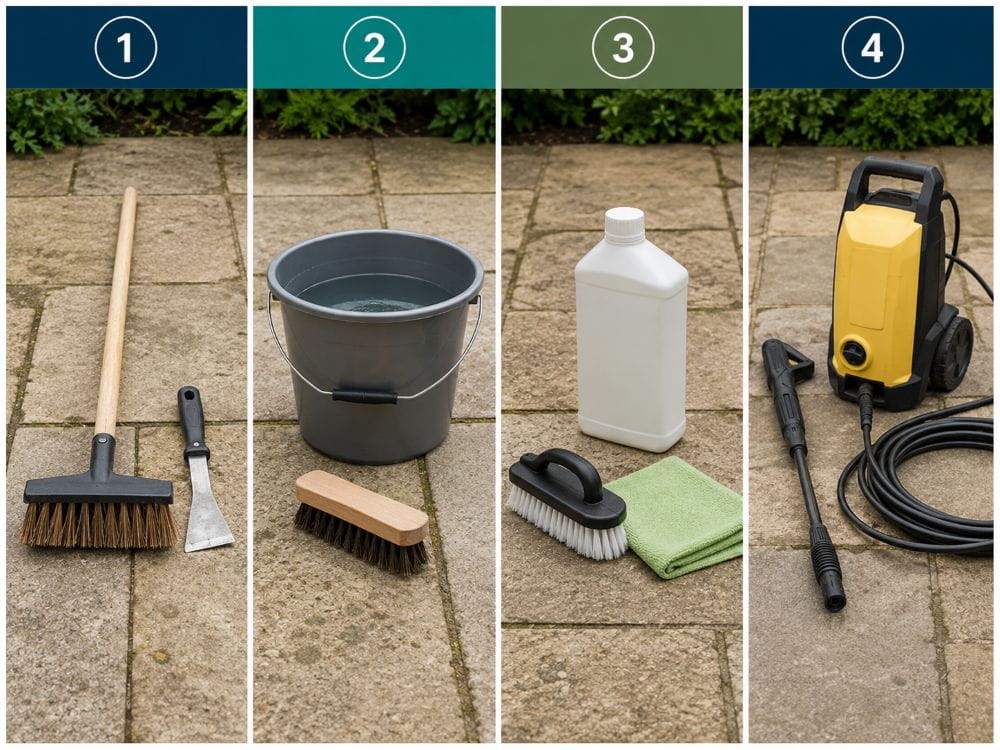
Manual cleaning is the safest starting point for most paths and patios. Sweep away leaves, soil, grit and loose moss. Use a stiff outdoor broom for surface dirt and a hand brush or scraper for joints. This approach reduces the amount of product needed and gives you a clearer view of whether there is a real algae, moss or stain problem.
Manual cleaning is best for light grime, seasonal debris, pet-used areas, sensitive surfaces and patios where you do not yet know the stone type. It is slower than a chemical cleaner, but it gives the most control.
Warm water and mild detergent
For general dirt, warm water and a small amount of mild detergent can be enough. Use this on stable paving where runoff can be controlled. Rinse well where residue could remain, especially if pets use the area. Avoid using washing-up liquid in large quantities, because excess foam and residue can move into planting or drains.
Low-odour or lower-aggression outdoor cleaners
Some outdoor cleaners are designed to remove algae, mould and mildew without scrubbing or pressure washing. These can be useful where manual cleaning is not enough, but they still need careful use. Check whether the product needs dilution, whether the surface needs rinsing, how long pets must be excluded, and whether the product is suitable near plants, drains or ponds.
For a wider method comparison before choosing a product, use How to Clean a Patio Safely.
Biocidal patio cleaners
Many products that target algae, mould, mildew or green growth work because they contain an active ingredient. That does not make them automatically unsuitable, but it does mean the label and safety data sheet matter. The product must be used for its intended purpose, at the correct dilution, in the right conditions and with the right exclusion period for pets and children.
Pressure washing as a reduced-chemical option
Pressure washing can reduce chemical use, but it is not automatically safer. It can remove jointing sand, damage soft stone, mark concrete, drive water into edges and spread dirty water into borders. If you use a pressure washer, use the lowest effective pressure, keep the nozzle moving, avoid blasting joints directly and keep pets out of the spray and runoff area.
Decision Framework: What Should You Use?
1. What surface are you cleaning?
Identify the surface before choosing a method. Concrete flags, sandstone, limestone, porcelain, block paving, tarmac and timber decking respond differently. If the surface is limestone, marble, sealed paving or unknown natural stone, avoid strong acidic products and test first.
2. What is the problem?
Loose dirt, algae, moss, oil, rust, leaf staining and pet mess are different problems. Do not use one general cleaner for everything. Organic green growth may need a patio cleaner. Oil may need a degreaser. Rust may need a specialist stain remover. Light dirt may only need brushing and water.
3. Are pets using the area?
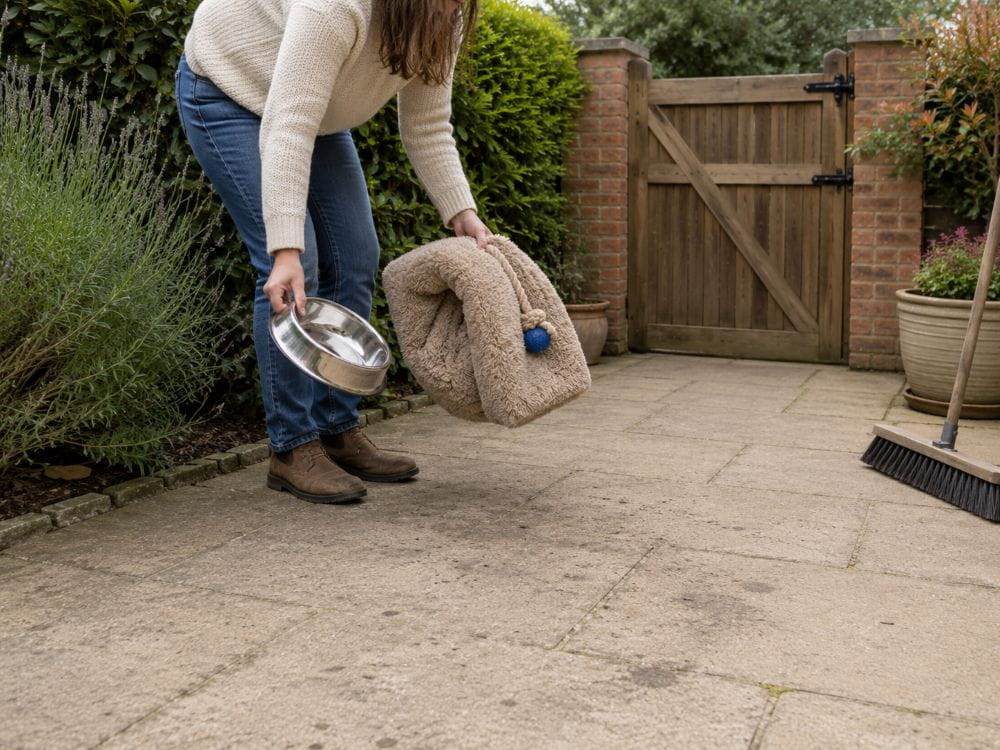
If pets walk, lie, eat or drink in the area, choose the most conservative cleaning method. Keep pets away during cleaning and until the surface has dried. Empty water bowls, cover hutches where appropriate, move toys and bedding, and prevent pets from drinking rinse water or puddles.
4. Can runoff be controlled?
If runoff could enter a pond, vegetable bed, watercourse, open drain or animal enclosure, pause before applying any cleaner. Use manual methods, very controlled spot treatment, or seek advice. Cleaning should not move risk from the patio into another part of the garden.
5. Does the label support the use case?
Stop if the product label does not clearly support your surface, cleaning problem and safety requirements. Do not rely on generic “outdoor cleaner” wording where pets, ponds, sensitive stone or sealed surfaces are involved.
Step-by-Step Pet-Aware Patio Cleaning Method
Step 1: Remove pets, bowls and loose items
Before cleaning, move pet bowls, toys, bedding, hutches, planters and furniture where practical. Keep pets indoors or in a separate part of the garden. Do not rely on watching them while you work; pets can walk through wet product quickly.
Step 2: Dry sweep first
Sweep the area thoroughly. Remove leaves, soil, grit, moss clumps, loose weeds and general debris. This reduces the amount of cleaner needed and prevents organic matter from turning into sludge when wet.
Step 3: Scrape joints and problem edges
Use a suitable scraper or brush to clear joints and edges. Most recurring green growth starts where water and debris sit. Clearing those areas first makes any later cleaning more effective.
Step 4: Try water and brushing
Use clean water and a stiff brush on a small section. If the surface improves enough, continue manually rather than applying a cleaner. For pet-used areas, this is often the preferred first pass.
Step 5: Patch test any cleaner
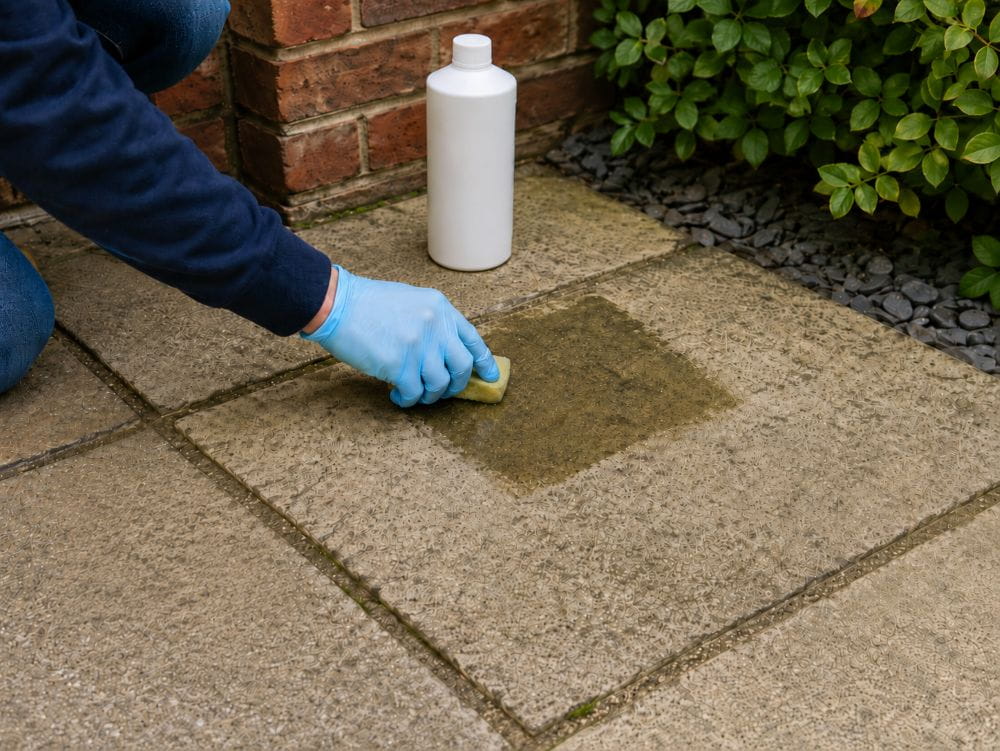
If a cleaner is needed, test it in a discreet area first. Check for colour change, residue, surface dulling, excessive foaming or staining. Let the test area dry before judging the result.
Step 6: Apply only as directed
Dilute only where instructed. Do not make the mix stronger. Do not combine products. Apply in small areas so you can control coverage, dwell time and runoff. Keep the cleaner away from ponds, edible plants, pet bedding and drainage routes unless the product clearly allows that use.
Step 7: Rinse or leave according to the label
Some cleaners are rinse-off products. Others are apply-and-leave products. Follow the label. If rinsing is required, use controlled water flow and direct it away from pet areas, ponds and sensitive planting.
Step 8: Let the surface dry before pets return
Do not let pets back onto the patio while it is wet. Wait until the surface is dry and the area has aired. Check that no puddles, wet residue or product containers remain accessible.
Common Mistakes
Assuming “natural” means safe
Natural products can still irritate skin, damage plants, affect pets or stain paving. Essential oils, acids and strong homemade mixtures are not automatically safe just because they are not conventional patio cleaners.
Using bleach as a shortcut
Bleach can create pet, planting and surface risks. It can also cause discolouration, strong odours and harmful reactions if mixed with other products. For a low-chemical approach, bleach should not be the default patio cleaner.
Letting pets return too early
This is one of the biggest safety mistakes. Pets may lick paws, drink from puddles or lie on damp surfaces. Keep them away until the area is dry and safe to use again.
Cleaning the symptom but not the cause
If algae returns quickly, the cause may be shade, poor airflow, standing water, blocked drainage or debris collecting in joints. Stronger products are not always the answer. Reduce the conditions that allow growth to return.
Overusing pressure washing
Pressure washing can look chemical-free, but it can damage joints and softer surfaces. If it removes jointing sand or marks the paving, it has created a new maintenance problem.
Maintenance and Prevention
The best eco-friendly cleaning plan is prevention. The less growth and debris you allow to build up, the less product you need later.
Weekly during heavy garden use: sweep food crumbs, soil, grass cuttings and leaves from patios and paths.
Monthly: brush shaded corners, steps and joints where algae and moss usually start.
After rain: check where water sits. Persistent damp patches should be treated as a drainage or airflow issue.
Autumn: clear leaf fall before it breaks down into staining sludge.
Pet areas: clean spills and mess quickly with the gentlest suitable method, then rinse or dry as needed before pets return.
If weeds are part of the problem, use Weed Control for Patios and Paths before choosing any weedkiller or hard-surface treatment. Weed control has different legal and safety considerations from general cleaning.
Your Next Step: DIY or Professional
DIY cleaning is usually suitable when the patio or path is stable, the surface type is known, the growth is light to moderate, pets can be kept away, and runoff can be controlled. Start with manual methods. If a cleaner is needed, choose a product designed for outdoor hard surfaces and use it exactly as directed.
For suitable outdoor cleaner options, use Doff outdoor path, patio and decking cleaners. For broader surface treatment options, use paving, path and driveway treatments.
Choose professional help if the surface is high-value natural stone, staining is severe, the area is slippery again shortly after cleaning, runoff cannot be controlled, pets or livestock cannot be excluded, or the paving has movement, drainage or joint failure. In those cases, the safest answer may be repair or surface assessment before cleaning.
Summary
Eco-friendly path and patio cleaning is not about avoiding all products. It is about using the lowest effective method, reducing unnecessary chemical exposure, protecting pets and plants, and avoiding damage from harsh cleaning. For light dirt, start with sweeping, brushing and water. For established algae, mould or mildew, choose a suitable outdoor cleaner and use it exactly as directed.
Pet-safe cleaning should be treated as controlled exposure, not a blanket guarantee. Keep pets away during cleaning, prevent contact with wet surfaces or puddles, and let the area dry before they return. If you cannot control pets, runoff or surface compatibility, pause and choose a safer method.
Frequently Asked Questions
What is the safest way to clean a patio around pets?
Start with sweeping, brushing and clean water. If a cleaner is needed, choose one intended for outdoor hard surfaces, follow the label, keep pets away during application and let the surface dry before they return.
Does pet-safe mean pets can walk on the cleaner while it is wet?
No. Pet-safe should not be treated as risk-free. Keep pets away from freshly cleaned surfaces until the area is dry and aired out.
Are eco-friendly patio cleaners chemical-free?
Not always. Some are lower-chemical, biodegradable, bleach-free, plant-based or lower odour, but those are different claims. Always check the label rather than assuming.
Can I use bleach to clean a patio?
Bleach is not the best default for a low-chemical or pet-aware cleaning plan. It can create risks for pets, plants, surfaces and runoff, especially if mixed with other products.
Is pressure washing more eco-friendly than using a cleaner?
Sometimes, but not always. Pressure washing may reduce chemical use, but it can damage joints, mark surfaces and move dirty water into borders or drains. Use the lowest effective pressure and avoid blasting joints directly.
What should I do if algae keeps coming back?
Look for the cause: shade, poor airflow, standing water, blocked drainage or debris collecting in joints. Regular brushing and better drainage control may reduce the need for repeat cleaning.
Can I use patio cleaner near ponds?
Only if the product label clearly allows it and runoff can be fully controlled. If there is any risk of cleaner reaching a pond or watercourse, use manual cleaning or seek advice.
What product route should I use for low-chemical patio cleaning?
Start with the Doff outdoor path, patio and decking cleaners category if you want a dedicated outdoor cleaner, then choose based on the surface, the type of growth and the label instructions.

Path & Patio is a UK supplier of paving and landscaping products, sharing practical guidance, product expertise and installation advice for patios, paths and driveway projects.