
Best Jointing Compound for Porcelain Paving: Joint Size, Residue Risk and Product Fit
Choosing a jointing compound for porcelain paving needs more care than choosing a compound for a standard patio slab. Porcelain paving is often dense, smooth or finely textured, and many porcelain patios are laid with narrow, tidy joints. That means joint width, joint depth, residue control and clean-down discipline matter before you buy.
This guide is for UK homeowners, DIY patio users and trade buyers choosing a jointing product for porcelain paving, porcelain patios and precision paving work. It explains how porcelain differs from more absorbent paving, what to check before using brush-in compound, when epoxy or porcelain-specific grout may make more sense, and how to avoid residue, haze and wrong-product frustration.
The main risk is buying a jointing product because it works on patios generally, then finding it is not the right fit for the actual porcelain joint. A product may be suitable only above a certain joint width or depth. A surface may need a neater clean-down than rougher paving. A small test area and the current product instructions should always come before full application.
Quick Fit Check for Porcelain Joints
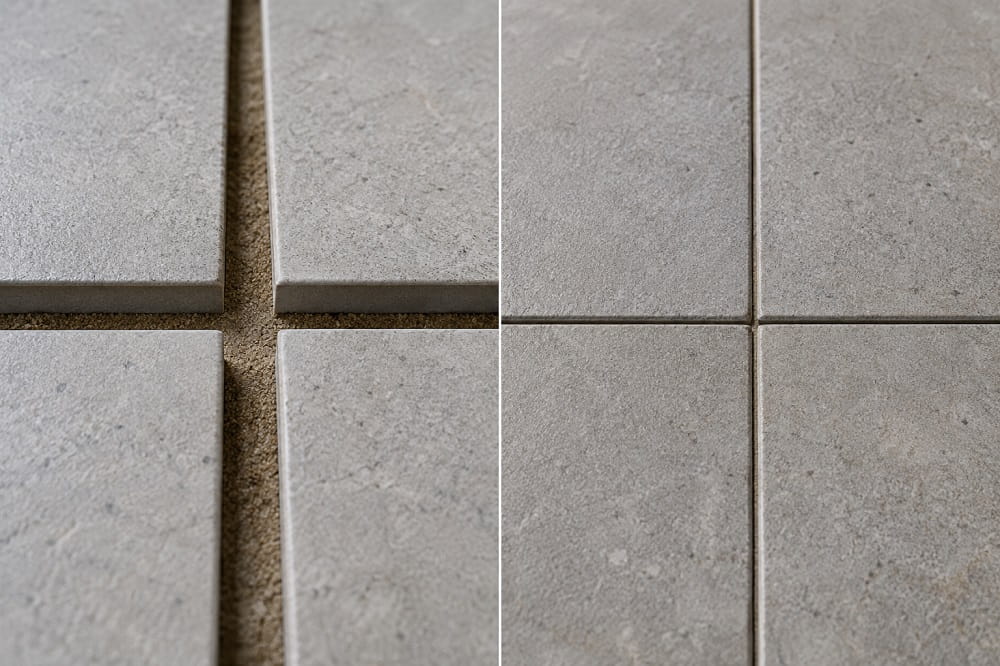
- Safest default: Measure the joint width and depth before buying any compound, then check the product guidance for porcelain suitability.
- Porcelain is less forgiving: Residue, haze and smears can be more visible on dense or lightly coloured porcelain paving.
- Narrow joints need caution: Some brush-in products need a minimum width and depth, so they may not suit very tight porcelain joints.
- Epoxy or porcelain-specific grout may be better: Use these when the joint, finish or surface demands more controlled application.
- Test first: A small trial area helps confirm colour, clean-down and residue risk before treating the full patio.
- Pause if slabs move: Jointing product will not fix loose bedding, poor falls, unstable paving or a patio that holds water in the joints.
What This Guide Cannot Decide for You
This guide does not replace the product label, manufacturer instructions or technical data sheet. Every jointing product has its own requirements for joint size, weather, surface preparation, clean-down, curing and use. Always check the current guidance before buying or applying.
This guide also does not confirm that your porcelain patio has been laid correctly. If the slabs move, the bedding is loose, the fall is wrong, the joints hold water, or the surface is contaminated with primer, grout haze or old compound, the jointing product may not be the only issue.
If you need a broader comparison of patio jointing options, use the paving jointing compounds guide first. This page focuses specifically on porcelain paving and the decisions that make porcelain jointing different.
Warning Signs Before You Start
Pause before joining porcelain paving if the joints are narrower than the product allows, the joints are too shallow, the slabs move, the surface is dusty, the paving still has grout haze, or water sits in the joints after rain. These issues can lead to a poor finish or early failure.
Escalate the job if the patio has loose slabs, failed bedding, poor drainage, incorrect falls or widespread surface contamination. Jointing compound is not a repair for poor installation, and porcelain paving can make finish problems more visible.
Use suitable gloves, eye protection and clean tools. Porcelain jointing often relies on careful clean-down. Do not rush the work or leave material sitting on the paving longer than the product guidance allows.
Why Porcelain Needs a Different Jointing Decision
Porcelain paving is different from many natural stone or concrete slabs because it is usually dense and low-absorption. That can be a benefit for outdoor paving, but it also means jointing residue may sit on the surface instead of soaking away.
Many porcelain patios are also installed with neat, consistent, narrow joints. That can look excellent when finished well, but it limits the range of products that can be used. Some brush-in compounds need wider or deeper joints than a porcelain patio provides.
Residue and haze can stand out
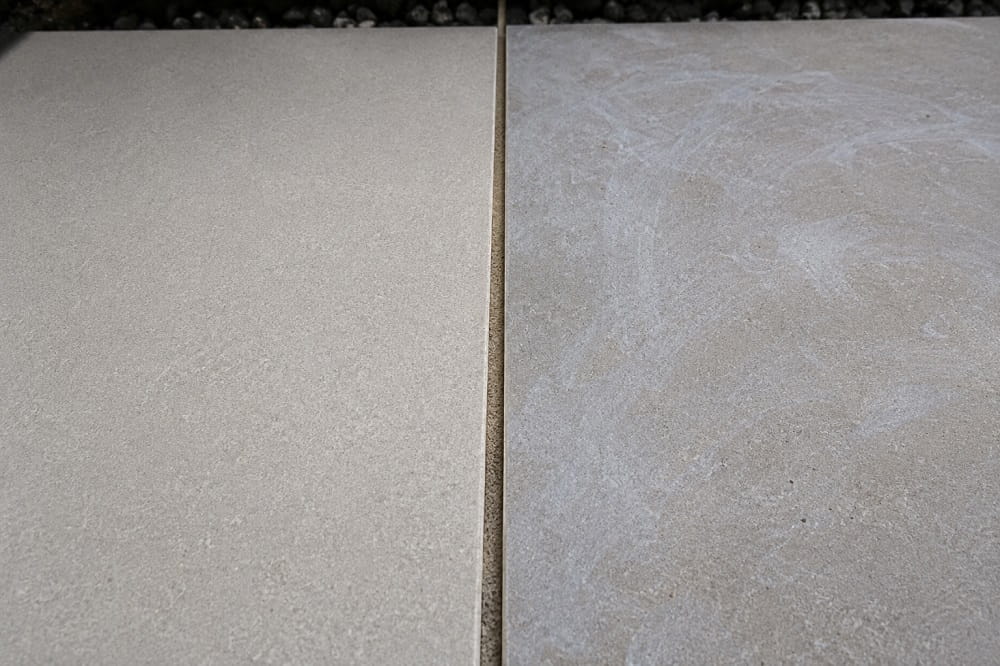
On some paving, minor residue is less visible because the surface is rough, varied or porous. On porcelain, smears, haze or leftover jointing material can be more noticeable, especially on dark, pale, polished-looking or finely textured slabs.
This is why clean-down is not a small detail. It is part of product selection if a product needs rapid, careful or repeated clean-down, plan for that before opening the tub or cartridge.
Joint width controls product choice
Some jointing products are designed for joints above a certain width. If your porcelain joint is too narrow, the material may bridge the top, fail to settle, leave voids or become difficult to finish neatly.
Measure several joints before buying. Do not measure only the widest gap. Use the narrowest realistic joint as your buying guide.
Joint depth is just as important
A joint can look suitable from above but be too shallow underneath because of bedding material, debris, old compound or poor clean-out. Shallow joints can reduce product grip and make failure more likely.
Before applying any new product, check that the joint has enough usable depth for the chosen system.
Which Product Route Makes Sense?
The right product route depends on the joint, surface finish, application skill and expected use. Do not start with the brand. Start with the paving and the joint.
Use brush-in compound when the joint allows it
Brush-in compound can be suitable where the joint is wide enough, deep enough, and the product guidance allows it. It can be a practical route for suitable patios, but porcelain needs careful residue control.
Use this route when the joints meet the product limits, the surface can be cleaned properly, and the finish expectation is realistic. Do not use it where the joint is too tight or shallow.
Consider epoxy or porcelain grout for tighter control
Epoxy-style or porcelain-specific grout may make sense where the paving has tighter joints, a more precise finish requirement or higher clean-down expectations. These products can be more controlled, but they also require careful application and the correct tools.
For a porcelain-focused product route, compare Joint-It 2-Part Porcelain Epoxy Pointing Grout with the joint size, colour and application requirements of your patio.
Look at flowable porcelain options where suitable
Some porcelain paving systems use flowable jointing products or related systems. These can be useful where the product is designed for porcelain paving, and the installation method fits the job.
For a Sika route, review SikaCeram Flowfix porcelain paving jointing compound and check the current instructions before choosing it for your surface.
Stop if the patio has installation problems
Pause product selection if the slabs move, the joints are inconsistent, the surface is still contaminated, or water remains in the joints. In those cases, the correct product may still fail because the patio condition is not suitable.
Joint Size and Surface Checks
Before buying, spend time measuring and checking the surface. This is the point where many wrong purchases can be avoided.
Measure the joint width
Measure across several joints, including corners, edges and the tightest areas. Porcelain paving can be laid very neatly, but real joints are not always identical. If some joints are too narrow for the product, that matters.
Do not rely on the pack name or a general patio description. Product suitability should be checked against actual measurements.
Measure the joint depth
Use a thin measuring tool to check usable joint depth after debris has been removed. Bedding material, dust or old compound can reduce the usable space.
If the joint is too shallow, the product may sit as a thin cap. That can affect durability and appearance.
Check surface texture
Some porcelain has a smooth surface. Some have a fine anti-slip texture. Textured porcelain can hold residue in tiny surface details, which makes clean-down more important.
A test area helps show whether the product leaves haze, staining or residue on that exact paving.
Check colour and lighting
Dark porcelain can show pale residue. Pale porcelain can show darker smears or dirty water marks. Strong sunlight can also make haze more visible from certain angles.
View the test area when dry and from different directions before continuing across the full patio.
Clean-Down Discipline for Porcelain
Porcelain jointing is not only about getting material into the joint. It is also about removing surplus material from the surface at the right time and in the right way.
Prepare everything before opening the product
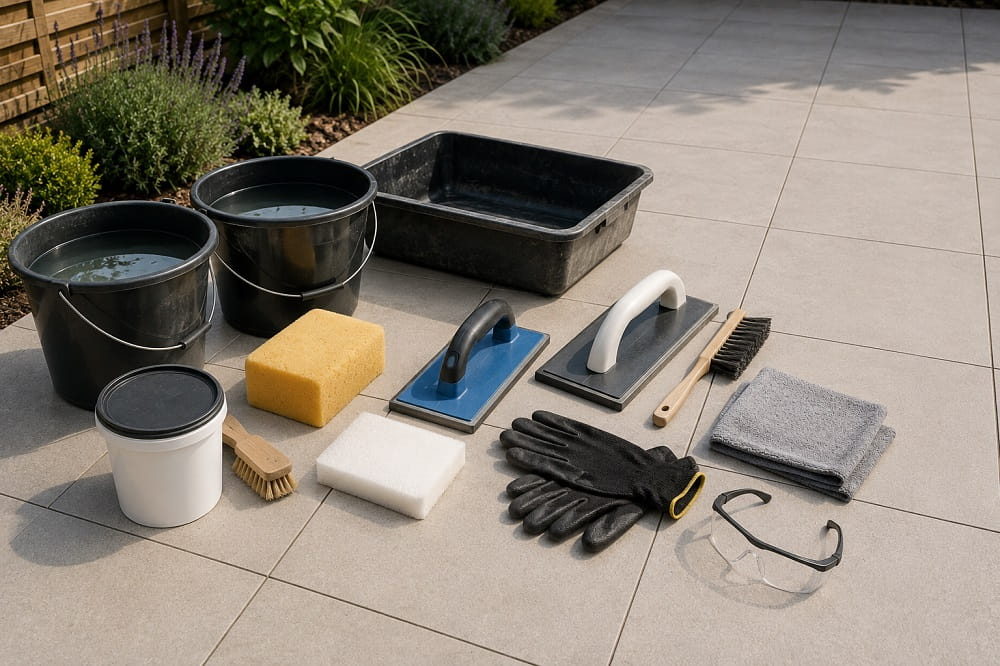
Have buckets, clean water, sponges, brushes, finishing tools, cloths and waste handling ready before you start. Do not wait until the product is on the surface to find the right clean-down tools.
Work in manageable areas
Porcelain can punish rushed work. Smaller areas allow better control, especially if the product has a limited working time or needs careful clean-down.
Remove residue before it becomes a problem
Do not assume residue will weather off. Some marks may remain visible or need further cleaning. Follow the product clean-down instructions and inspect the surface as you go.
Do not overfill without control
Overfilling can spread material across the surface and make clean-down harder. The aim is a filled joint and a clean slab, not simply more material.
Product Selection Traps to Avoid
One common mistake is buying the same compound used on a neighbour’s patio without checking whether their paving and joint size are the same. Porcelain paving can have different joint dimensions and surface behaviour.
Another mistake is choosing only by colour. Colour matters, but it comes after joint size, depth and surface suitability. A good colour match is not useful if the product cannot work properly in the joint.
A third mistake is assuming all “all-weather” or “patio” products suit porcelain. Weather suitability does not automatically mean porcelain suitability. Check the label and product guidance.
Some users also ignore the clean-down stage. Porcelain can show residue clearly, so the tools, timing and method matter. Plan clean-down as part of the job, not as an afterthought.
Another mistake is jointing over dust, primer residue, old haze or loose debris. Porcelain surfaces should be clean and ready before jointing starts.
Keeping Porcelain Joints Looking Right
After jointing, inspect the patio once it is dry and again after the first heavy rain. Look for gaps, soft material, residue, haze, low joints, surface staining and movement.
Keep the patio swept and avoid leaving soil, leaves or organic material in the joints. Dirt can make even a neat porcelain patio look poor over time.
Use cleaning methods that suit the paving and jointing product. Aggressive pressure washing can disturb some joints or drive dirt into textured surfaces. Gentle, regular cleaning is often better than harsh, occasional cleaning.
If residue appears later, check the product guidance before trying strong cleaners. The wrong cleaner can create a second problem on top of the first.
Product Routes for Porcelain Jointing
Before buying, measure the joint width and depth, check the surface texture, decide how much clean-down control is needed, and confirm whether the product is suitable for porcelain paving.
For general browsing, start with the patio pointing and jointing compound range. This gives the broadest route for comparing patio jointing products and tools.
For porcelain-focused options, compare the Joint-It paving jointing range and the Sika paving and pointing products. These brand ranges are useful starting points once your joint measurements are known.
If you are still deciding between wider product families, use the Geo-Fix and Sika jointing comparison as a supporting guide, but keep this porcelain guide as the surface-specific decision page.
A sensible porcelain jointing basket may include the chosen compound or grout, compatible application tools, clean-down tools, gloves, buckets, sponges, brushes and a waste plan. Do not buy the compound alone if the job also needs careful finishing and cleaning.
Key Points to Remember
The best jointing compound for porcelain paving depends on joint width, joint depth, surface texture, clean-down requirements and product compatibility. Porcelain can be less forgiving than rougher or more porous paving because residue, haze and smears may be more visible.
Measure first, test first and check the current product guidance before applying anything across the full patio. If the joints are too narrow, the paving moves, or the surface is contaminated, stop and correct the issue before choosing the final product.
Frequently Asked Questions
Can you use jointing compound on porcelain paving?
Some jointing compounds may be suitable for porcelain paving, but it depends on the product, joint width, joint depth, surface texture and clean-down requirements. Always check the current product guidance first.
What is the best jointing compound for porcelain paving?
The best option depends on the joint size and finish required. Epoxy or porcelain-specific grout may suit some precision joints, while brush-in compounds may suit other joints if the product guidance allows it.
Do porcelain paving joints need to be wider for compound?
Many jointing products have minimum width requirements. Measure the narrowest joints before buying and check them against the product instructions.
How do I avoid haze on porcelain paving?
Use a suitable product, test a small area, work in manageable sections and follow the clean-down instructions carefully. Do not let residue sit on the surface longer than the product allows.
Is epoxy grout better for porcelain patios?
Epoxy grout may be better for some porcelain patios where a more controlled jointing system is needed, but it is not automatically the best option for every job. Check surface and joint suitability.
Can I use Geo-Fix or Sika on porcelain paving?
You should only use any brand product on porcelain if the current product guidance confirms it is suitable for your joint size, depth and surface. Brand alone is not enough to confirm suitability.
Should I test the jointing compound before doing the whole patio?
Yes. A small test area is sensible on porcelain paving because it helps check colour, residue, haze and clean-down before the full area is treated.
Why did my porcelain jointing leave marks?
Marks may come from residue, haze, poor clean-down, wrong product choice, surface texture or contamination. Check the product guidance before using any cleaner or trying to remove the marks.

Path & Patio is a UK supplier of paving and landscaping products, sharing practical guidance, product expertise and installation advice for patios, paths and driveway projects.