
Geo-Fix vs Sika vs Other Jointing Compounds: Which Is Best for Your Patio?
Choosing a paving jointing compound is not just about colour. The right product depends on the paving surface, joint width, joint depth, drainage, exposure, traffic level and how well the area has been prepared. A compound that works well on one patio may fail on another if the joints are too shallow, the slabs move, or the surface is not suitable.
Geo-Fix, Sika FastFix, Joint-It, EASYJoint and other brush-in compounds all sit in the same broad category, but they are not identical. Some products are better suited to particular joint sizes, weather conditions, application methods or surface types. The best choice is the one that matches the patio, not the one with the closest colour on the shelf.
For the main buying route, use Patio, Path and Driveway Pointing. Compare products only after measuring the joint width, checking joint depth and confirming that the paving is stable.
Quick Answer: Geo-Fix, Sika or Another Jointing Compound?
- Safest default: measure joint width and depth before choosing any jointing compound.
- Choose Geo-Fix where the paving, joint dimensions and application conditions match the relevant Geo-Fix product guidance.
- Choose Sika FastFix where you need a ready-to-use, self-setting jointing compound and the joints meet Sika’s size requirements.
- Consider Joint-It, EASYJoint or other alternatives where narrower joint compatibility, colour choice or application method better suits the project.
- Do not use jointing compound to fix loose slabs, unstable bedding, failed falls or drainage problems.
- Pause before buying if the paving moves, joints are shallow, the stone is porous or sensitive, or the area carries vehicles.
What This Guide Does Not Solve
This guide does not repair loose paving, failed sub-base, poor falls, hollow bedding, drainage failure or unstable edges. Jointing compound finishes a suitable paving system; it does not turn an unstable patio into a stable one.
It also does not replace product labels or technical data sheets. Geo-Fix, Sika, Joint-It, EASYJoint and other products each have their own requirements for joint size, surface preparation, weather, curing, traffic and storage.
Finally, this guide does not declare one universal best product. The best jointing compound depends on the patio conditions. A product that is “best” for a wide sandstone patio may be wrong for narrow porcelain joints or a driveway edge.
When to Pause or Escalate
Stop before jointing if the slabs rock, the paving moves underfoot, joints are full of loose dirt, water pools after rain, or the joint depth is below the product requirement. In those cases, adding compound can hide the problem temporarily and fail later.
Pause before applying any compound to porous, dark, honed or sensitive natural stone without a test area. Some products require the surface to be wetted, kept damp during application, swept off quickly or protected from staining risk.
Escalate to a professional if the area carries vehicles, has widespread joint failure, repeatedly washes out, drains badly, or contains expensive natural stone. Product choice alone will not overcome a poor base or unsuitable joint structure.
Why Jointing Compound Choice Matters
Joint width controls compatibility
Every jointing compound has minimum joint width requirements. Some products are suitable for narrower joints than others. If the usable joint throat is too narrow, the compound may not compact or bond as intended.
Joint depth affects durability
Depth matters as much as width. A shallow skim of compound over the top of an old joint is more likely to crack, lift or wash out. Many ready-to-use jointing compounds require a minimum depth so the material can sit securely in the joint.
Surface type affects staining and cleaning
Porcelain, sandstone, limestone, slate, concrete and granite all behave differently. Porous stone can hold residue. Smooth paving can show haze. Textured stone can trap particles. A small test area is sensible before full application.
Exposure affects product choice
Shaded, wet or exposed patios need careful product selection. Water movement, freeze-thaw exposure, cleaning methods and foot traffic all affect how long a jointing product lasts.
Geo-Fix Jointing Compounds
Geo-Fix is a well-known brush-in paving jointing compound range. Geo-Fix Original technical guidance is commonly associated with minimum joints around 5mm wide and 25mm deep. It is often considered where the patio has suitable joint dimensions, stable paving and a surface compatible with a ready-to-use brush-in application.
Geo-Fix can be a strong fit where the joints are wide and deep enough, the paving is not moving, the surface has been prepared correctly and the user wants a straightforward brush-in approach. It is not the right fix where slabs are loose, the joint depth is too shallow or old failed material has not been removed.
For Geo-Fix-specific options, use Geo-Fix paving jointing compounds.
Sika FastFix Jointing Compounds
Sika FastFix All Weather is a popular ready-to-use, self-setting jointing compound. Sika states that FastFix All Weather is for joints over 5mm wide and 20mm deep, and describes the product as highly water permeable. That makes the product relevant where the joint dimensions and application conditions match Sika’s current guidance.
Sika FastFix can be a good fit where the project suits those joint dimensions and where a ready-to-use, all-weather positioned product is preferred. “All weather” should not be read as “no rules”. The joint still needs to be clean, stable and correctly prepared.
For Sika options stocked on Path & Patio, use Sika paving and pointing compounds.
Other Jointing Compounds
Joint-It Simple
Joint-It Simple is another ready-to-use option often considered for patios and paving. It can be relevant where colour, application method or joint suitability makes it a better fit than Geo-Fix or Sika for a particular project. As with all products, the surface and joint dimensions should be checked before purchase.
For a Path & Patio alternative product route, use Joint-It Simple paving jointing compound.
EASYJoint and similar alternatives
EASYJoint and similar brush-in products are commonly compared with Geo-Fix and Sika. These products may suit different joint widths, working methods, colours or surface preferences. Check current data sheets because requirements can vary between product ranges and colours.
Traditional mortar or cement-based pointing
Traditional mortar may still be used for some paving jobs, especially where the finish, joint size or traditional look requires it. It is slower and more skill-dependent than brush-in compounds and can be less forgiving for inexperienced users.
Comparison Table: Geo-Fix, Sika and Other Jointing Compounds
| Factor | Geo-Fix | Sika FastFix | Joint-It / EASYJoint and similar alternatives | Traditional mortar |
|---|---|---|---|---|
| Typical format | Ready-to-use brush-in compound | Ready-to-use self-setting compound | Ready-to-use brush-in compounds | Mixed mortar or cement-based pointing |
| Joint size | Product-specific; Geo-Fix Original is commonly associated with minimum 5mm width and 25mm depth | FastFix All Weather is stated for joints over 5mm wide and 20mm deep | Some options suit narrower joints; check each product | Depends on mix, joint and installer skill |
| Best fit | Suitable patios with correct joint dimensions and stable paving | Patios and paths where Sika size and application rules match | Projects needing different joint-size, colour or application profile | Traditional finishes and installer-led pointing |
| Preparation need | Clean, stable joints and compatible surface | Clean, stable joints and correct application conditions | Varies by product, but clean joints remain essential | High preparation and skill requirement |
| Main risk | Using on unsuitable joint size or unstable paving | Assuming all-weather means no preparation rules | Choosing by colour without checking technical fit | Poor mix, staining, cracking or weak finish |
Decision Framework: Which Jointing Compound Should You Choose?
1. What surface are you jointing?
Start with the paving material. Porcelain, sandstone, limestone, granite, concrete and slate can all need different handling. Sensitive or porous surfaces should be tested before full application.
2. What are the real joint dimensions?
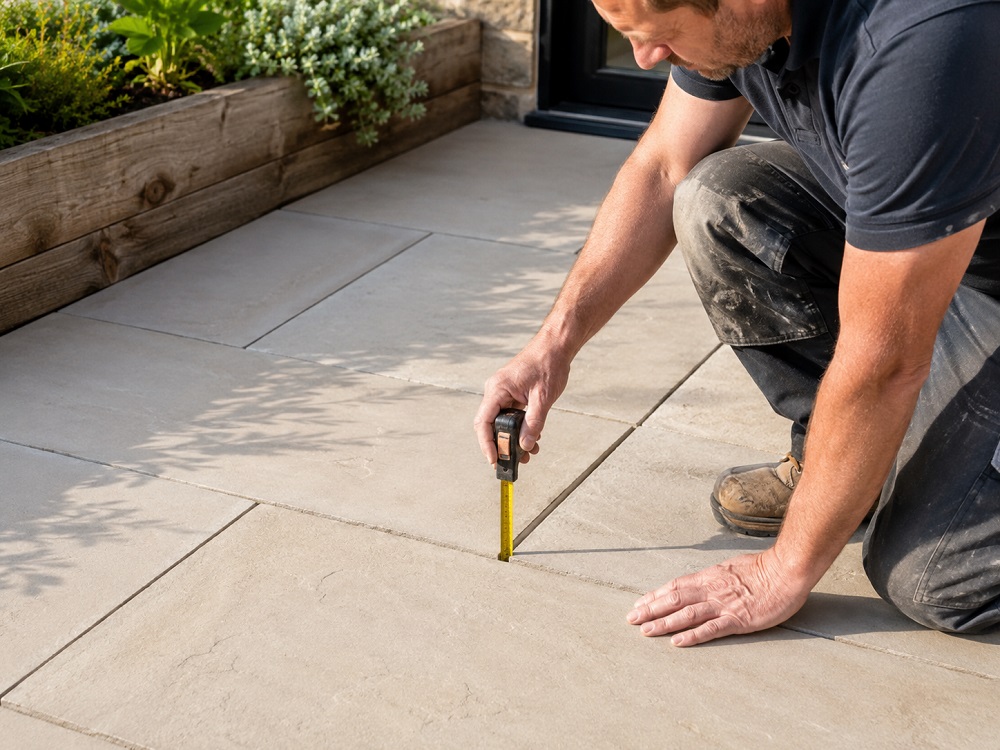
Measure the narrowest width and shallowest usable depth, not only the best-looking section. Chamfered edges can make joints appear wider than they are lower down.
3. Is the paving stable?
Walk the surface. If slabs rock, move or sound hollow, fix the paving before jointing. Jointing compound is not designed to stabilise failed bedding.
4. How exposed is the area?
Wet, shaded, high-traffic or freeze-exposed areas need careful product choice and good preparation. Water movement through or across joints can affect long-term performance.
5. Is colour still important?
Yes, but after technical fit. Colour affects the finished look, but it should not override joint size, surface type or preparation requirements.
Pause before buying if you cannot confirm surface type, joint width, joint depth, drainage condition or whether the paving is stable. Guessing at this stage often leads to cracking, washout, staining or early failure.
Step-by-Step: Choose the Right Jointing Compound
Step 1: Identify the paving
Confirm whether the surface is porcelain, natural stone, concrete, granite, slate or another material. Note whether it is textured, honed, porous, dark or sensitive to staining.
Step 2: Measure the joints
Measure width and depth in several places. Use the smallest reliable measurement when checking product compatibility.
Step 3: Check stability
Look for rocking slabs, voids, loose edges and failed bedding. Do not joint over unstable paving.
Step 4: Check water behaviour
After rain, look for pooling, runoff and areas where water tracks through joints. Drainage problems should be addressed before jointing.
Step 5: Compare product requirements
Compare Geo-Fix, Sika and other products by minimum joint size, application method, weather limits, surface restrictions, traffic suitability and cleaning requirements.
Step 6: Test the surface
On sensitive paving, test a small area before committing to the full patio. Check for staining, haze, colour contrast and clean-down behaviour.
Step 7: Choose the best fit
Choose the product that fits the patio conditions. If two products both fit technically, then use colour, finish, working time, availability and cost as secondary deciding factors.
Common Mistakes
Choosing by colour only
Colour matters, but it comes after compatibility. A perfect colour match will not save a product used in joints that are too shallow or on paving that moves.
Ignoring joint depth
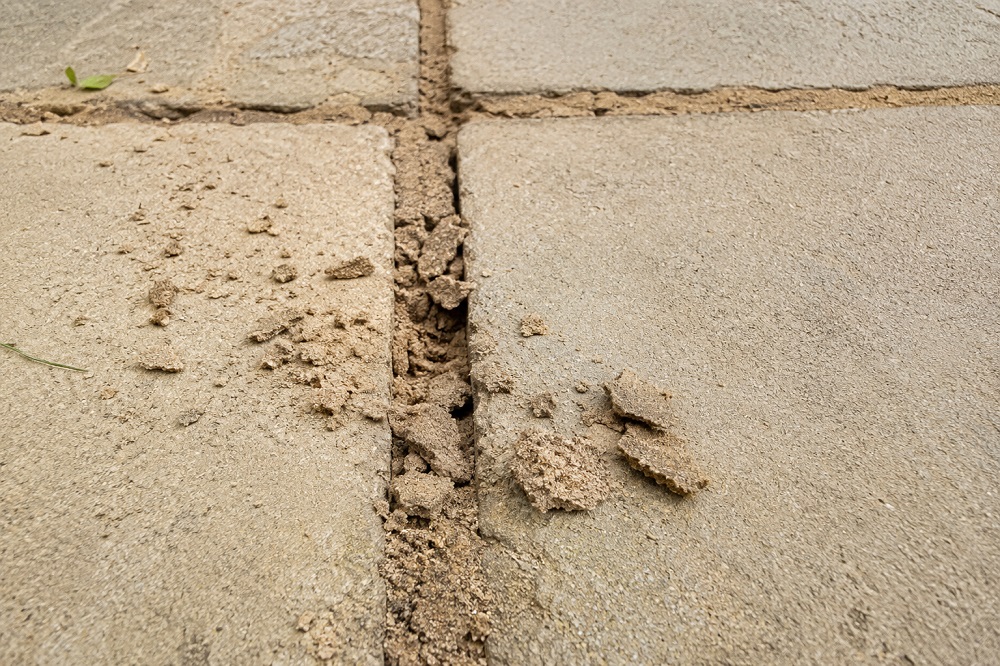
Joint width is easier to see, but depth is just as important. A shallow joint may fail even when the surface looks tidy on application day.
Applying over old loose material
Fresh compound should not be swept over failed jointing, moss, soil or loose sand. Remove failed material and prepare the joint properly.
Assuming all-weather means no preparation
All-weather products still have instructions. Surface condition, joint dimensions, compaction and clean-down still matter.
Using patio compound on vehicle areas without checking
Driveway edges and vehicle-loaded areas need special care. Some products may allow light or occasional vehicle use only under specific base and support conditions.
Skipping a test area
Testing is especially important on porous, dark, textured or high-value paving. It helps identify staining or haze risk before the whole patio is affected.
Maintenance and Prevention
After jointing, keep the surface clean and avoid aggressive cleaning too soon. Follow the product guidance before pressure washing or applying cleaners. Fresh joints may look firm before they have reached full resistance.
Inspect joints after winter, heavy rain and deep cleaning. Small gaps, cracking or settlement should be addressed early. If the same area repeatedly fails, look for movement, drainage or base problems rather than only topping up the joint.
Keep leaves, soil and moss from sitting in joints. Organic debris holds water and encourages weeds, staining and surface growth.
Your Next Step: DIY or Professional
DIY jointing is usually suitable where the paving is stable, the joint dimensions clearly match the product, the surface is not highly sensitive and the area carries normal pedestrian use.
Professional help is the better route where the paving moves, the joints are inconsistent, the stone is expensive or sensitive, the area drains badly, the patio has failed before, or the surface carries vehicles.
The best product is the one that fits the paving system. Choose Geo-Fix, Sika or another compound only after checking surface type, joint width, joint depth, preparation and exposure.
Summary
Geo-Fix, Sika FastFix, Joint-It, EASYJoint and traditional mortar all have valid use cases. Geo-Fix and Sika are popular ready-to-use options, while alternatives may suit different joint widths, colours, surfaces or application preferences.
There is no universal winner. The best jointing compound for your patio depends on the surface, joint size, drainage, exposure, traffic and preparation. Measure first, check the data sheet, test sensitive surfaces and do not use jointing compound to hide movement or drainage failure.
Frequently Asked Questions
Is Geo-Fix better than Sika FastFix?
Not universally. Geo-Fix may be better for one patio and Sika FastFix may be better for another. The decision depends on joint dimensions, surface type, weather conditions, preparation and the finish you want.
What joint width do I need for Geo-Fix?
Geo-Fix products have specific requirements. Geo-Fix Original guidance is commonly associated with minimum joints around 5mm wide and 25mm deep. Always check the current product data sheet.
What joint width do I need for Sika FastFix?
Sika states that FastFix All Weather is for joints over 5mm wide and 20mm deep. Check the current Sika guidance before buying or applying.
Can I use jointing compound on porcelain paving?
Sometimes, but check product compatibility and test first. Porcelain surfaces can show residue or haze if the wrong product or clean-down method is used.
Can jointing compound fix loose slabs?
No. Loose slabs need the bedding or base corrected first. Jointing compound finishes the joint; it should not be used as a structural repair.
Why does jointing compound wash out?
Common causes include shallow joints, poor preparation, water exposure before curing, weak compaction, pressure washing too soon or drainage problems.
Can I top up old jointing compound?
Only if the remaining material is sound and the product allows it. Loose, dirty or failed material should be removed before re-jointing.
Which jointing compound is best for patios?
The best compound is the one that matches your paving, joint width, joint depth, drainage, exposure and traffic level. Technical fit matters more than brand or colour alone.

Path & Patio is a UK supplier of paving and landscaping products, sharing practical guidance, product expertise and installation advice for patios, paths and driveway projects.