
Block Paving Jointing Sand vs Jointing Compound: Which Should You Use?
Block paving joints are different from many patio slab joints. They are often narrow, repeated across a large area, and exposed to water, weeds, tyre movement, brushing, pressure washing and everyday dirt. That means the choice between jointing sand, stabilising sand, active sand and wider-joint compound should be based on joint size, surface use and maintenance needs.
This guide is for UK homeowners, DIY users and trade buyers deciding whether to refill block paving joints with sand, use an active or stabilising sand, or consider a jointing compound. It explains where each route can make sense, when a product may be unsuitable, what to check before buying and how to avoid common repair mistakes.
The main risk is treating block paving like a standard patio slab. A brush-in compound may suit some wider joints, but many block paving joints are too narrow or too shallow for products designed for paving slabs. Standard kiln-dried sand may be simple and familiar, but it may need more maintenance. A stabilising or active sand may sit between these routes where the product is suitable.
Fast Decision Guide
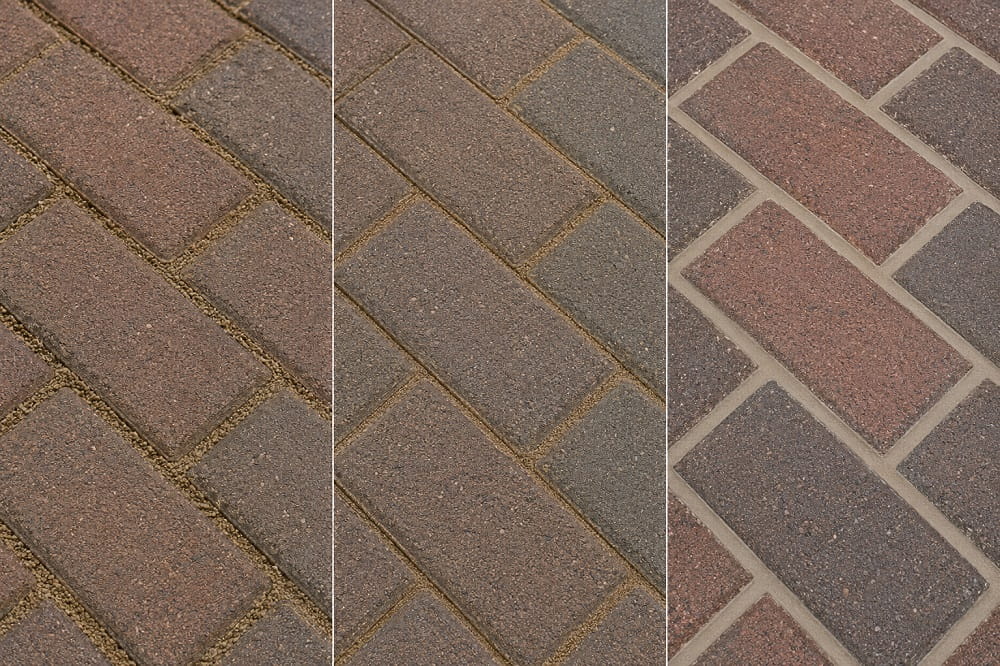
- Safest default: Check joint width, depth, block stability and drainage before choosing sand or compound.
- Use jointing sand when: The joints are narrow, the blocks are stable, and you need a traditional refill route for block paving.
- Use stabilising or active sand when: You want a sand-based product with extra joint stability where the surface and product guidance suit the job.
- Use wider joint compound only when: The joints meet the product’s width and depth requirements, and the surface is suitable.
- Pause if blocks move: Jointing material will not fix unstable bedding, rocking blocks or poor edge restraint.
- Weeds need more than product choice: Joint filling helps, but dirt, seeds, damp and poor maintenance can still allow regrowth.
What This Comparison Does Not Prove
This guide does not replace the instructions for a specific sand, stabilising sand, active sand or jointing compound. Always check the current product label, joint size requirements, application method, weather conditions, drying or curing guidance and surface suitability before use.
This guide also does not prove that your block paving is structurally sound. If blocks move, dip, lift, spread at the edges or hold water, the issue may be the bedding, sub-base, drainage or edge restraint rather than the jointing material.
For a wider explanation of patio and paving jointing products, use the paving jointing compounds guide before choosing a replacement product. This block paving guide focuses specifically on the sand-versus-compound decision.
Checks Before You Refill the Joints
Pause before filling joints if the paving is wet beyond product limits, heavily weeded, full of soil, missing edge restraint, moving underfoot, or very uneven. Filling the joints without fixing the cause may give a short-term improvement only.
Escalate the job if the driveway has deep ruts, sunken blocks, loose edges, ponding water or large areas of movement. Jointing sand or compound will not correct a failed base or poor drainage.
Use suitable gloves and eye protection where the product label requires it. Take care when brushing, scraping or pressure washing, as aggressive cleaning can remove jointing material or disturb weaker areas.
How Block Paving Joints Work
Block paving is made from many individual blocks laid in a pattern. The joints between them help the surface lock together, allow controlled movement and reduce gaps where dirt and weeds can collect. The jointing material is part of the surface system, but it is not the only thing holding the driveway or path together.
Sand is commonly used because it can enter narrow joints and be topped up when needed. Compounds are usually chosen for different types of paving joints and may need more width and depth. Stabilising or active sands aim to give a sand-based route with extra performance features, depending on the product.
Why narrow joints matter
Many block paving joints are narrow. A product that needs a wider joint may not enter properly, may sit on the top, or may fail to reach the depth it needs. This is why measuring matters before buying.
Why the base still matters
If blocks rock, dip or spread, the jointing material is not the root cause. Loose blocks can disturb any joint fill. Refill the joints only after the paving itself is stable enough.
Why dirt and weeds keep returning
Weeds often grow where dirt and organic matter collect in joints. Filling joints helps reduce open gaps, but seeds, soil and moisture can still create regrowth if the surface is not maintained.
Which Option Makes Sense?
The best option depends on the joint shape, paving condition, traffic level and maintenance expectation. Do not choose only by price or the promise of fewer weeds.
Traditional jointing sand
Traditional jointing sand is commonly used for narrow block paving joints. It can be brushed into the surface and topped up as joints empty over time. It is a familiar route for driveways and paths where the blocks are stable.
Use sand when the joints are narrow, the surface is sound, and you are comfortable with periodic maintenance. Do not expect loose sand to behave like a hard compound or to remove maintenance entirely.
Stabilising or active sand
Stabilised or active sand may be useful where you want a sand-based jointing route with more resistance to washout or movement than loose sand, depending on the product. It may suit some block paving jobs where the joints are appropriate and the instructions are followed.
For a product route, compare Sika Buff Setting Sand for narrow paving joints and Joint-It Fine block paving jointing sand against your joint size and surface condition.
Wider-joint compound
Wider-joint compounds may suit some paved areas where the joints are wider and deeper, but they should not be assumed suitable for narrow block paving. Some compounds have minimum joint width and depth requirements.
Use this route only when the joints meet the product guidance and the surface is suitable. Stop if the joint is too narrow, too shallow or full of old sand that cannot be cleared properly.
When a repair is needed first
If the paving is sinking, spreading, lifting or holding water, the joint material is not the first decision. The surface may need repair, lifting, rebedding, edge restraint work or drainage correction before refill products make sense.
Before You Buy Sand or Compound
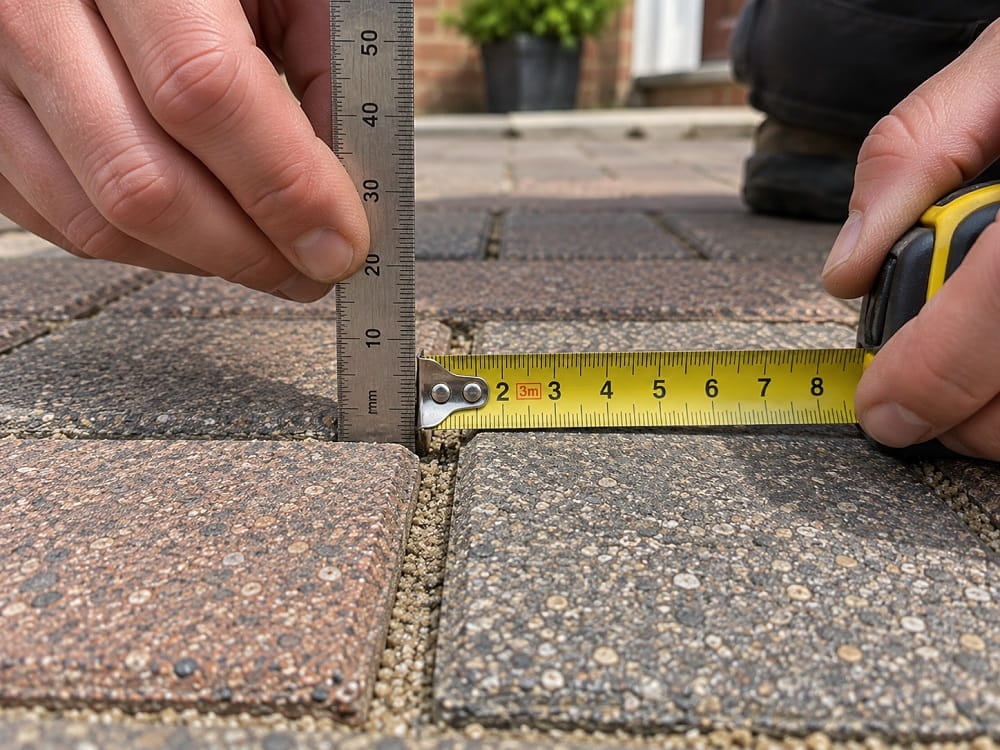
Spend a few minutes checking the surface before buying. It can save wasted product and repetitive work.
Measure the joints
Check several areas, including narrow joints, edges, high-traffic sections and places where sand has washed out. If the joint size changes across the surface, choose based on the tightest practical areas.
Check depth and cleanliness
Jointing material needs room. If the joint is full of soil, moss, old sand or debris, new material may only sit near the top. Clean the joint to the depth required by the chosen product.
Look at edge restraints
Block paving needs stable edges. If the blocks at the edge are spreading, jointing sand will not hold the surface together on its own.
Watch how water moves
After rain, check where water sits or flows. If the same joints empty every time, there may be a washout or drainage route that needs attention.
Refilling and Maintenance Planning
The best method depends on the product, so follow the instructions on the bag or tub. The general principle is to clean the joints, apply the correct material, work it into the joint and avoid leaving excess material where it can stain or create a mess.
For sand-based products
Sand-based products need dry enough conditions and clean joints, depending on the product. Brush the material evenly and avoid leaving piles on the surface. Some products may need specific activation or finishing steps.
For compound-style products
Compound-style products need the correct joint size, surface condition and application method. If the joint is too narrow, do not force the product into a place where it cannot perform properly.
For weed-prone areas
Remove existing weeds and soil before refilling. Filling over roots, moss, or dirt may leave the cause in place. For ongoing maintenance, compare relevant products in the weed killer and weed control range where appropriate.
Mistakes That Lead to Repeat Joint Loss
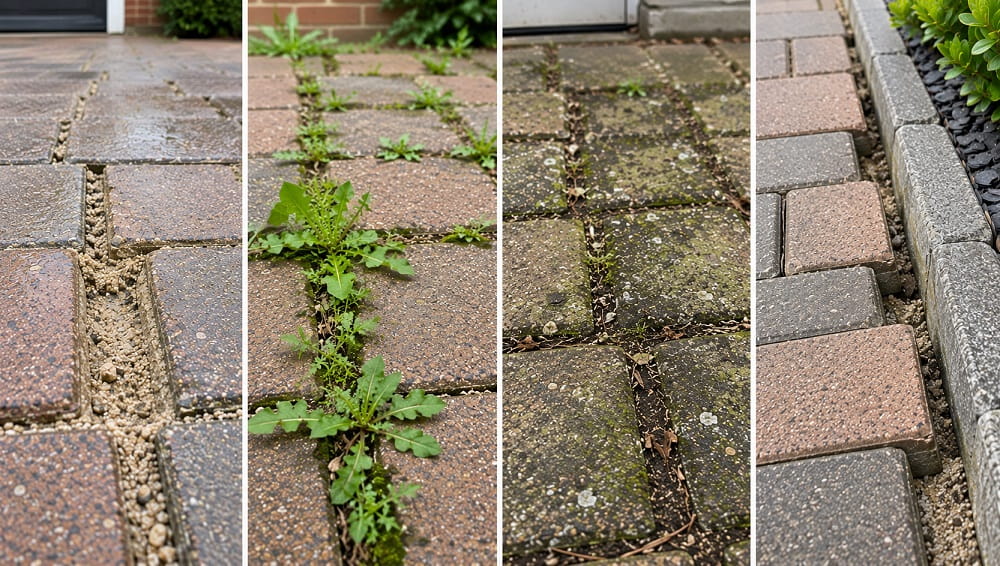
One common mistake is brushing new sand over dirty joints. If the joint is already full of soil and moss, the new material may not reach the depth needed.
Another mistake is using a patio compound in narrow block paving joints without checking the product limits. The product may not enter the joint correctly.
A third mistake is expecting any jointing material to stop weeds permanently. Weeds can return when dirt, seeds and moisture collect on the surface.
Some users pressure wash aggressively and then refill only lightly. This can remove too much jointing material and leave the blocks less supported.
Another mistake is ignoring edge movement. If blocks spread at the side, the joints will keep opening and losing material.
Keeping Block Paving Joints Filled
Block paving joints should be checked as part of normal driveway or path maintenance. Look for low joints, loose blocks, weed growth, sand loss, washout lines and areas where tyres turn repeatedly.
Keep the surface swept so dirt and organic matter do not build up in the joints. Deal with weeds before they become established. Avoid repeated high-pressure cleaning directly into the joints unless the surface and jointing system can tolerate it.
Top up sand-based joints when needed. If the same area keeps losing material, check water flow, joint depth, block movement and edge restraint before adding more.
Product Routes for Block Paving Joints
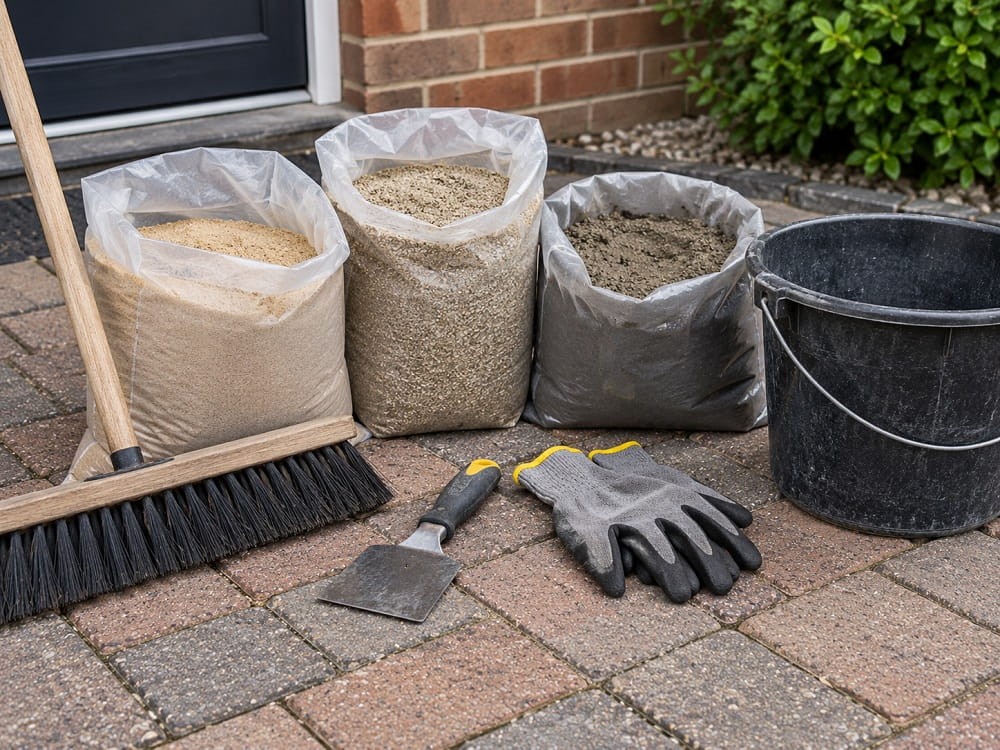
Before buying, decide whether your paving needs a sand-based refill, a stabilising or active sand, or a wider-joint compound. The right route depends on joint width, depth, paving stability, water movement and maintenance expectations.
For the broadest product route, start with the patio pointing and jointing products category. This gives access to jointing compounds, sands and related tools.
For brand-specific product browsing, compare the Sika paving and pointing range and the Joint-It paving jointing products. These routes are useful once your joint measurements and surface condition are known.
A sensible basket may include jointing sand or compound, a stiff broom, gloves, a bucket, a scraper for moss and soil, and weed-control or cleaning products where the surface needs preparation first.
Key Points to Remember
Block paving jointing sand, stabilising sand and jointing compound are not always interchangeable. Sand is often used for narrow block paving joints. Stabilising or active sands may offer a sand-based route with extra joint support where suitable. Wider-joint compounds need the right width, depth and surface condition.
Measure the joints, clean them properly, check for block movement and understand how water moves across the surface before buying. The right product should match the paving, not just the problem you want to solve.
Frequently Asked Questions
Should I use sand or compound for block paving?
It depends on joint width, depth and the surface condition. Many block paving joints are narrow and suit sand-based products, while compounds usually need wider and deeper joints.
What is the best jointing sand for block paving?
The best option depends on the joint size, traffic level, surface condition and product instructions. Traditional sand, stabilising sand and active sand can all suit different jobs.
Can I use patio jointing compound on block paving?
You should only use it if the joints meet the product’s width and depth requirements and the surface is suitable. Do not assume a patio compound suits narrow block paving joints.
Does jointing sand stop weeds?
Jointing sand can help fill gaps where dirt and seeds collect, but it does not guarantee weed prevention. Regular sweeping, cleaning and maintenance still matter.
Why does sand keep washing out of my block paving?
Sand may wash out because of water flow, pressure washing, low joints, poor drainage, loose blocks or repeated tyre movement. Check the cause before topping up again.
Do I need to remove old jointing sand first?
Remove loose soil, moss, weeds and contaminated material before refilling. New material needs enough clean joint depth to settle properly.
Can I seal block paving after re-sanding?
Some block paving sealers may be used after suitable preparation and joint filling, but you should check the sealer instructions and make sure the surface is ready.
How often should block paving joints be topped up?
There is no fixed rule. It depends on traffic, cleaning, weather, drainage and the product used. Inspect the joints regularly and top up when the level drops.

Path & Patio is a UK supplier of paving and landscaping products, sharing practical guidance, product expertise and installation advice for patios, paths and driveway projects.