
When and How to Use Admixtures in Concrete and Mortar for Outdoor Projects
Outdoor concrete and mortar failures often come from the mix, the conditions or the preparation, not only the workmanship. A mix that is too dry may be hard to compact or finish. A mix that is too wet can shrink, weaken or crack. A mortar that is hard to spread can leave poor contact behind bricks, blocks or paving edges. A repair done in cold or wet conditions can fail before it has gained enough strength.
Admixtures are used to adjust how concrete, mortar, render or sand/cement mixes behave. The right admixture can improve workability, reduce water demand, improve water resistance, support cold-weather setting, help with freeze-thaw conditions or improve colour consistency. The wrong admixture, or the right admixture used incorrectly, can create new problems.
For mortar admixtures, cement colourants and related outdoor building products, use Admixtures and Cement Colourant. Use this guide first so the product choice matches the job, the surface, the weather and the mix type.
Quick Answer: When Should You Use an Admixture?
- Safest default: use the correct base mix first, then add an admixture only when there is a clear job-specific reason.
- Use a plasticiser when mortar needs better workability without simply adding more water.
- Use a waterproofer or integral waterproofer where the mix and product guidance support improved resistance to water penetration.
- Use a frostproofer or accelerator only when cold-weather work is suitable and the product label supports the conditions.
- Use fibres or reinforcement aids only where they suit the application; they do not replace structural reinforcement where that is required.
- Stop and get professional advice for load-bearing concrete, structural slabs, retaining walls, foundations, high-risk repairs or unknown existing substrates.
What This Guide Does Not Solve
This guide does not design structural concrete. It does not specify foundations, retaining walls, reinforced slabs, suspended concrete, engineered steps or load-bearing repairs. Those jobs need proper design, suitable materials and, where required, professional specification.
It also does not fix a poor base mix. If the cement, sand, aggregate, water and preparation are wrong, an admixture will not reliably rescue the job. Admixtures modify behaviour; they do not replace correct proportions, compaction, curing or substrate preparation.
This guide does not replace product labels or technical data sheets. Different admixtures have different dosage rates, mixing methods, temperature ranges, compatibility limits and safety requirements. The label and technical data sheet always take priority.
When to Pause or Escalate
Stop before mixing if the work is structural, load-bearing, retaining soil, supporting vehicles, close to buildings, or connected to drainage or damp proofing that you do not fully understand. These are not the right situations for guesswork or casual product substitution.
Pause before working with wet cement, fresh concrete or mortar unless you have suitable protection. HSE states that cement-based products such as concrete and mortar can cause serious skin problems, including dermatitis and burns. Wear suitable gloves, eye protection and clothing, and wash off splashes promptly.
Escalate to professional help if the job involves structural cracking, repeated water ingress, failed previous repairs, deep concrete damage, reinforcement corrosion, ground movement, below-ground waterproofing or any repair where failure could create a safety risk.
What Admixtures Do in Outdoor Mixes
They adjust behaviour, not fundamentals
An admixture changes how a mix performs or handles. It may improve workability, help the mix resist water penetration, support cold-weather setting or improve finish consistency. It does not remove the need for the right mix, clean substrate, correct thickness, suitable weather and proper curing.
Concrete and mortar are not the same job
Concrete is usually used for slabs, pads, bases, repairs and structural or semi-structural outdoor work. Mortar is used for bricklaying, blockwork, pointing, bedding and some rendering tasks. A mortar plasticiser is not automatically suitable for every concrete mix, and a concrete admixture is not automatically suitable for fine pointing or render.
Water is usually the hidden risk
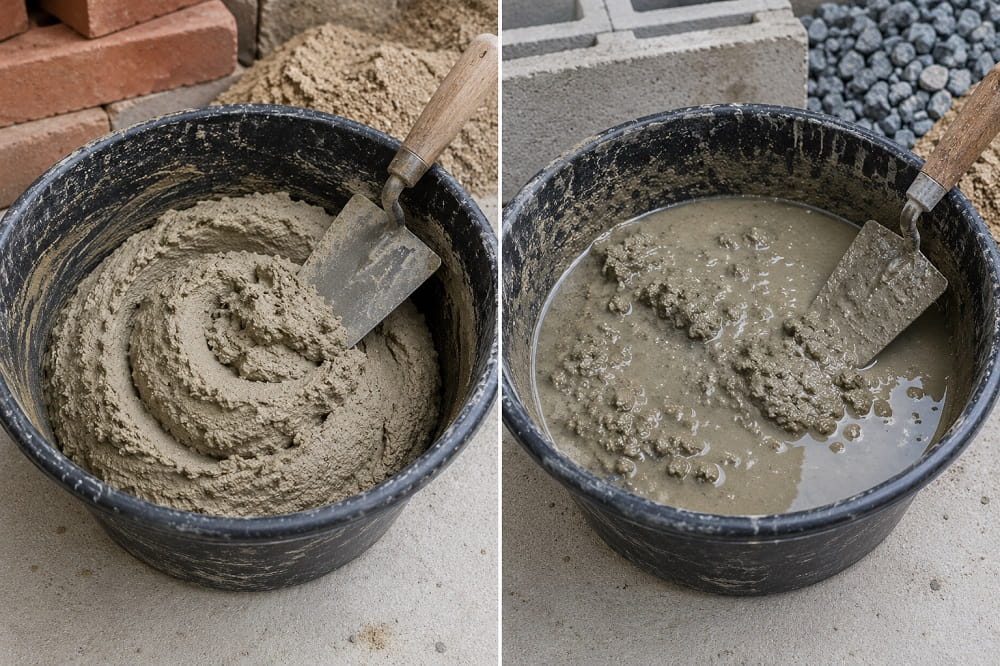
Adding extra water can make a mix easier to spread, but it can also increase shrinkage, weaken the mix or affect finish quality. Superplasticising and water-reducing admixtures exist because workability and water content are not the same thing. The Concrete Society explains that superplasticising/high-range water-reducing admixtures can reduce the water needed for a given workability or increase workability in plastic concrete.
Outdoor exposure changes the decision
Outdoor mixes face rain, frost, wet-dry cycles, temperature swings and sometimes de-icing salts or constant damp. This is why admixture selection matters more outside than in some protected indoor uses. The product must suit the exposure and the job, not only the bucket or bag in front of you.
Admixture Types Explained
Plasticisers
Plasticisers improve workability. In mortar, that usually means the mix becomes easier to spread, tool and finish without relying on extra water. This is useful for brickwork, blockwork, pointing, bedding and rendering where consistency matters.
For a Path & Patio product example, Bond It Power Mix 1L Mortar Plasticiser is described as a concentrated plasticiser for Portland cement-based mortars. It should be used only where the mix type and product guidance match the job.
Mortar admixtures for workability and frost resistance
Some mortar admixtures combine plasticising benefits with improved handling in outdoor conditions. For example, SikaMix Plus Mortar Admix Plasticiser 5L is described as a liquid admixture for mortars, renders and plasters that improves workability and freeze-thaw resistance. Use this type of product for relevant mortar, render and plaster applications, not as a universal concrete fix.
Waterproofers and integral waterproofer plasticisers
Waterproofing admixtures are used where the mix needs improved resistance to water penetration. They are relevant to some renders, below-ground work, wet locations, exterior masonry and other cementitious applications where the product is designed for that exposure.
For a Path & Patio product example, Sika MaxMix Integral Waterproofer Plasticiser is described as improving waterproofing and plasticising properties of sand/cement mixes, with reduced water permeability. This kind of product should not be used to hide drainage failure, structural cracks or active water ingress without diagnosis.
Frostproofers, accelerators and hardeners
Cold conditions slow cement-based work and can create early failure if the material is exposed before it has developed enough strength. Frostproofers or accelerators may help in suitable cold-weather work, but they do not make every winter job safe.
For a Path & Patio product example, Bond It Power Frost is described as a concentrated frostproofer and accelerator for cement mortars and concrete applications. Use it only where the product guidance supports the weather, mix type and application.
Air-entraining admixtures
Air entrainment introduces small stable air bubbles into a concrete or mortar system. The Concrete Society explains that air-entraining admixtures can improve resistance to freeze-thaw degradation, increase cohesion and reduce bleeding and segregation. This can be relevant for outdoor exposure, but the mix still needs correct design and use.
Fibres and crack-control aids
Fibres may be used in some concrete and screed mixes to help control shrinkage cracking and improve distribution of stress in the early stages. They do not replace structural reinforcement where reinforcement is required by design.
Cement colourants
Cement colourants are used where mortar, pointing, render or concrete colour consistency matters. They are especially relevant for visible pointing, decorative mortar or repairs where a patchy colour would be obvious. Colourants need accurate dosing and consistent mixing to avoid uneven results.
Where Admixtures Fit in Outdoor Projects
Pointing and repointing
Pointing work needs a mix that is workable, compactable and suitable for the masonry or paving joint. A plasticiser can help handling, but it will not fix loose joints, poor preparation or unstable paving. Rake out failed material, clean the joint and match the mix to the job before choosing an additive.
Rendering and external repairs
External render needs adhesion, workability, controlled drying and resistance to weather exposure. Waterproofing admixtures or plasticisers may be relevant where the product system supports the application. Do not apply render over damp, loose, salty or unstable backgrounds without resolving the cause.
Small slabs, pads and bases
For small domestic slabs or bases, admixtures may help workability or performance, but they do not replace base preparation, compaction, thickness, reinforcement where required or proper curing. Where loads are significant, get the specification right before mixing.
Outdoor mortar bedding
Mortar used for bedding should be workable enough to create full contact but not so wet that it slumps, shrinks or weakens. Plasticisers can help with consistency, but the bedding depth, substrate and support remain critical.
Water-exposed details
Steps, wall bases, external renders, below-ground details and damp-prone areas may need water-resistance measures. A waterproofing admixture may be part of the system, but water must still be directed away where possible. Waterproofing should never be used as a substitute for drainage design.
Decision Framework: Which Admixture Fits the Job?
1. What is the mix?
Identify whether the job uses concrete, mortar, render, screed, grout or a specialist repair product. Do not assume one additive suits all cement-based mixes.
2. What problem are you trying to solve?
If the issue is poor workability, consider a plasticiser. If the issue is water exposure, consider a suitable waterproofer. If the issue is cold-weather setting, consider a frostproofer or accelerator. If the issue is appearance, consider cement colourant. If the issue is structural movement, an admixture is not the answer.
3. Is the base mix already correct?
Admixtures should improve a suitable mix, not disguise a bad one. Check cement type, sand or aggregate grading, water content, mixing method and substrate preparation first.
4. What is the exposure?
Outdoor work may face frost, rain, standing water, traffic, impact, UV exposure, damp ground or freeze-thaw cycles. The admixture should match the exposure, and the product label should support the use.
5. Is the work safety-critical?
Pause before relying on admixtures for foundations, retaining structures, vehicle-bearing slabs, steps, walls, structural repairs or below-ground waterproofing where failure would create risk. These jobs need a proper specification, not product-led guesswork.
Step-by-Step: How to Use Admixtures Safely and Sensibly
Step 1: Define the job
Write down the task: pointing, bricklaying, rendering, bedding, small slab, repair, patching or water-resistance work. This narrows the product type immediately.
Step 2: Check the substrate
Concrete, masonry, render, paving and repairs all need sound surfaces. Remove loose material, dust, oil, grease, algae and failing coatings before mixing or applying anything.
Step 3: Choose the base mix
Use the correct cement, sand, aggregate and water ratio for the job. The admixture is a modifier, not the foundation of the mix design.
Step 4: Select the admixture by function
Choose workability, waterproofing, cold-weather support, colour or crack-control function based on the job. Avoid adding several products unless the system is designed and documented for that combination.
Step 5: Read the label before opening
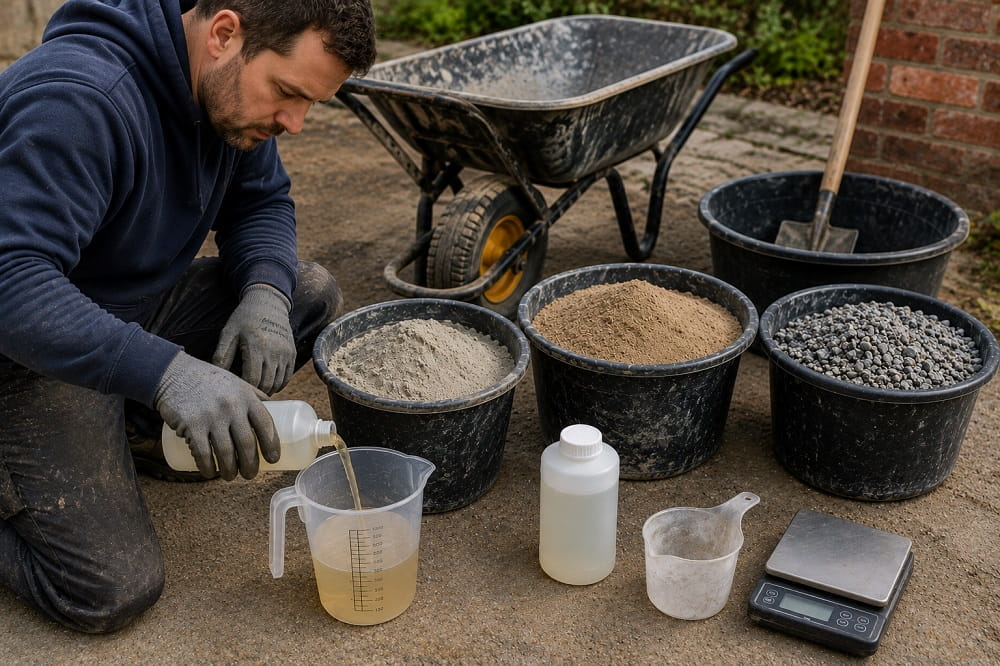
Check compatibility, dosage, temperature range, mixing method, curing conditions and safety guidance. Do not dose by eye unless the product instructions clearly allow a measured cap, sachet or stated method.
Step 6: Mix consistently
Add the admixture according to the product instructions. Keep water content controlled. Mix long enough for even distribution, especially with colourants, fibres and concentrated liquid additives.
Step 7: Apply in suitable weather
Avoid unsuitable cold, heat, rain, frost or drying wind unless the product is designed for those conditions. Cold-weather products do not make poor weather irrelevant.
Step 8: Cure and protect
Concrete and mortar performance depends on curing. Protect fresh work from rapid drying, frost, rain, impact and early loading according to the material and product guidance.
Step 9: Review the result
Check for cracking, dusting, weak edges, poor adhesion, colour variation, water penetration or surface defects. If the same failure repeats, reassess the substrate, water path, mix design and application conditions before trying another additive.
Common Mistakes
Adding extra water to improve workability
Extra water can make the mix easier to move, but it may reduce strength, increase shrinkage and weaken the finish. Use correct mix design and a suitable plasticiser where workability is the real problem.
Using mortar plasticiser as a universal additive
Mortar plasticisers are for mortar-type applications where the product guidance supports the use. They are not automatically suitable for structural concrete or specialist repair mixes.
Using a waterproofing admixture to ignore drainage
Waterproofing additives may reduce water penetration, but they do not fix water running towards a wall, failed damp detailing, standing water or cracked structural surfaces.
Assuming frostproofers make all cold-weather work safe
Cold-weather admixtures can support suitable work, but they do not remove the need for temperature checks, protection and curing. Do not work in conditions outside the product guidance.
Overdosing admixtures
More is not better. Overdosing can change set time, strength, colour, air content, surface finish or durability. Follow the label and measure accurately.
Mixing incompatible products
Combining admixtures without clear compatibility guidance can create unpredictable results. Use one system or follow documented manufacturer guidance.
Ignoring wet cement safety
Wet cement, mortar and concrete can damage skin. Gloves, eye protection, long sleeves and prompt washing are basic controls, not optional extras.
Maintenance and Prevention
Good outdoor concrete and mortar performance starts before the mix is made. Store cement and additives correctly, use clean water, keep aggregates clean, measure consistently and avoid working in unsuitable weather.
Protect fresh work while it cures. Rain can wash cement from the surface. Frost can damage immature work. Hot sun and wind can dry surfaces too quickly. Early traffic can mark, crack or weaken the finish.
For visible repairs and pointing, keep batch consistency. Changing water content, mixing time, colourant dosage or sand source can make colour and texture vary across the job.
Inspect outdoor repairs after heavy rain, frost and seasonal change. If cracks, water ingress or surface dusting appears, diagnose the cause before adding another product or coating over the issue.
Your Next Step: DIY or Professional
DIY use of admixtures is usually suitable for small, non-structural jobs where the mix type is clear, the product label supports the task, the surface is sound and the weather is suitable. Examples include small pointing jobs, garden wall mortar, minor render work, non-structural patching and some surface repairs.
Professional help is the safer route where the job is load-bearing, below ground, retaining soil, supporting vehicles, connected to damp proofing, exposed to continuous water, or linked to repeated failure. It is also sensible when reinforcement, movement joints, drainage design or structural concrete specification is needed.
For product selection, start with Admixtures and Cement Colourant. Choose by function: workability, water resistance, cold-weather support, colour consistency or repair compatibility. Product choice should follow the mix requirement, not replace it.
Summary
Admixtures can improve outdoor concrete and mortar work when they are chosen for a clear reason. Plasticisers help workability. Waterproofers can reduce water penetration where the system supports them. Frostproofers and accelerators can help in suitable cold-weather work. Fibres and colourants solve specific performance or appearance problems.
The main rule is simple: fix the basics first. Use the correct mix, prepare the substrate, control water, work in suitable weather and cure properly. An admixture can improve a good system, but it cannot rescue bad design, poor drainage, structural movement or unsafe working conditions.
Frequently Asked Questions
What is an admixture in concrete or mortar?
An admixture is a material added to a concrete, mortar, render or sand/cement mix to modify how it behaves. It may improve workability, water resistance, setting behaviour, frost performance, crack control or colour consistency.
When should I use a mortar plasticiser?
Use a mortar plasticiser where the mortar needs better workability and the product is suitable for the mix. It is commonly relevant for bricklaying, pointing, rendering and similar Portland cement-based mortar work.
Can admixtures stop concrete cracking?
They can help reduce some cracking risks where the right product is used correctly, but they cannot prevent cracking caused by poor base preparation, wrong mix design, movement, drying too quickly or lack of reinforcement where reinforcement is needed.
Is adding more water the same as using a plasticiser?
No. Extra water may make the mix easier to work, but it can weaken the mix and increase shrinkage. Plasticisers are designed to improve workability without simply over-watering the mix.
Can I use a waterproofing admixture instead of fixing drainage?
No. Waterproofing admixtures may improve water resistance in suitable mixes, but they do not fix water running towards a structure, standing water, failed falls or drainage defects.
Can I use admixtures in cold weather?
Only where the product label supports the temperature and application. Frostproofers and accelerators can help in some conditions, but cold-weather work still needs protection and correct curing.
Are admixtures safe to handle?
They need careful handling, and wet cement-based mixes can cause dermatitis and burns. Wear suitable gloves, eye protection and protective clothing, and follow the product safety guidance.
When should I get professional advice?
Get professional advice for load-bearing concrete, retaining walls, vehicle-bearing slabs, foundations, below-ground waterproofing, structural repairs, reinforcement issues or repeated failures.

Path & Patio is a UK supplier of paving and landscaping products, sharing practical guidance, product expertise and installation advice for patios, paths and driveway projects.