
Time-Saving Gadgets for Path, Patio and Driveway Maintenance
The right small tools and gadgets can save more time than most people expect. On path, patio and driveway work, time is often lost through poor marking, repeated measuring, awkward cuts, messy preparation, avoidable cleanup and unfinished edges. A simple marker, guide rail, scraper, wipe or measuring aid can reduce rework before it starts.
Time-saving tools do not replace good planning. They make planning easier to carry out accurately. A marker only helps if the measurement is right. A cutting guide only helps if the cut is safe and necessary. A cleaning wipe only helps if the surface has been prepared properly for the next job. The best results come from matching the tool to the stage of work.
For wider contractor site tools, hand tools, cleaning products, marking tools and preparation equipment, use Contractors & Professional Tools. Choose tools based on the task: marking out, cutting, cleaning, fixing, scraping, finishing or protecting equipment.
Quick Answer: Which Small Tools Save the Most Time?
- Safest default: measure, mark, and check the job before cutting, drilling, fixing or applying products.
- Use marking tools when fixing points, cut lines or layout marks that need to stay visible.
- Use guide rails or straight edges where accurate, repeatable straight cuts are needed.
- Use cleaning and preparation wipes before bonding, sealing, repair or coating work.
- Use scrapers and joint tools to remove debris before applying treatments or jointing products.
- Pause before cutting paving, blocks or kerbs unless dust, PPE, support and cutting method are properly controlled.
What This Guide Does Not Solve
This guide does not fix poor drainage, failed sub-bases, loose slabs, unstable edging, rotten decking, unsafe driveways or structural problems. Small tools can improve workflow, but they cannot make a failed surface sound.
It also does not replace tool instructions, product labels or safety guidance. Cutting, drilling, scraping, chemical cleaning and preparation work all carry risks when done carelessly. A time-saving tool should not encourage shortcuts that create damage or injury.
Finally, this guide does not claim that every gadget is worth buying. The best tools are the ones that solve repeated problems in your actual workflow. A contractor working across patios every week will benefit from different tools than a homeowner touching up one small path each year.
When to Pause or Escalate
Stop before cutting, grinding or chasing paving, blocks, kerbs or concrete if dust control, PPE, tool stability and safe working space are not in place. Cutting hard landscaping materials can create serious dust exposure, and avoidable cuts should be planned out where possible.
Pause before using any gadget to “force” a bad layout. If repeated cuts, narrow slivers, uneven edges or awkward measurements keep appearing, the layout may need adjusting rather than more tools.
Escalate to professional help if the job involves structural decking, vehicle-bearing paving, complex falls, drainage correction, extensive cutting, or surfaces close to thresholds, air bricks or buildings. In these cases, time-saving gadgets are useful only after the technical design is correct.
Why Small Tools Save Time on Outdoor Work
They reduce repeated measuring
Repeated measuring is one of the easiest ways to lose time. It also increases the risk of errors. Marking pens, chalk lines, squares and guide rails help preserve the measurement so the next step can be carried out consistently.
They make preparation clearer
Outdoor maintenance often fails because preparation is rushed. Surfaces need to be swept, scraped, wiped, dried or marked before products are applied. Preparation tools make these steps quicker and more repeatable.
They reduce awkward cuts
Accurate marking and straight-edge guidance can reduce miscuts, uneven trims and wasted materials. This matters on decking, paving borders, edging strips, repair boards, sheet materials and decorative trims.
They improve finish quality
A cleaner finish often comes from small steps done well: sharp marks, straight cuts, clean surfaces, controlled adhesive application and tidy wipe-downs. Finishing tools do not only save time; they reduce the chance of having to redo the job.
Time-Saving Gadgets Compared
Marking and measuring tools
Marking and measuring tools are useful at the layout stage. They help mark fixing points, cut lines, board positions, edging lines and drilling points. This is especially useful when working on wood, brick, concrete, porcelain, metal or uneven surfaces where ordinary pencil marks are hard to see.
For marking pens, cutting guides and layout tools, use Marking and Measuring Tools. This is the strongest category route for the guide because accurate marking directly prevents wasted materials and awkward cuts.
Deep-hole markers
Deep-hole markers are useful when fixing brackets, posts, rails, clips, wall-mounted accessories, timber frames or fixtures where a normal pencil cannot reach. They transfer the mark through the hole, which reduces guesswork.
For a Path & Patio product example, the MarXman Deep Hole Marker is designed to mark holes over 45mm deep with a burst of fluorescent pigment. It is useful where accurate drill positions matter and the surface is awkward to mark.
Cutting guide rails and straight edges
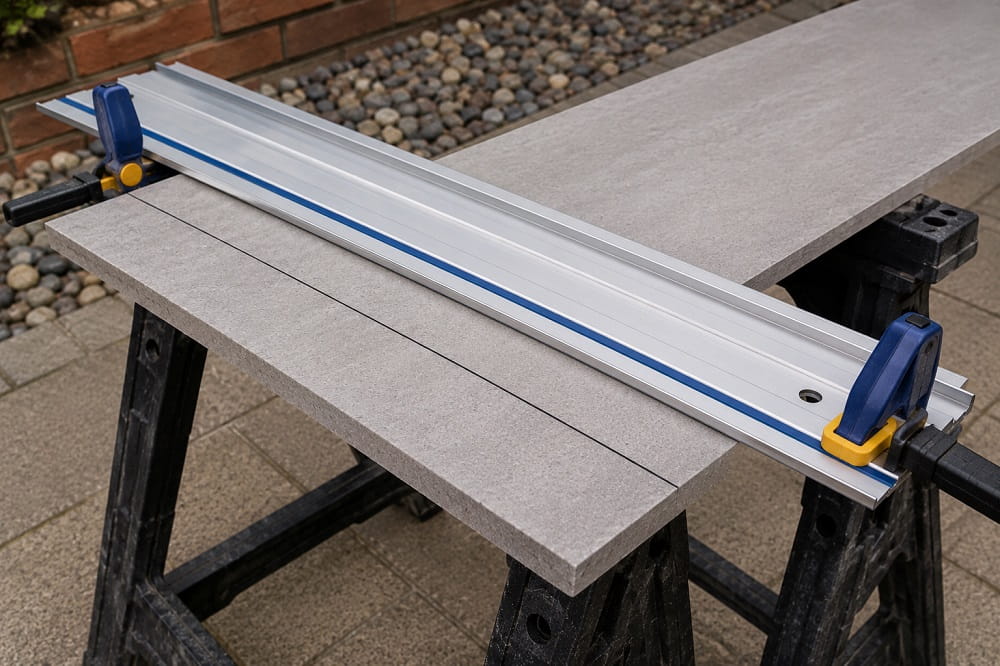
Cutting guides and straight edges are useful when the cut needs to stay straight across sheet materials, timber sections, edging pieces or trim. They are not a substitute for safe cutting, but they can reduce slips, wandering cuts and wasted material.
For a Path & Patio product example, the Faithfull Cutting Guide Rail Clamping Straight Edge 1250mm is designed to clamp securely and guide straight cuts across sheet materials. It is best suited to controlled cutting and alignment work, not freehand shortcuts.
Cleaning and surface-preparation products
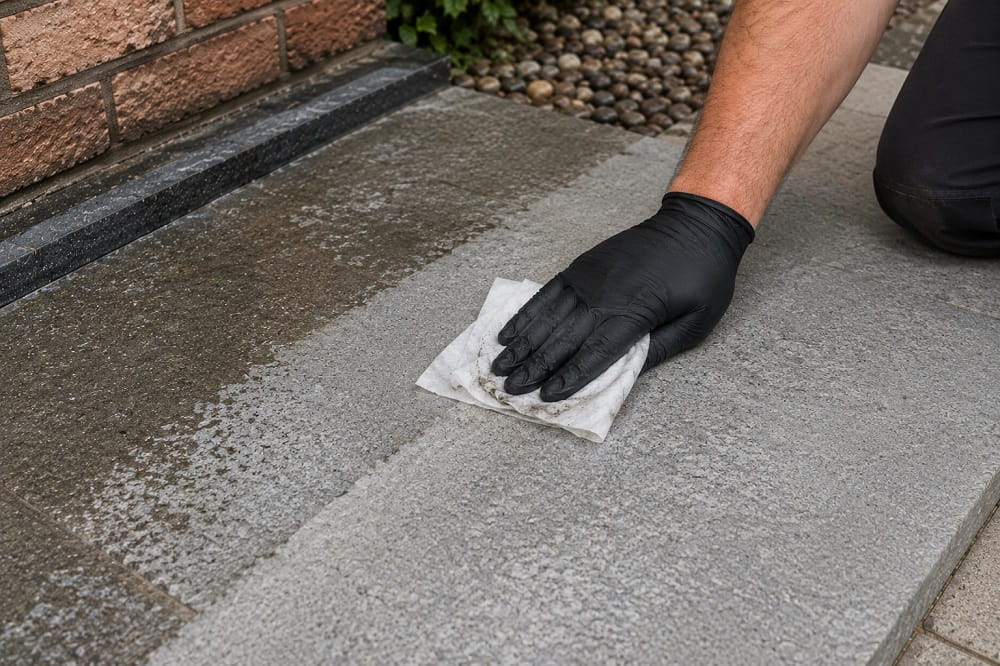
Cleaning and preparation tools save time because they reduce failed applications. Adhesives, sealers, coatings, repair materials and tapes often need clean surfaces. Wipes and surface-preparation products are useful for removing grime, grease, residue and contamination before the next stage.
For cleaning wipes and preparation products, use Cleaning and Surface Preparation. This category is relevant when the maintenance task depends on clean surfaces before coating, repair or bonding.
Scrapers and joint-cleaning tools
Scrapers, joint tools and narrow cleaning tools save time when dirt, moss, loose jointing or debris has collected in gaps. They are useful before re-jointing, sealing, weed treatment or detailed cleaning.
The main caution is surface damage. Aggressive scraping can widen joints, mark paving or disturb weak jointing. The right scraper should remove debris without turning a maintenance task into a repair job.
Gloves and handling accessories
Gloves, tool pouches, buckets and handling accessories are not glamorous, but they save time by keeping work moving. Gloves reduce hand contamination and improve control when handling sharp, dirty or abrasive materials. Buckets and pouches reduce repeated trips back to the shed or van.
These tools are best treated as workflow support. They do not replace skill, but they reduce small delays that build up across a job.
Comparison Table: Time-Saving Tools and What They Help With
| Tool type | Best for | Time saved by | Best Path & Patio route | Main caution |
|---|---|---|---|---|
| Marking tools | Fixing points, drill marks, cut lines and layout marks | Reducing guesswork and repeated measuring | Marking and Measuring Tools | Marks only help if the original measurement is correct |
| Deep-hole marker | Brackets, rails, awkward fixing points and deep holes | Transferring marks where pencils cannot reach | MarXman Deep Hole Marker | Check mark visibility and surface suitability before drilling |
| Cutting guide rail | Straight cuts on sheet materials, boards and trims | Reducing miscuts and improving repeatability | Faithfull Cutting Guide Rail | Cutting still needs safe support, PPE and dust control |
| Cleaning wipes and prep products | Removing residue before bonding, sealing or repair | Reducing failed adhesion or messy finishes | Cleaning and Surface Preparation | Check surface and product compatibility |
| Scrapers and joint tools | Clearing joints, edges and debris before treatment | Reducing preparation time in gaps and corners | Contractors & Professional Tools | Can damage weak joints if used aggressively |
| Gloves, buckets and tool holders | Handling, carrying, sorting and keeping small tools nearby | Reducing interruptions and cleanup delays | Contractors & Professional Tools | Choose the right protection for the material or chemical being handled |
Decision Framework: Which Tool Should You Use?
1. Are you planning, preparing, cutting or finishing?
Start by identifying the stage of work. Marking tools belong to planning and layout. Scrapers and wipes belong to preparation. Cutting guides belong to controlled cutting. Gloves, buckets and tool holders support handling and workflow.
2. Is the task repeated?
A small tool is most valuable when the same task is repeated: marking several drill holes, cutting several trims, cleaning multiple edges or scraping a long joint line. If the job is repeated, a purpose-made tool often saves more time than improvising.
3. Is accuracy more important than speed?
For outdoor maintenance, accuracy often saves more time than speed. A fast wrong cut, poor mark or dirty surface usually creates rework. Use tools that slow the first step slightly if they prevent bigger delays later.
4. Could the tool damage the surface?
Scrapers, cutting tools and clamps can damage soft stone, coated timber, porcelain, paint, sealers or weak joints. Patch test where needed and use controlled pressure.
5. Does the task create dust, noise or sharp edges?
Pause before cutting or grinding paving, blocks, kerbs or concrete if dust control and safe working methods are not in place. HSE guidance warns that cutting paving materials can produce very high levels of silica-containing dust. Avoid unnecessary cutting where layout changes can solve the issue.
Step-by-Step: Build a Time-Saving Maintenance Kit
Step 1: List your common jobs
Write down the maintenance tasks you do most often: cleaning, scraping joints, marking cuts, drilling fixings, applying treatments, moving tools or preparing surfaces.
Step 2: Identify where time is lost
Look for repeated problems. Do you measure the same line several times? Do cut lines disappear? Do surfaces need cleaning again before products bond? Do tools keep going missing mid-job?
Step 3: Choose tools by bottleneck
Buy for the bottleneck, not for novelty. If marking is the issue, choose a marker. If straight cuts are the issue, choose a guide. If preparation is the issue, choose cleaning and scraping tools.
Step 4: Keep a small task kit together
For common outdoor maintenance, keep a compact kit with a marker, tape, gloves, scraper, wipes, pencil, small brush and waste bag. This reduces setup time and makes short jobs easier to start.
Step 5: Review what actually saves time
After a few jobs, keep the tools you reach for often and remove the ones that do not help. A good kit should be practical, not cluttered.
Common Mistakes
Buying gadgets before identifying the problem
A tool is only useful if it solves a real workflow issue. Start with the repeated problem, then choose the tool.
Measuring once and cutting once
Fast measuring is not the same as accurate measuring. Check twice, mark clearly and cut only when the layout is confirmed.
Skipping surface preparation
Many failed adhesives, coatings, fillers and sealers come from dirty or contaminated surfaces. Cleaning and preparation tools can prevent rework.
Using aggressive tools on delicate surfaces
Scrapers, clamps and cutting guides can mark surfaces if used carelessly. Protect finished materials and test where needed.
Assuming a cutting guide controls dust
A guide may improve straightness, but it does not control dust. Cutting hard landscaping materials needs proper dust control, PPE and planning.
Letting small tools scatter
Time-saving tools stop saving time when they cannot be found. Keep them in a small kit or pouch.
Maintenance and Prevention
Time-saving tools need maintenance too. Clean markers, close caps, wipe guide rails, store wipes sealed, keep scrapers dry and check clamps or moving parts before use. A neglected tool can slow the next job down.
Store layout and marking tools together. Keep cutting and measuring tools away from wet cleaning products. Replace worn scraper blades, dried-out markers and torn gloves before a job starts.
For contractor site tools, cleaning products, marking tools and maintenance sprays, use the Contractors & Professional Tools category as the broader route. It is better to build a small practical kit than to buy isolated tools that do not work together.
Your Next Step: DIY or Professional
DIY users usually benefit most from a simple kit: marker, tape, scraper, gloves, cleaning wipes and a straight edge. This covers most small path, patio and driveway maintenance tasks without overcomplicating the job.
Trade users and frequent DIY users may benefit from more specialised tools, including deep-hole markers, cutting guide rails, clamps, preparation wipes, maintenance sprays and tool storage. These reduce setup time and improve repeatability across jobs.
Professional help is the safer route where the project involves major cutting, structural repairs, drainage correction, vehicle-bearing surfaces, complex levels or materials that create significant dust when cut.
Summary
Time-saving gadgets for path, patio and driveway maintenance are most useful when they reduce rework. Marking tools improve layout accuracy. Deep-hole markers help with awkward fixing points. Cutting guide rails support straighter cuts. Cleaning and preparation products improve bonding, sealing and repair results. Scrapers, gloves and small handling tools keep maintenance tasks moving.
The best small tools are not gimmicks. They solve repeated problems: unclear marks, missed measurements, messy preparation, awkward cuts and poor finishes. Choose tools by job stage, check safety before cutting, and keep a compact maintenance kit ready for regular outdoor work.
Frequently Asked Questions
What small tools save the most time on patio maintenance?
Marking tools, scrapers, gloves, cleaning wipes, brushes and straight edges are usually the most useful. They help with preparation, layout, cleaning and finishing.
Are marking tools worth using for outdoor projects?
Yes, where fixing points, drill holes or cut lines need to be accurate and visible. They reduce guesswork, but they do not replace measuring properly.
When should I use a deep-hole marker?
Use a deep-hole marker where a normal pencil or marker cannot reach through a bracket, fixing hole or deep recess.
Do cutting guide rails reduce waste?
They can reduce miscuts on suitable materials by keeping cuts straighter and more controlled. They do not remove the need for safe cutting methods or dust control.
Why are cleaning wipes useful for maintenance work?
Cleaning wipes and preparation products remove dirt, grease and residue before bonding, sealing, coating or repair. Cleaner surfaces reduce the risk of poor adhesion or messy finishes.
Should I buy individual tools or a full kit?
Start with individual tools that solve repeated problems. A useful kit grows from real tasks, not from buying everything at once.
Can small tools fix poor patio installation?
No. They can improve maintenance and preparation, but they cannot fix unstable slabs, failed drainage, poor falls or a weak sub-base.
When should I get professional help instead of using gadgets?
Get professional help for structural repairs, drainage correction, major cutting, vehicle-bearing surfaces, complex levels or work that creates significant silica dust.

Path & Patio is a UK supplier of paving and landscaping products, sharing practical guidance, product expertise and installation advice for patios, paths and driveway projects.