
Timber vs Composite Fence Panels: Lifespan, Maintenance and Cost Compared
Choosing timber or composite fence panels is not only a design decision. It is also a maintenance, lifespan and fixing decision. Timber usually wins on natural appearance, familiarity and lower upfront cost. Composite often appeals because it is lower maintenance, more colour-stable and less dependent on regular treatment. In both cases, fixings, posts and supports play a major role in how long the fence remains stable.
A fence is a system. Panels, posts, gravel boards, rails, screws, brackets, post supports and ground conditions all matter. A good composite panel can still fail if the posts move. A good timber panel can last longer when it is treated properly, lifted away from standing moisture and fixed with suitable corrosion-resistant hardware.
For screws, fasteners, post supports and installation equipment, use Fixings and Fasteners. Choose fixings based on panel type, post material, exposure, load and the manufacturer’s installation guidance.
Quick Answer: Timber or Composite Fence Panels?
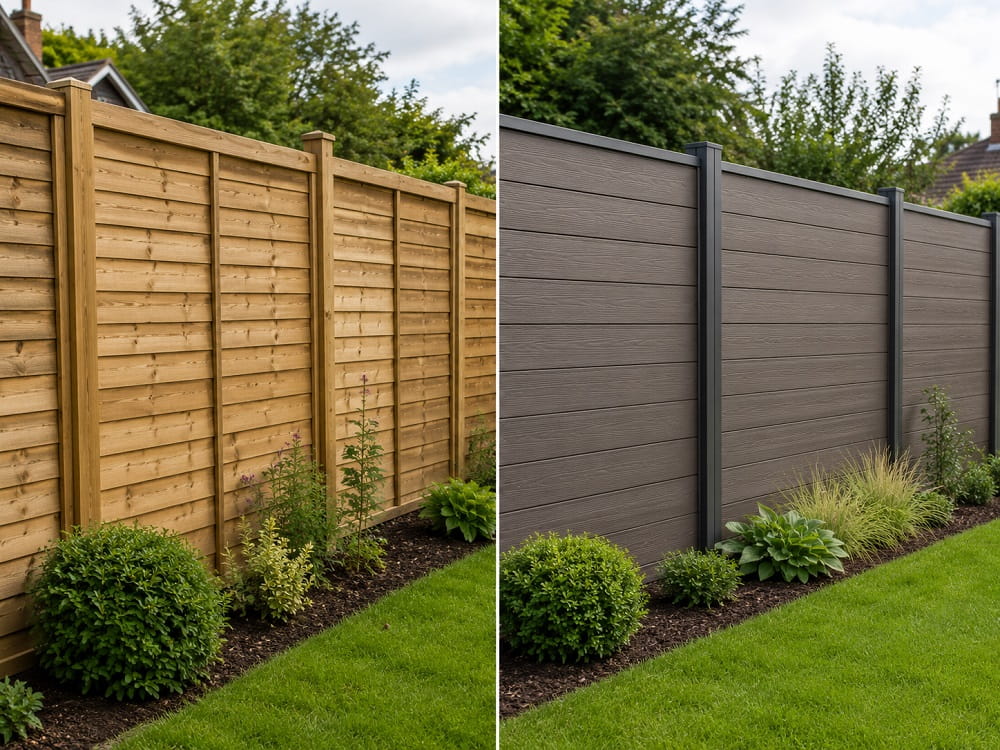
- Safest default: choose the panel type only after checking posts, supports, fixings, wind exposure and maintenance expectations.
- Choose timber if you want a natural look, lower upfront cost and are prepared for periodic cleaning, treatment and inspection.
- Choose composite if you want lower routine maintenance and are comfortable with a higher initial purchase cost.
- Timber lifespan depends heavily on treatment quality, installation, ground contact, exposure and maintenance.
- Composite lifespan depends on product quality, UV stability, fixing system, installation and manufacturer guidance.
- Stop before buying if the existing posts lean, supports are corroded, fixings are loose, or fence height/location may trigger planning issues.
What This Guide Does Not Solve
This guide does not resolve boundary disputes, neighbour agreements, fence ownership or planning enforcement issues. If the fence line, height or responsibility is unclear, resolve that before buying panels.
It also does not guarantee that timber or composite will last a fixed number of years in every garden. Lifespan depends on exposure, quality, installation, post stability, fixings, drainage, maintenance and how the fence is used.
This guide is not a structural design guide for high, exposed, security, commercial or retaining fencing. If the fence is tall, exposed to strong wind, next to a highway, or connected to retaining structures, professional advice may be needed before material choice.
When to Pause or Escalate
Stop before choosing new panels if the existing posts are leaning, rotten, cracked, loose at the base, or if metal supports are corroded or moving. Replacing panels without fixing the support system can lead to repeat failure, even if the new panels are more expensive.
Pause before installing taller fencing or changing the height near a road, pavement or boundary with public access. The Planning Portal guidance for fences, gates and garden walls explains when planning permission may be needed, including common height restrictions.
Escalate to a professional if the fence is exposed to strong wind, panels are heavy, the garden is sloped, the boundary is uncertain, posts need replacing, or the fence has failed repeatedly. In those cases, panel material is only part of the decision.
Timber and Composite Fence Panels Compared
Timber fence panels
Timber fence panels are familiar, widely available and usually easier to match with traditional gardens. They can be repaired, repainted, stained or replaced panel by panel. Timber also offers a natural appearance that composite products may imitate but not fully replicate.
The trade-off is maintenance. Timber is affected by moisture, UV exposure, biological decay, splitting, warping and surface weathering. Treated timber can last well when the specification, installation and maintenance are right, but it still needs inspection and occasional care.
Composite fence panels
Composite fence panels are usually made from a mixture of recycled plastic and wood fibres or similar composite materials. They are commonly marketed as low-maintenance and long-lasting because they do not need the same painting, staining or preservative-treatment cycle as timber.
The trade-off is cost and system compatibility. Composite panels usually cost more upfront and may require specific posts, rails, clips or fixings. They can also have colour, expansion, thermal movement and installation requirements that should be followed carefully.
Why fixings matter in both cases
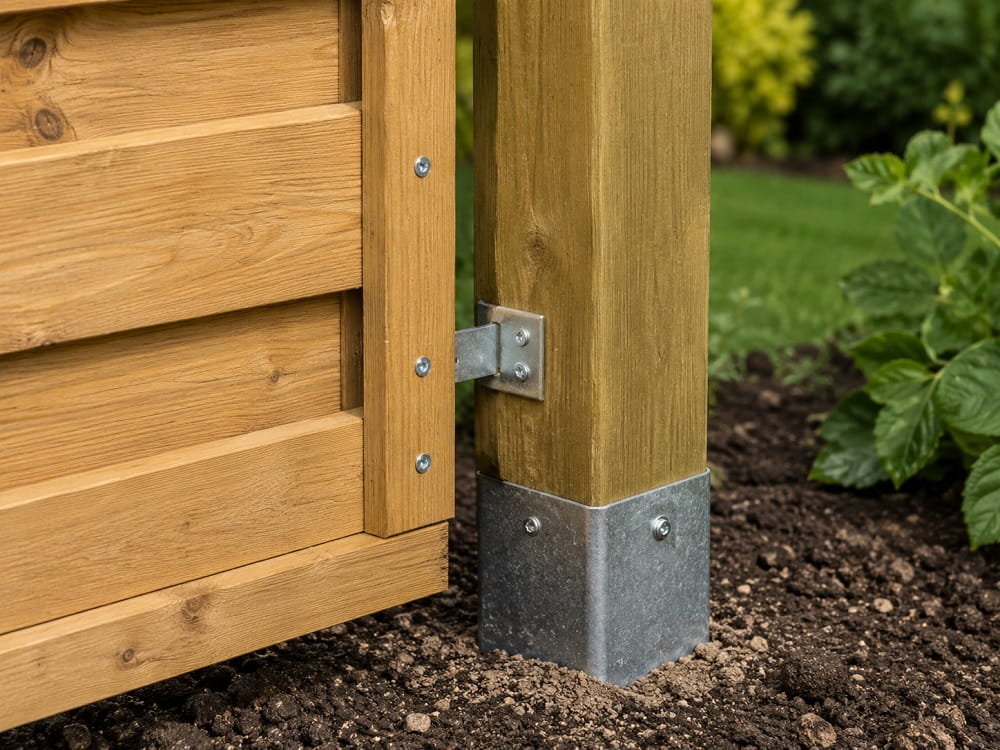
Fixings and supports are often overlooked, but they can decide whether a fence lasts. Screws, brackets, post shoes, repair supports and fasteners must resist moisture, movement and wind load. Weak, rusting or undersized fixings can shorten the life of both timber and composite fencing.
Lifespan: What to Expect
Timber lifespan
Timber lifespan varies widely. Pressure-treated timber products are commonly specified by desired service life, and the Wood Protection Association explains that pressure-treated timber fence posts are typically supplied to 15-year or 30-year desired service life specifications, depending on treatment and intended use. That is useful context, but it is not a guarantee for every panel, post or installation.
The Wood Protection Association guidance on pressure-treated timber posts is useful when considering timber specification, treatment level and expected performance.
Composite lifespan
Composite fencing is often promoted with longer expected lifespans than standard softwood timber fencing. Many suppliers discuss typical ranges around 20 to 30 years or more, but this depends on product quality, UV stability, installation, fixings, exposure and whether the manufacturer’s care guidance is followed.
For comparison content, avoid treating composite as maintenance-free. It is usually lower maintenance than timber, but it still needs cleaning, inspection and correct installation.
The real weak point: posts and supports
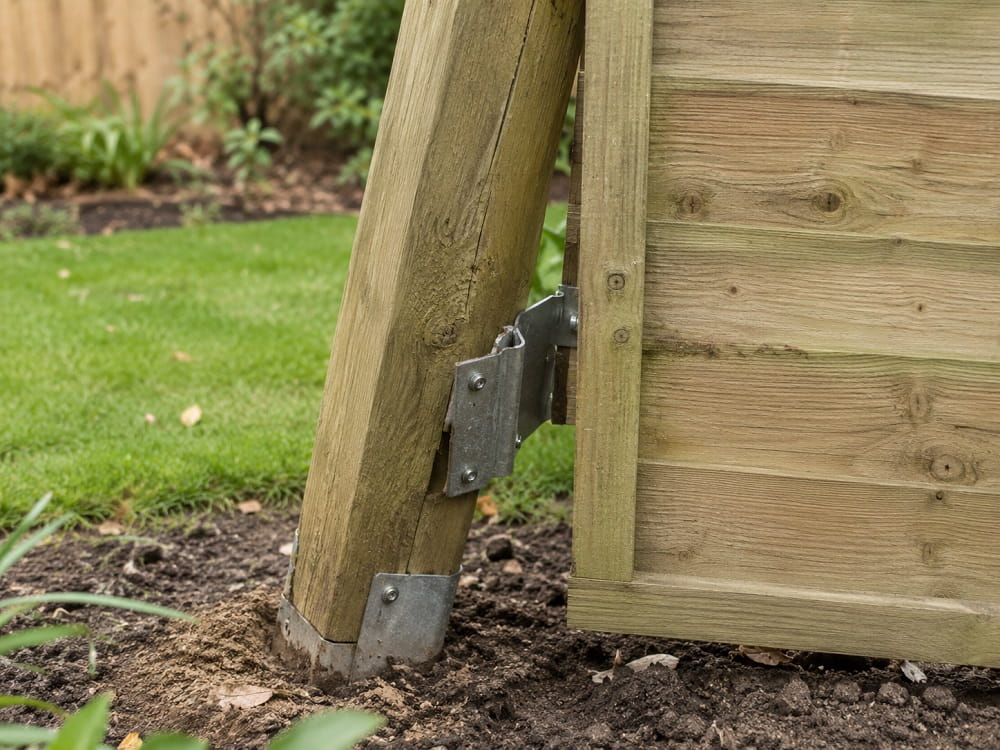
Panels rarely work in isolation. The fence usually fails when posts move, supports corrode, fixings loosen, or timber at ground level deteriorates. A durable panel on a weak support system is still a weak fence.
Maintenance Compared
Timber maintenance
Timber fencing usually needs periodic inspection, cleaning and treatment. Depending on product and finish, this may include staining, painting, oiling or preservative treatment. The aim is to reduce water absorption, slow weathering and protect exposed surfaces.
Timber should also be kept clear of soil, compost, dense planting and trapped moisture where practical. Ground contact and damp areas increase the risk of decay.
Composite maintenance
Composite fencing usually needs less routine treatment than timber. It does not normally need annual staining or painting, unless the manufacturer allows it for a specific finish. Maintenance is usually focused on cleaning dirt, algae, dust and debris.
However, composite is not “fit and forget”. Panels should still be inspected for movement, fixing issues, impact damage and surface build-up. Manufacturer cleaning advice should be followed, especially for textured or capped surfaces.
Fixings maintenance
In both systems, inspect fixings. Look for rust, staining around screw heads, loose brackets, cracked rails, worn post shoes and movement at the base. In exposed gardens, fixing failure can happen before the panel itself has reached the end of its life.
Cost Compared
Upfront cost
Timber panels usually have a lower upfront cost than composite panels. This makes timber attractive for budget-led projects, quick replacements and traditional gardens where the look matters.
Composite panels often cost more at the point of purchase. That cost may be easier to justify where the buyer wants less maintenance, longer replacement cycles or a more consistent appearance over time.
Maintenance cost
Timber can cost more over time if you include treatments, brushes, cleaners, replacement panels and labour. Composite can reduce those routine treatment costs, but it may involve more expensive replacement components if part of a proprietary system fails.
Whole-life value
The best-value option depends on how long you plan to keep the fence, how exposed the garden is, whether you do the work yourself, and how much maintenance you are willing to do. A cheaper timber panel can be better value if well maintained. A more expensive composite system can be better value if it avoids repeated treatment and replacement.
Comparison Table: Timber vs Composite Fence Panels
| Factor | Timber fence panels | Composite fence panels |
|---|---|---|
| Upfront cost | Usually lower | Usually higher |
| Maintenance | Needs periodic cleaning, treatment or refinishing | Usually lower maintenance, but still needs cleaning and inspection |
| Appearance | Natural, traditional, repairable and paintable | Consistent, modern and colour-stable depending on product |
| Lifespan | Varies by treatment, installation, exposure and care | Often promoted as longer lasting, but product and installation dependent |
| Repairability | Often easy to repair or replace in sections | May depend on proprietary profiles, posts or clips |
| Fixing risk | Requires corrosion-resistant fixings and protection from moisture | Requires compatible fixings and allowance for movement where specified |
| Best fit | Traditional look, lower upfront budget, users happy to maintain | Lower-maintenance preference, modern look, longer replacement horizon |
Decision Framework: Timber, Composite or Professional Installation?
1. What is your main priority?
If the priority is low upfront cost and natural appearance, timber is often the better starting point. If the priority is low maintenance and longer replacement intervals, composite may be worth comparing.
2. How much maintenance will you realistically do?
Timber performs best when maintained. If you are unlikely to clean, treat or inspect the fence, composite may be the better match. If you enjoy maintaining timber and want control over colour and finish, timber can be a strong choice.
3. Are the posts and supports sound?
Check the support system before choosing panels. Posts, brackets, screws and supports must be suitable for the panel weight, wind exposure and site conditions. If the supports are weak, changing panel material will not solve the issue.
4. Are compatible fixings available?
Timber and composite systems may need different fixings. Use corrosion-resistant fixings for outdoor use, and follow manufacturer guidance where panels require clips, rails or expansion allowance. The wrong fixing can shorten service life.
5. Is the fence high, exposed or close to a highway?
Pause before buying if the fence is tall, exposed to wind, close to a road, or may exceed common planning height limits. Material choice should not override planning, structural stability or public-facing safety.
Common Mistakes
Comparing panel price only
Timber often looks cheaper at checkout, but whole-life cost includes treatment, replacement, labour and maintenance time. Composite often costs more upfront, but may reduce routine treatment demands.
Ignoring posts and supports
A fence is only as strong as its support system. New panels on leaning or rotten posts are a short-term fix.
Using indoor or unsuitable fixings outdoors
Outdoor fixings need to resist moisture and corrosion. Rusting screws, weak brackets or mismatched fasteners can shorten fence life and stain materials.
Assuming composite is maintenance-free
Composite is usually lower maintenance than timber, not maintenance-free. It still needs cleaning, inspection and correct installation.
Assuming timber is poor value
Good treated timber, installed and maintained properly, can be a practical, attractive and cost-effective choice.
Mixing systems without checking compatibility
Composite panels may rely on specific posts, rails, clips or expansion allowances. Timber may need particular screw types, preservative treatment or post supports. Do not assume parts are interchangeable.
Maintenance and Prevention
For timber fences, inspect annually for loose panels, rot, splitting, failing treatment, leaning posts and rusting fixings. Clean off algae and debris, keep soil and compost away from the lower sections, and re-treat as required by the product or finish.
For composite fences, clean periodically with a suitable method and inspect fixings, rails, posts and joints. Remove debris where it collects and follow the manufacturer’s cleaning advice.
For both types, check after storms and high winds. Many fence failures start with one loose fixing, one moving post or one unsupported panel. Repairing small issues early can avoid full-panel replacement later.
Your Next Step: Timber, Composite or Professional
Choose timber if you want a natural look, lower upfront cost and a material that can be painted, stained, repaired and replaced easily. Choose composite if you want a lower-maintenance finish and are willing to pay more upfront for a longer-term system.
For fixing, support and installation products across fencing projects, use Fencing Equipment. Match screws, brackets, supports and accessories to the panel type, post material and exposure level.
Choose professional installation where the fence is tall, exposed, sloped, near a highway, close to retaining structures, or where heavy composite systems, new posts or major support upgrades are required.
Summary
Timber and composite fence panels both have valid use cases. Timber is usually cheaper upfront, natural-looking and easy to repair, but it needs more maintenance. Composite is usually more expensive upfront but often has lower maintenance and is longer lasting, depending on product quality and installation.
Fixings and supports matter in both systems. A durable panel can still fail if the posts move, screws corrode, brackets loosen or supports are wrong for the site. The best fence choice is not just timber versus composite. It is the full system: panels, posts, fixings, supports, exposure and maintenance.
Frequently Asked Questions
Do timber fence panels last as long as composite panels?
Usually not in standard low-maintenance conditions, but timber lifespan varies widely by treatment, installation, exposure and care. High-quality treated timber can perform well when properly installed and maintained.
Are composite fence panels maintenance-free?
No. Composite panels are usually lower maintenance than timber, but they still need cleaning, inspection and correct installation.
Are timber fence panels cheaper than composite?
Timber is usually cheaper upfront. Composite usually costs more initially but may reduce ongoing treatment and replacement costs over time.
What matters most for fence lifespan?
Panel material matters, but posts, supports, fixings, ground conditions, exposure and maintenance often decide how long the fence stays stable.
Can I use the same fixings for timber and composite panels?
Not always. Composite systems may need specific fixings, clips or rails. Timber panels also need suitable outdoor fixings that resist corrosion.
Which is better in windy gardens?
It depends on the whole fence system. Panel weight, post depth, support strength, wind gaps and fixing quality all matter. Professional advice is sensible for exposed sites.
Can composite panels go on existing timber posts?
Sometimes, but only if the posts are sound, correctly spaced and compatible with the panel system. Do not fit heavier or different panels onto weak posts.
When should I replace posts instead of panels?
Replace or repair posts if they are leaning, rotten, loose at the base, cracked or unable to hold fixings securely. New panels will not compensate for failed supports.

Path & Patio is a UK supplier of paving and landscaping products, sharing practical guidance, product expertise and installation advice for patios, paths and driveway projects.