
Slippery Green Decking: Causes, Prevention and the Best Products to Fix It
Green, slippery decking is not just a cosmetic issue. Algae, moss, mildew and wet surface deposits can create a real slip risk, especially in damp UK conditions, shaded gardens and areas where leaves or soil collect on the boards. If the deck is used as a main route to the garden, shed, bins or back door, the problem should be treated as a safety issue.
The safest approach is to inspect first, remove loose debris, clean the surface with the lowest effective method, and only then decide whether a cleaner, wood restorer, anti-slip measure or repair is needed. A product can help with surface build-up, but it cannot fix rotten boards, unstable structure, poor drainage or permanent shade.
For suitable weathered timber that needs cleaning and colour restoration, use Owatrol Net-Trol 1L. Choose it where the board condition and product guidance match the job, and do not treat it as an anti-slip coating or structural repair product.
Quick Answer: What Should You Do About Slippery Green Decking?
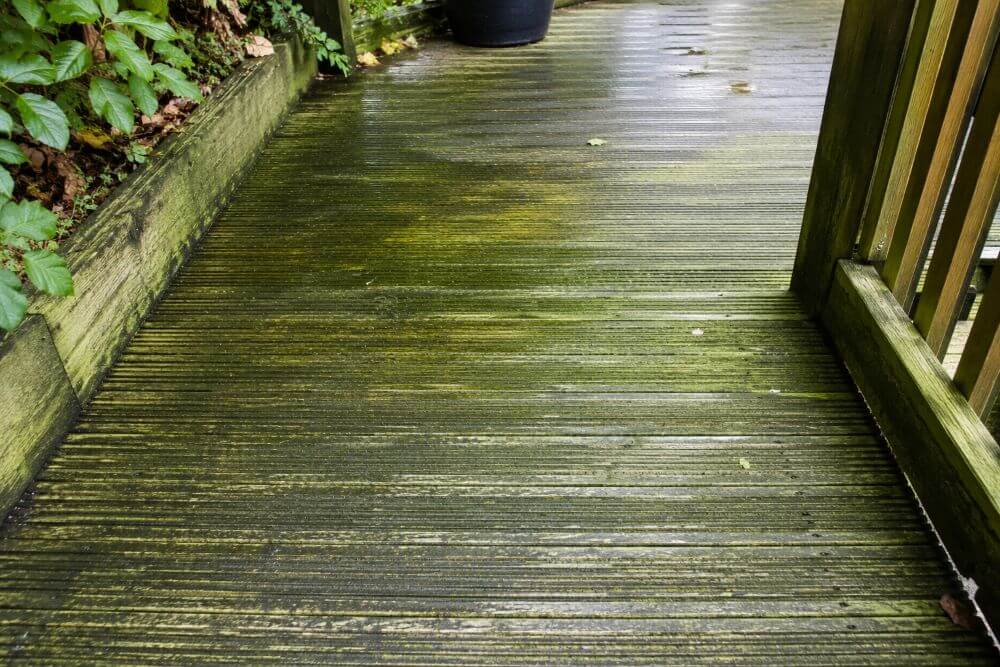
- Safest default: stop using the slippery area as a main route until loose debris and surface growth have been removed.
- Brush away leaves, moss and dirt before applying any cleaner or restorer.
- Use a suitable decking cleaner or wood restorer where brushing and water are not enough.
- Improve airflow, reduce trapped moisture and stop leaves from sitting on the boards to reduce repeat growth.
- Use anti-slip strips or coatings only where the boards are sound, clean and compatible.
- Stop and get help if boards are rotten, loose, springy, badly splintered or still slippery shortly after cleaning.
What This Guide Does Not Solve
This guide does not repair rotten timber, failed joists, loose fixings, unstable handrails or boards that move underfoot. Cleaning can remove surface growth, but it cannot make unsafe decking structurally safe.
It also does not guarantee that one product application will stop decking from ever turning green again. Algae, moss and mildew can return when the same conditions remain: damp surfaces, shade, trapped leaves, poor airflow, standing water or surface wear.
This guide focuses on timber decking. Some advice may apply to composite decking, but composite boards can have different cleaning limits and manufacturer instructions. Always check the board manufacturer’s guidance before using cleaners, pressure washing or coating systems.
When to Pause or Escalate
Stop before cleaning if boards are loose, rotten, soft, springy underfoot, badly splintered, or if fixings are raised. These are safety and repair issues. A cleaner may improve appearance, but it will not fix a weak or failing deck.
Pause before using any product if you do not know the surface material, if the deck is painted or coated with an unknown finish, or if nearby materials may be affected by runoff. Product labels and technical guidance should come before assumptions.
Escalate to professional help if the decking remains slippery shortly after cleaning, if the same area repeatedly turns green, if the deck is part of a raised structure, or if boards need sanding, stripping or replacement. Persistent slipperiness can point to shade, drainage, surface wear or underlying timber condition, not just surface growth.
Why Decking Turns Green and Slippery
Algae and moss thrive on damp surfaces
Green decking usually appears where moisture sits for too long. Shaded corners, north-facing areas, steps, boards under overhanging plants and sections beneath pots or furniture are common problem areas. The RHS guidance on algae and moss on hard surfaces confirms that this type of growth can make decking and other hard surfaces slippery.
Wet leaves and soil feed the problem
Wet leaves, soil and organic debris hold moisture against the boards. They also give algae, moss and mildew more material to grow in. If the deck is not swept regularly, a thin green film can build up and become slippery.
Poor airflow slows drying
Decking needs airflow above and below the boards. Pots, mats, furniture and dense planting can trap damp. The longer the boards stay wet, the more likely green growth becomes.
Surface deposits get worse in wet conditions
The TDCA guidance on slippery decking explains that surface deposits such as mildew, algae and fine mosses can develop in wet conditions. That makes winter, shaded areas and poorly ventilated sections more likely to become hazardous.
Product Options: What Fixes What?
Brush and water
For light green film or loose moss, brushing and clean water may be enough. Use a stiff outdoor broom or a suitable deck brush. Work with the board direction where possible and clear gaps, edges and steps.
Decking cleaner
A decking cleaner is useful where algae, mildew, dirt and grime remain after brushing. Use a product intended for decking, follow the label, and avoid mixing products. Work in sections so the cleaner does not dry unevenly.
Wood cleaner and colour restorer
A wood cleaner and colour restorer can help where timber is green, grey, weathered or stained. This is most relevant where the boards need more than a basic wash and the product is suitable for the timber.
Anti-slip strips or anti-slip coating
Anti-slip products can help where clean, sound decking still needs extra grip, especially on steps, shaded routes or high-use walkways. They should not be applied over algae, dirt, rotten boards or loose timber.
Repair or replacement
If the deck is soft, unstable, rotten or moving, repair comes before cleaning or coating. Surface products should not be used to disguise unsafe boards.
Decision Framework: Clean, Restore, Protect or Repair?
1. Is the deck safe to stand on?
Walk the area carefully. If boards flex excessively, feel soft, move underfoot or have raised fixings, stop. Do not scrub, pressure wash or coat unsafe boards.
2. Is the green layer loose or established?
If the growth is loose, start with brushing and water. If it is established, slimy, stained or embedded into weathered timber, use a suitable decking cleaner or wood restorer.
3. Is the timber also grey or weathered?
If the timber looks grey and weather-beaten after the green growth is removed, a cleaner and restorer may be more suitable than a basic cleaner. If the timber is simply dirty, do not use a stronger product than needed.
4. Does the surface need grip improvement?
If the deck remains a slip risk after cleaning and drying, consider anti-slip strips or coating on suitable boards. Do not rely on anti-slip products to compensate for rot, movement or poor structure.
5. Why did it turn green?
Pause before applying more products if the same area keeps turning green because of shade, blocked drainage, poor airflow or trapped leaves. Cleaning deals with the symptom. Prevention means changing the conditions that allow the growth to return.
Step-by-Step: How to Fix Slippery Green Decking
Step 1: Restrict access if it is slippery
If the surface is very slippery, avoid using it as a main route until it has been cleaned. Pay particular attention to steps, ramps and areas near entrances.
Step 2: Clear loose debris
Remove furniture, pots, mats and loose items. Sweep away leaves, soil, loose moss and grit. This prevents the first rinse from turning debris into sludge.
Step 3: Inspect the boards
Check for raised screws, loose boards, splinters, soft patches, rotten timber and movement. Repair safety issues before wet cleaning.
Step 4: Brush the surface
Use a stiff brush to loosen green growth. Work along the board direction and focus on grooves, steps, corners and shaded edges. Do not use a wire brush where it could damage the timber or finish.
Step 5: Apply the cleaner or restorer
If brushing is not enough, use a suitable decking cleaner or restorer. Wet the surface first, where the product instructions require it. Apply in manageable sections, agitate with a suitable brush and follow the dwell-time instructions.
Step 6: Rinse thoroughly
Rinse with clean water according to the product guidance. If a pressure washer is used, keep pressure controlled and avoid damaging the timber. Surfaces may be slippery while wet, so move carefully during application and rinse-off.
Step 7: Let the deck dry
Allow the boards to dry fully before replacing furniture, adding treatment or judging the final result. Drying time depends on weather, shade, airflow and timber condition.
Step 8: Review whether protection or grip is needed
Once dry, decide whether the deck needs oil, sealer, anti-slip strips, anti-slip coating or repair. Do not rush into a finish if the timber is still damp or if the cause of the green build-up has not been addressed.
Common Mistakes
Treating green decking as only cosmetic
Green decking can be slippery. If it is on a route used daily, treat it as a safety issue before it causes a fall.
Applying the product over loose growth
Cleaner or coating should not be applied over loose moss, leaves or thick dirt. Remove debris first so the product reaches the board surface.
Using pressure as the first answer
Pressure washing can remove surface growth, but excessive pressure can damage timber. Start with brushing and controlled cleaning, then use pressure only where appropriate.
Ignoring shade and airflow
If the deck stays damp, algae and moss are likely to return. Trim back planting where practical, move pots and keep furniture from trapping wet leaves.
Using anti-slip coating on unsafe boards
Anti-slip coating may improve grip on a sound surface, but it does not fix rot, soft boards, raised fixings or loose framing.
Using the wrong product on the wrong material
Always check compatibility. Some cleaners or restorers are not suitable for every surface, coating or nearby material.
Maintenance and Prevention
Preventing green decking is easier than fixing a slippery surface later. Sweep regularly, especially during autumn and winter. Remove leaves before they break down. Move pots and furniture occasionally so the surface can dry.
Improve airflow where possible. Trim plants that overhang the deck, clear debris from gaps and avoid leaving mats or planters in one place for long periods. If one area repeatedly turns green, record where water sits after rain and where shade lasts longest.
A practical routine is:
- Weekly in wet periods: sweep leaves, dirt and loose debris.
- Monthly: inspect shaded areas, steps, fixings and high-use routes.
- Spring or autumn: carry out a thorough clean.
- After cleaning, allow the boards to dry before applying protective products.
- Before winter: check steps and access routes for slip risk.
Your Next Step: DIY or Professional
DIY cleaning is usually suitable when the deck is structurally sound, the boards are not rotten or loose, and the green growth is mainly surface contamination. In that case, start with brushing, then use a compatible cleaner or restorer where needed.
For wider cleaning, care and protection options, use Decking Care and Maintenance. Choose products based on whether the deck needs cleaning, restoration, protection or extra grip.
Professional help is the safer route if the deck is raised, structurally weak, persistently slippery, badly stained, heavily coated, rotten, badly splintered or needs sanding, stripping or board replacement.
Summary
Slippery green decking is usually caused by surface deposits such as algae, moss, mildew, wet leaves and dirt. Damp UK conditions, shade and poor airflow make the problem worse. Cleaning helps, but prevention depends on keeping the boards clear and dry enough for growth to slow down.
The right fix depends on the condition. Brush first. Clean where needed. Use a wood cleaner and restorer for suitable weathered timber. Consider anti-slip measures only on clean, sound boards. Repair unsafe decking before using any surface product.
Frequently Asked Questions
Why has my decking turned green?
Decking usually turns green because algae, moss or mildew are growing on damp surface deposits. Shade, wet leaves, poor airflow and standing moisture make the problem more likely.
Is green decking dangerous?
It can be. Green growth can become slippery, especially in damp weather or on steps and main walking routes. Treat it as a safety issue, not just a cosmetic problem.
What is the safest first step?
Restrict access if the deck is slippery, then sweep and brush away loose leaves, moss and dirt before using any cleaner or restorer.
Can I use Owatrol Net-Trol on green decking?
Owatrol Net-Trol is a wood cleaner and colour restorer for suitable exterior wood, including decking. It is best considered where the timber is weathered, grey or stained as well as dirty. Always follow the label and technical guidance.
Will one cleaner stop decking going green forever?
No. Cleaning removes existing growth, but it does not permanently change shade, airflow, drainage or leaf build-up. Regular prevention is still needed.
Should I pressure wash slippery decking?
Only with care. Pressure washing can remove growth, but excessive pressure can damage timber. Start with brushing and controlled cleaning first.
When should I use anti-slip strips or coating?
Use anti-slip measures where the boards are clean, dry, sound and compatible, but the area still needs extra grip. They are useful on steps, ramps and shaded routes.
When should I replace decking boards?
Replace or repair boards if they are rotten, soft, loose, badly splintered or moving underfoot. Surface cleaners and coatings should not be used to hide unsafe timber.

Path & Patio is a UK supplier of paving and landscaping products, sharing practical guidance, product expertise and installation advice for patios, paths and driveway projects.