
Should You Pressure Wash Decking? Pros, Cons and Safer Alternatives
Pressure washing can clean decking quickly, but it can also damage the surface if the pressure is too high, the lance is held too close, or the technique is too aggressive. Timber boards can bruise, splinter, lift fibres or lose surface finish. Composite boards can mark, streak or show surface damage if cleaned outside the manufacturer’s guidance.
Cleaning decking safely is about control, not force. The best method is usually to start with sweeping and brushing, then use a suitable decking cleaner or cleaning fluid where needed, and only use a pressure washer if the boards are sound, the setting is low enough, and the technique is controlled.
For suitable cleaning fluids and compatible outdoor cleaning products, use Kärcher Cleaning Fluids. Choose products based on board material, existing finish, surface condition and the product label.
Quick Answer: Should You Pressure Wash Decking?
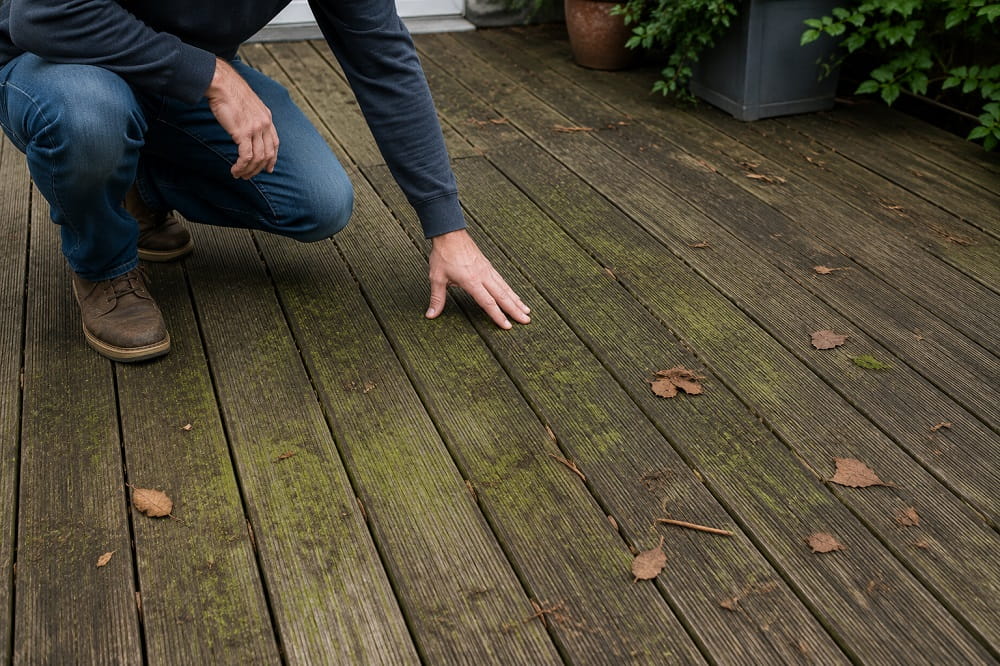
- Safest default: sweep and brush the decking first before using a pressure washer.
- Pressure washing may be suitable on sound decking when used at low pressure with a distance from the surface.
- Do not pressure wash rotten, soft, badly splintered, loose or heavily weathered boards.
- For timber decking, avoid holding the lance close to the surface or staying in one spot.
- For composite decking, check the board manufacturer’s cleaning guidance before using pressure.
- Pause if the deck is still slippery after cleaning, because the cause may be shade, airflow, moisture or surface wear.
What This Guide Does Not Solve
This guide does not repair rotten boards, weak joists, loose fixings, unstable steps, failed coatings or timber that is already badly splintered. Cleaning may improve appearance and reduce surface grime, but it cannot make unsafe decking structurally sound.
It also does not replace the instructions supplied with a pressure washer, cleaning fluid, decking cleaner or board system. Pressure settings, nozzle type, cleaning-fluid compatibility and surface restrictions vary by product.
This guide does not guarantee that pressure washing is right for every deck. Older timber, softwood boards, composite boards, painted decking and previously treated surfaces all need different levels of caution.
When to Pause or Escalate
Stop before pressure washing if boards are loose, soft, rotten, badly splintered, springy underfoot, or if fixings are raised. These are repair and safety issues. Pressure washing can make existing damage worse.
Pause before using high-pressure water on composite decking unless the board manufacturer allows it. Composite boards vary, and some surfaces may mark, streak or lose finish if pressure, heat or abrasion is too aggressive.
Escalate to professional help if the deck remains slippery shortly after cleaning, if large areas of coating are failing, if the surface is badly stained, or if the job requires sanding or board replacement. In these cases, pressure washing may hide the symptom without fixing the cause.
Why Pressure Washing Decking Needs Care
Timber fibres can lift
Timber decking has surface fibres that can roughen or lift if pressure is too strong. Once the surface has been raised, the boards can feel rough underfoot, hold dirt more easily and may need sanding or refinishing.
Protective finishes can be stripped
Pressure washing can remove grime, but it can also remove weakened coating, oil, stain or sealer. That may be useful during preparation for refurbishment, but it is not ideal if the existing finish is still protecting the timber.
Composite boards can mark
Composite decking is often described as lower maintenance, but lower maintenance does not mean indestructible. Some composite boards can show wand marks, streaks or surface damage if cleaned too harshly.
Green growth creates slip risk
Decking affected by algae, moss or similar growth can become slippery. The RHS guidance on algae and moss on hard surfaces confirms that these growths can make decking and other hard surfaces slippery. Cleaning can therefore be a safety task, not only a cosmetic one.
Pros and Cons of Pressure Washing Decking
Pros
Pressure washing can remove loose dirt, algae, surface grime and some embedded debris faster than brushing alone. It can be useful for larger decks, heavily soiled areas and cleaning before further treatment, where the deck is suitable and the pressure is controlled.
It can also help rinse grooves, edges and textured areas that are harder to clean with a broom. When used carefully, it may reduce the amount of scrubbing needed.
Cons
The main downside is damage risk. Too much force can bruise timber, raise grain, strip finish, drive water into gaps or mark composite boards. Pressure washing can also spread dirty water into planting, surrounding paving or nearby walls.
The TDCA pressure-washing guidance for decking warns that timber can be damaged if the pressure is too high and advises lower pressure with the lance kept away from the deck surface.
Bottom line
Pressure washing is not automatically wrong, but it should not be the first or only method. Use it only where the decking is sound, the pressure can be controlled, and a gentler method has not done enough.
Safer Alternatives to Pressure Washing
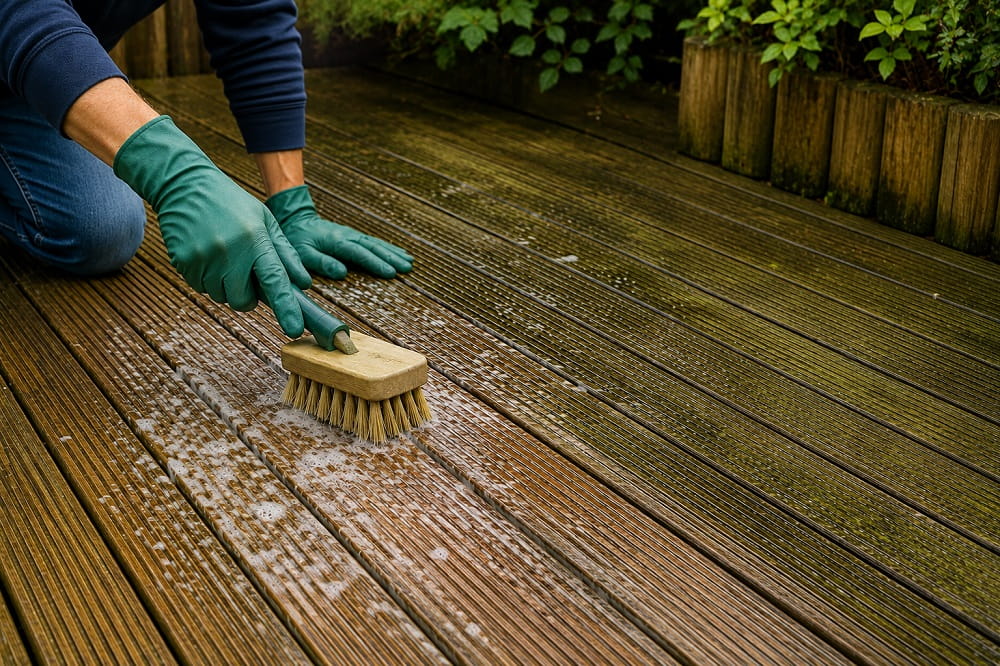
Sweeping and dry brushing
Sweeping is the safest starting point. Remove leaves, soil, grit, loose moss and debris before adding water. This prevents organic material turning into sludge and reduces the need for stronger cleaning.
Water and a stiff brush
For light grime, clean water and a stiff outdoor brush may be enough. Work with the board direction where possible and pay attention to grooves, steps and shaded edges.
Decking cleaner or cleaning fluid
A suitable decking cleaner or cleaning fluid can help loosen grime, algae and weathering before rinsing. This can reduce the temptation to use excessive pressure. Check that the product matches timber or composite boards and follow dilution, dwell time and rinse instructions.
Low-pressure rinsing
A garden hose or low-pressure rinse can be enough after brushing and cleaner application. If the dirt has already been loosened, force should not be the main cleaning method.
Decision Framework: Should You Pressure Wash This Deck?
1. What material is the deck?
Timber and composite boards react differently. Timber can roughen and splinter. Composite can mark or streak. If you cannot identify the board type, start with brushing and cleaner rather than pressure.
2. Is the deck structurally sound?
Walk the surface. If boards move, bounce, feel soft or have raised fixings, do not pressure wash. Repair comes first.
3. How dirty is it?
Light dirt, leaves and surface grime rarely need pressure washing. Established algae, heavy grime or old residue may justify controlled pressure after sweeping and cleaner use.
4. Is there an existing finish?
If the deck has oil, stain, sealer or paint, pressure washing may strip or disturb it. Decide whether you are cleaning for maintenance or preparing for restoration.
5. Can you control pressure and technique?
Pause before pressure washing if you cannot use a low setting, keep the lance moving, maintain distance from the boards, or test a hidden area first. Cleaning safely depends on control.
Step-by-Step: Clean Decking Without Damage
Step 1: Clear the deck
Remove furniture, pots, mats, barbecues and loose items. Lift items rather than dragging them, especially on composite decking.
Step 2: Sweep thoroughly
Brush away loose leaves, soil, grit and moss. Clean under furniture and around planters where moisture and debris collect.
Step 3: Inspect for damage
Check for loose boards, raised screws, soft timber, cracks, splinters, peeling coating and unstable steps. Fix safety issues before wet cleaning.
Step 4: Try brushing and cleaner first
Apply a compatible decking cleaner or cleaning fluid where needed. Let it work according to the label, then agitate with a suitable brush.
Step 5: Test pressure in a hidden area
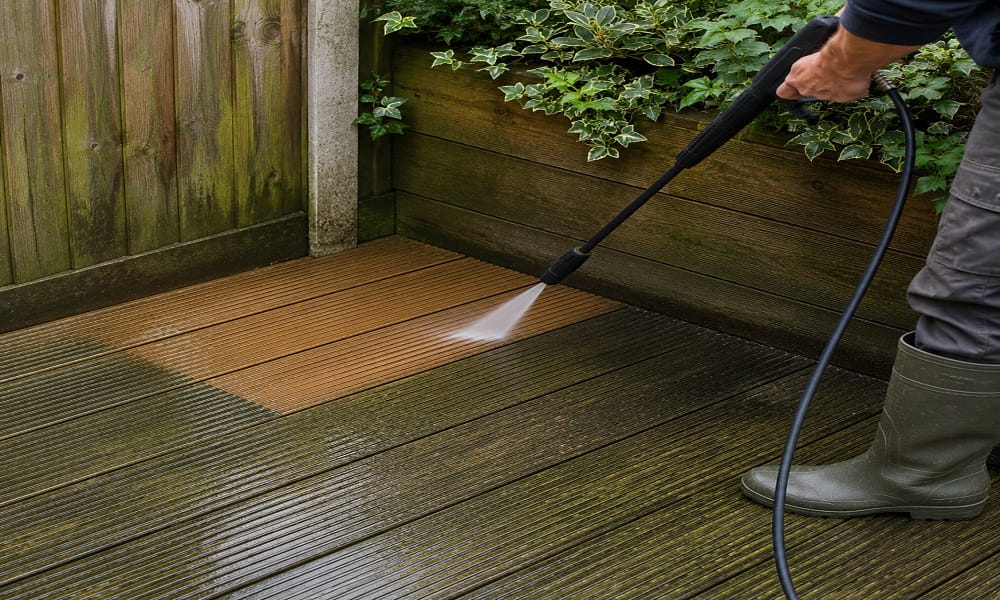
If pressure washing is still needed, test in a discreet section. Use low pressure, keep the lance away from the surface and keep the spray moving.
Step 6: Work with the board direction
Clean along the grain or board direction where practical. Do not hold the spray in one place. Avoid direct close-range blasting into grooves, gaps or board ends.
Step 7: Rinse and let the deck dry
Rinse away residue and allow the deck to dry fully before replacing furniture or applying oil, stain, sealer or anti-slip treatment.
Step 8: Review the result
If timber feels rough or composite boards show streaking, do not repeat the same technique. The method may be too aggressive for the surface.
Common Mistakes
Using maximum pressure
Maximum pressure is rarely the right starting point for decking. Use the lowest effective setting and increase only if the surface tolerates it.
Holding the lance too close
Close-range spraying can bruise timber and mark boards. Keep distance and keep the spray moving.
Pressure washing rotten or loose boards
Water pressure can worsen damage. Repair weak boards before cleaning.
Skipping the cleaner stage
A suitable cleaner can loosen grime and reduce the need for force. Brute pressure is not a substitute for the right cleaning sequence.
Putting furniture back too soon
Furniture and pots can trap moisture if replaced while the deck is still damp. Let the surface dry first.
Ignoring the cause of recurring algae
If algae returns quickly, the issue may be shade, poor airflow, wet leaves or trapped moisture. Pressure washing alone will not fix that.
Maintenance and Prevention
Decking is easier to clean when it is maintained regularly. Sweep leaves and soil before they break down. Move plant pots occasionally. Keep gaps, steps and shaded areas clear. Improve airflow where planting or furniture traps damp.
For wider cleaning, protection and maintenance options, use Decking Care and Maintenance. Choose products based on whether the deck needs cleaning, restoration, protection or slip-risk management.
Check decking after winter, after heavy rain and before applying any finish. A clean deck is easier to protect, but a damaged deck needs repair before treatment.
Your Next Step: DIY or Professional
DIY cleaning is usually suitable when the deck is structurally sound, the surface grime is light to moderate, and you can use controlled cleaning methods. Start with sweeping, brushing and a compatible cleaner, then consider low-pressure washing only if needed.
Professional help is the better route where boards are rotten, splintering, loose, heavily coated, persistently slippery, or where the surface needs sanding, stripping, restoration or board replacement.
The right answer is not “pressure wash or never pressure wash”. The right answer is to use the least aggressive method that cleans the deck safely.
Summary
Pressure washing can clean decking quickly, but it can also damage timber or mark composite boards if the pressure is too high or the technique is poor. Safe cleaning starts with sweeping, brushing and compatible cleaning fluids. Pressure washing should be controlled, tested and used only where the deck is sound.
Cleaning safely is about control, not force. Keep pressure low, maintain distance, keep the lance moving and stop if the surface roughens, splinters, streaks or loses finish. If decking remains slippery after cleaning, look at shade, airflow, trapped moisture and surface condition rather than simply increasing pressure.
Frequently Asked Questions
Should you pressure wash decking?
Sometimes, but not as the first step. Sweep and brush first, use a suitable cleaner if needed, and only pressure wash if the decking is sound and the pressure can be controlled.
Can pressure washing damage timber decking?
Yes. Excessive pressure, close-range spraying or staying in one place can bruise timber, raise grain, strip finish or worsen splintering.
Can I pressure wash composite decking?
Only if the board manufacturer allows it. Composite boards vary, and some can mark or streak if pressure is too high or the nozzle is too close.
What is the safest alternative to pressure washing?
Sweeping, brushing, water and a compatible decking cleaner are usually safer first steps. Low-pressure rinsing may be enough after the cleaner has loosened dirt.
Should I use cleaning fluid before pressure washing?
Often yes, if the product is compatible with the deck. Cleaning fluid can loosen grime and reduce the need for excessive pressure.
Should I pressure wash with or across the grain?
Work with the board direction where practical. This reduces visible marking and helps avoid roughening the surface unnecessarily.
How do I know if the pressure is too high?
Stop if timber fibres lift, the board feels rough, the finish strips unevenly, composite boards streak, or visible wand marks appear.
What should I do after cleaning decking?
Let the deck dry fully. Then inspect for roughness, damage, remaining algae, loose boards or treatment needs before replacing furniture or applying a finish.

Path & Patio is a UK supplier of paving and landscaping products, sharing practical guidance, product expertise and installation advice for patios, paths and driveway projects.