
Seasonal Garden Tool Checklist: What You Need for Spring, Summer, Autumn and Winter
Different seasons bring different garden jobs. Spring often means pruning, planting, soil preparation and restarting lawn care. Summer brings watering, mowing, deadheading and fast weed growth. Autumn is about leaf clearance, final cuts, tool cleaning and preparing for wet weather. Winter is when tools are cleaned, sharpened, repaired, stored and checked before the next growing season.
A seasonal garden tool checklist helps avoid rushed work and last-minute buying. The aim is not to own every tool. The aim is to have the right tools ready for the jobs your garden actually creates, while avoiding unsafe shortcuts, damaged equipment and seasonal tasks that should be paused because of weather, wildlife or tool condition.
For garden hand tools, cutting tools, sprayers, lawn-care equipment and general maintenance products, use Garden Tools and Equipment. Use the checklist below to decide what should be ready each season, what should be maintained, and what should be hired or handled professionally.
Quick Answer: What Tools Should You Keep Ready?
- Safest default: choose the correct tool for the task, check it is safe to use, then clean and store it properly after the job.
- Keep core tools ready year-round: gloves, secateurs, hand trowel, fork, spade, brush, rake, watering can or hose, and safe storage.
- Prepare spring tools for pruning, planting, soil work, lawn restart and light repairs.
- Prepare summer tools for watering, mowing, weeding, deadheading, trimming and sprayer use.
- Prepare autumn tools for leaf collection, final lawn care, cleaning, edging, pruning checks and storage preparation.
- Stop before hedge cutting, powered-tool work or heavy pruning if nesting birds, damaged equipment, poor weather or user safety are concerns.
What This Guide Does Not Solve
This guide does not replace safe tool training. Powered mowers, hedge trimmers, chainsaws, brush cutters, scarifiers and other powered tools need manufacturer guidance, safe handling, maintenance checks and appropriate protective equipment.
It also does not cover specialist tree surgery, commercial landscaping machinery, climbing work, large-scale clearance or professional arborist equipment. If the job involves work at height, heavy branches, large trees, powered cutting near people, or complex machinery, professional help is usually safer.
This guide does not guarantee that every garden needs every tool listed. A paved courtyard, a lawned family garden, a small veg patch and a hedge-heavy boundary all need different seasonal kits.
When to Pause or Escalate
Stop before using any garden tool if the handle is cracked, the head is loose, the blade is chipped, the cable is damaged, the guard is missing, the battery casing is cracked, or the tool feels hard to control. These are safety issues, not minor maintenance details.
Pause before hedge cutting or heavy pruning during nesting season. RSPB advises avoiding hedge cutting between March and September because the likelihood of birds nesting is high, and its Wildlife and Countryside Act guidance says disturbance of nesting birds should be avoided.
Escalate to professional help for large trees, heavy limbs, work above shoulder height, powered cutting near buildings or boundaries, repeated use of vibrating powered tools, or machinery that has become noisy, unstable or difficult to control. HSE guidance explains that hand-held and guided powered tools can expose users to hand-arm vibration risk, including tools such as hedge trimmers and powered mowers.
Why Seasonal Garden Tool Planning Matters
Seasonal jobs arrive quickly
Many garden jobs are time-sensitive. Seed sowing, pruning, planting, watering, mowing, leaf clearance and winter storage all have practical windows. If the right tool is blunt, broken, missing or still dirty from last season, the job either gets delayed or is done badly.
Correct tools reduce strain and damage
A tool that matches the task is easier to control. RHS tool-safety guidance includes choosing the correct tool for the task and using tools safely. That matters in every season, whether you are pruning soft spring growth, cutting summer hedges, lifting wet autumn leaves or cleaning tools for winter.
Safety equipment is part of the checklist
Gloves, eye protection, sturdy footwear, hearing protection, masks, knee pads and safe storage are not extras. They are part of the tool kit. RHS safety guidance advises protective clothing and safety gear such as gloves, long sleeves, safety goggles and visors to create a physical barrier against gardening hazards.
Maintenance prevents seasonal failure
A seasonal checklist should include tool care, not only tool buying. RHS guidance advises cleaning tools, oiling moving parts and storing tools in a clean dry place. This is especially important before winter storage and before spring tools go back into heavy use.
Core Garden Tools to Keep Ready All Year
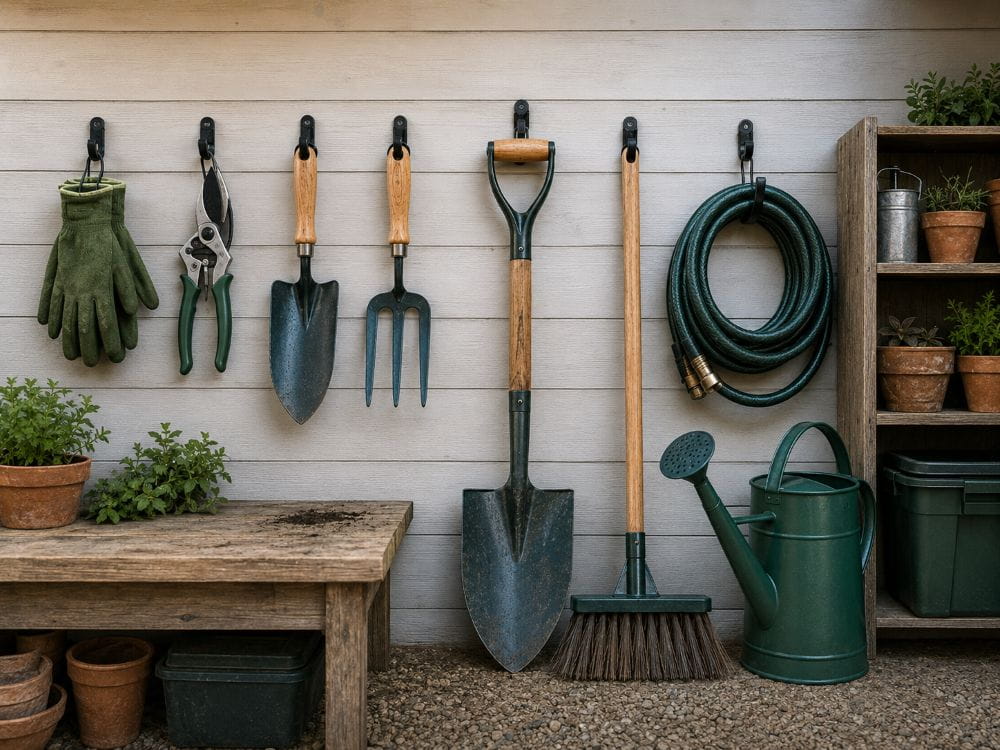
Most gardens benefit from a small year-round tool kit. This is the practical base before adding seasonal items.
| Core tool | Use | Quality check | Safety point |
|---|---|---|---|
| Gardening gloves | Handling soil, plants, tools and rough materials | Good grip, correct size, suitable protection | Use task-appropriate gloves for thorns, wet work or chemicals |
| Secateurs | Pruning, deadheading and light cutting | Sharp blade, stable pivot, secure lock | Do not use on branches beyond their capacity |
| Hand trowel and fork | Planting, weeding and small soil jobs | Strong handle and head connection | Avoid levering hard objects |
| Spade or fork | Digging, planting and soil movement | Secure shaft, sound head, no cracks | Use correct lifting posture and avoid overloading |
| Rake or broom | Leaves, debris, soil levelling and clean-up | Secure head and suitable tine or bristle type | Store safely so tines or handles do not cause trips |
| Watering can, hose or sprayer | Watering, feeding or controlled liquid application | No leaks, clean nozzle, good control | Keep chemical sprayers separate and labelled where needed |
Spring Garden Tool Checklist
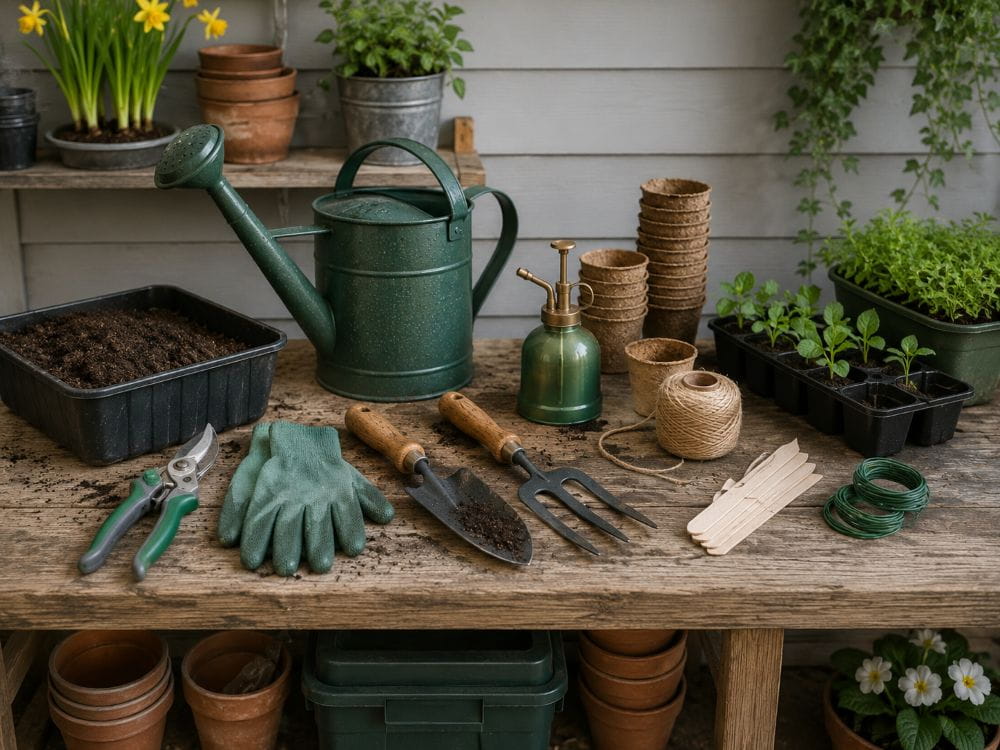
Spring jobs
Spring often brings pruning, planting, lawn restart, soil preparation, early weeding, seed sowing and cleaning up after winter. The main risk is rushing into jobs before tools are sharp, clean or safe.
Tools to prepare
Prepare secateurs, loppers, hand trowels, forks, spades, rakes, lawn tools, watering cans, labels, plant ties, kneeling pads, gloves and sprayers. For liquid application tools such as spray bottles and pressure sprayers, use Hand and Pump Garden Sprayers.
Spring safety checks
Check cutting tools before pruning. Blunt secateurs crush stems and require more force. Clean cutting tools if they were stored dirty over winter. Check for nesting birds before cutting hedges or dense shrubs, and delay the job if birds are active.
Spring buying priority
Buy or replace tools that will be used every week: gloves, secateurs, trowel, hand fork and watering equipment. Avoid buying specialist tools for one spring job unless you know they will be used repeatedly.
Summer Garden Tool Checklist
Summer jobs
Summer is usually about keeping growth under control. Common tasks include mowing, watering, deadheading, staking, weeding, trimming, pot care, feeding and managing pests or disease where appropriate.
Tools to prepare
Prepare hose fittings, watering cans, sprayers, secateurs, hand weeders, hoes, lawn-care tools, shears, plant supports, string, gloves, sun protection and storage for small tools used often.
Where lawnmower fuel, mixing bottles or maintenance products are needed for petrol-powered equipment, use Lawnmower Fuel and Maintenance.
Summer safety checks
Powered mowers and hedge trimmers should be checked before use. Look for damaged cables, loose guards, damaged blades, battery issues or unusual vibration. Stop using any powered tool that feels unstable, excessively noisy or difficult to control.
Summer buying priority
Prioritise tools that reduce repeated strain: comfortable secateurs, proper watering equipment, a suitable weeding tool and safe trimming equipment. Do not upgrade to powered tools unless storage, maintenance, PPE and user competence are in place.
Autumn Garden Tool Checklist
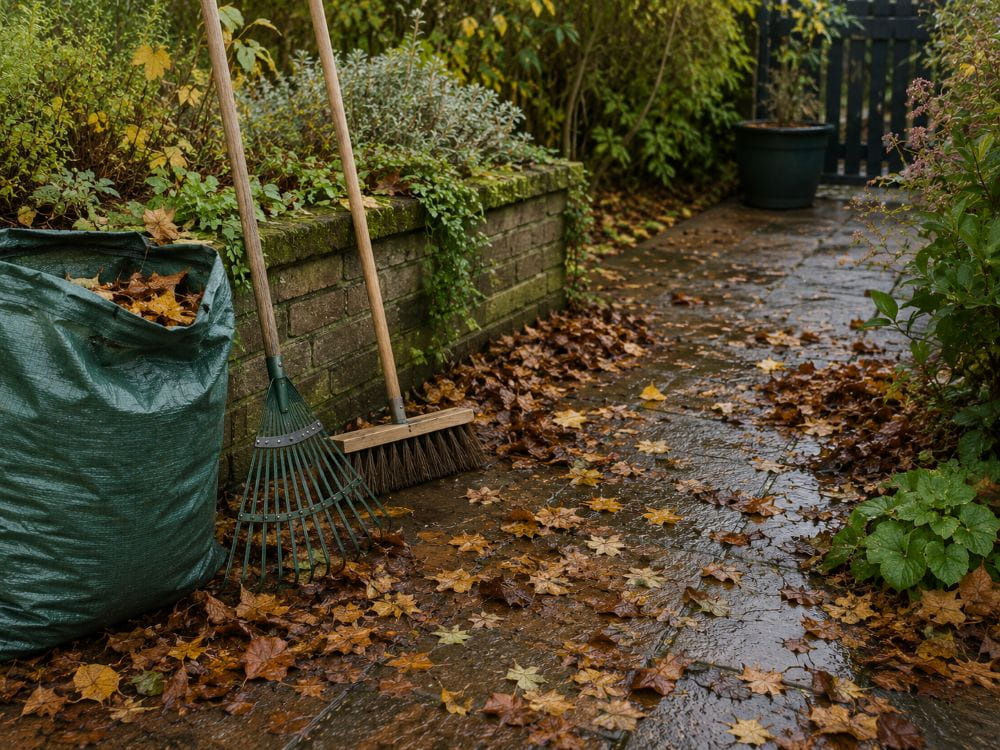
Autumn jobs
Autumn is a preparation season. Typical jobs include leaf clearance, final lawn cuts, bulb planting, border tidying, tool cleaning, drainage checks and preparing equipment for colder weather.
Tools to prepare
Prepare leaf rakes, brooms, garden bags, composting tools, spades, bulb planters, hand trowels, gloves, secateurs, shears, brushes and tool-cleaning items. If your garden has many paths or patios, include a stiff broom for wet leaves and debris.
Autumn safety checks
Wet leaves create slip risks on paths, patios, decking and steps. Keep access routes clear before leaf debris turns into slippery sludge. Clean soil from digging tools before putting them away after bulb planting or border work.
Autumn buying priority
Buy leaf-management and cleaning tools before heavy leaf fall, not after the garden is already covered. If storage is limited, choose collapsible bags, wall hooks or tools that serve more than one seasonal job.
Winter Garden Tool Checklist
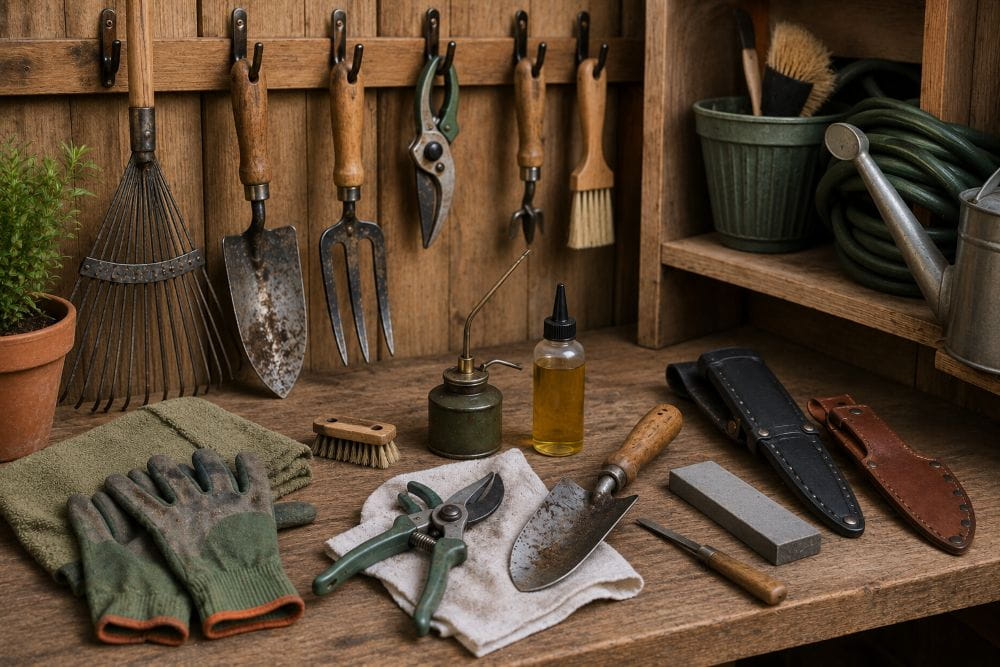
Winter jobs
Winter is the best time to review, clean, repair and store the tool kit. There may still be pruning, tidying, hard-surface clearing and storm clean-up, but tool maintenance becomes the main priority.
Tools to prepare
Prepare cleaning brushes, cloths, oil, sharpening tools where suitable, storage racks, blade covers, gloves, a safe work surface and spare parts where available. Check wooden handles, metal heads, pivots, locks, springs, hoses, nozzles and mower storage conditions.
Winter safety checks
Do not use frozen, slippery or unstable surfaces for tool work if you cannot stand safely. Avoid rushed pruning in poor visibility or bad weather. Store sharp tools securely, especially where children, pets or visitors can access sheds or garages.
Winter buying priority
Winter is the right time to replace tools that failed during the year, not to buy every possible upgrade. Focus on tools that were missing repeatedly, tools that are unsafe, and items needed before spring starts.
Decision Framework: Buy, Maintain, Store or Hire?
1. Will you use the tool every season?
Tools used year-round are worth owning. Gloves, secateurs, trowels, forks, rakes and watering equipment usually earn their place in most gardens. Tools used once every few years may be better hired or borrowed.
2. Is the tool safety-critical?
Cutting tools, powered tools, ladders, sprayers and heavy digging tools need more caution. If the tool can cause injury, poor-quality or damaged equipment is a false economy.
3. Can you maintain and store it?
A good seasonal tool is one you can keep clean, dry and safe. If you cannot store a tool properly, it may rust, leak, clog, blunt or become unsafe before the next season.
4. Does the job need a specialist?
Large tree work, high hedges, heavy powered cutting, complex machinery and repeated vibration exposure may need professional support. Tool ownership should not replace competence.
5. Is the timing safe and legal?
Pause before hedge cutting, heavy pruning or powered trimming if birds may be nesting, the weather is unsafe, or the tool condition is uncertain. The correct seasonal tool is not enough if the job timing is wrong.
Step-by-Step: Build a Seasonal Garden Tool Kit
Step 1: List your garden zones
Separate the garden into lawns, borders, hedges, trees, pots, veg beds, paths, patios and sheds. Each zone creates different seasonal tool needs.
Step 2: List the seasonal jobs
For each zone, list the spring, summer, autumn and winter jobs. This reveals what tools are needed repeatedly and what is rarely used.
Step 3: Check what you already own
Inspect existing tools before buying. Remove anything unsafe. Clean, sharpen or oil serviceable tools. Replace only what is genuinely missing or no longer safe.
Step 4: Build a core kit first
Start with gloves, secateurs, trowel, fork, spade, rake, brush, watering equipment and safe storage. Add seasonal tools after the core kit is working.
Step 5: Add seasonal extras
Add spring planting tools, summer watering and trimming tools, autumn leaf-clearance tools and winter storage or maintenance items only where the garden needs them.
Step 6: Store by season
Keep high-use seasonal tools easy to reach. Store less-used tools clean, dry and labelled. Put sharp tools somewhere safe and visible, not loose in a bucket or bag.
Step 7: Review twice a year
Review tools at the end of summer and the end of winter. These are the points where missing tools, broken tools and storage problems are easiest to fix before the next busy season.
Common Mistakes
Buying tools at the last minute
Last-minute buying often leads to poor fit, low quality or duplicate tools. Plan before the season starts so you can choose properly.
Using secateurs for every cutting job
Secateurs are not loppers, shears or pruning saws. Using the wrong cutting tool can damage the plant, damage the tool and increase hand strain.
Ignoring protective equipment
Gloves, eye protection, sturdy footwear and long sleeves may be needed depending on the task. Safety equipment should be planned alongside the tool.
Leaving tools dirty between seasons
Soil, sap and moisture damage tools. Clean and dry tools before storing them, especially before winter.
Buying powered tools without maintenance planning
Powered tools need storage, batteries or fuel, cleaning, guards, servicing and safe handling. They are not always simpler than hand tools.
Forgetting wildlife checks
Seasonal timing matters. Hedge trimming and heavy pruning should be delayed if birds are nesting or if you cannot check safely.
Maintenance and Prevention
Tool maintenance should be part of the seasonal checklist. Clean hand tools after use, dry metal parts, oil moving parts where appropriate and store tools in a dry place. Cutting tools should be cleaned after pruning and checked before storage.
Spring: check blades, pivots, hand tools and watering equipment before heavy use.
Summer: keep watering and cutting tools clean, and inspect powered tools before repeated use.
Autumn: clean leaf tools, brushes and digging tools before storing them.
Winter: repair, sharpen where suitable, oil, replace unsafe tools and organise storage.
For replacement tools, cutting equipment, sprayers and seasonal garden equipment, use the main Garden Tools and Equipment category as the product route.
Your Next Step: DIY or Professional
DIY garden tool planning is suitable for ordinary domestic work: planting, weeding, watering, mowing, light pruning, leaf clearance, tool cleaning and basic storage.
Professional help is the safer route for large trees, high hedges, heavy branches, repeated powered-tool use, large-scale clearance, machinery servicing or any job where the user cannot safely control the tool.
The practical next step is to build a core tool kit first, then add seasonal tools only where your garden actually needs them.
Summary
A seasonal garden tool checklist helps you prepare before the work arrives. Spring needs planting, pruning and soil tools. Summer needs watering, mowing, weeding and trimming tools. Autumn needs leaf-clearance, cleaning and storage preparation. Winter needs maintenance, sharpening, repairs and safe storage.
The best checklist is not the longest one. It is the one that matches your garden, keeps tools safe and ready, and avoids rushed buying. Choose the correct tool for each seasonal job, check it before use, clean it after use, and pause when wildlife, weather, tool condition or user safety makes the job unsuitable.
Frequently Asked Questions
What garden tools do I need for spring?
Useful spring tools include gloves, secateurs, trowel, hand fork, spade, rake, watering can, labels, plant ties and sprayers where needed. Check cutting tools before pruning.
What garden tools are most useful in summer?
Summer tools usually include watering equipment, mowing tools, secateurs, deadheading tools, hand weeders, hoes, shears, sprayers and plant supports.
What tools do I need for autumn garden jobs?
Autumn tools usually include leaf rakes, brooms, garden bags, composting tools, spades, bulb planters, gloves, secateurs and tool-cleaning items.
What should I do with garden tools in winter?
Clean, dry, inspect, oil, sharpen where suitable and store tools safely. Replace broken tools before spring starts.
Should I buy garden tools as a set?
A set can be useful if the tools match your real seasonal jobs. A smaller number of better-matched tools is often more useful than a large set with weak or unused items.
Can I cut hedges in spring or summer?
Only with caution. Check for nesting birds first and avoid cutting if birds may be nesting. The safest approach is to avoid hedge cutting during the main nesting period where possible.
When should I replace garden tools?
Replace or repair tools with cracked handles, loose heads, damaged blades, unstable pivots, missing guards, damaged cables or unsafe operation.
What is the best product route for seasonal garden tools?
Start with the Garden Tools and Equipment category, then narrow down to cutting tools, sprayers, lawnmower maintenance, soil tools or seasonal clean-up equipment based on the jobs in your garden.

Path & Patio is a UK supplier of paving and landscaping products, sharing practical guidance, product expertise and installation advice for patios, paths and driveway projects.