
NPK Explained: How to Read Garden Fertiliser Labels
The three numbers on a fertiliser label are one of the quickest ways to understand what the product is designed to do. They represent nitrogen, phosphorus and potassium, usually shown in that order as N-P-K.
The numbers are useful, but only when they are read in context. A higher figure does not automatically mean a better fertiliser, and two products with the same NPK ratio can still differ in overall concentration, format, application rate and intended use.
Quick Answer
- Read the label in this order: NPK ratio first, then product concentration, plant suitability, format and application instructions.
- N means nitrogen: associated with chlorophyll production and leafy vegetative growth.
- P means phosphorus: associated with root development.
- K means potassium: associated with reproduction, flowering and fruiting.
- Ratio and concentration are different: 10-10-10 and 5-5-5 have the same balance but different nutrient concentrations.
- Do not copy doses between products: similar-looking NPK figures can still come with different application rates.
What This Guide Does Not Solve
This guide explains how to interpret NPK on fertiliser labels. It does not diagnose every nutrient deficiency or determine the exact fertiliser requirement for every soil, crop, lawn or container.
Weak growth, yellow leaves, poor flowering and poor fruiting can have non-nutritional causes, including watering problems, root damage, poor drainage, unsuitable light, pests or disease. Do not increase fertiliser simply because a plant looks unhealthy.
NPK also does not tell you everything about a fertiliser. A complete label can include secondary nutrients, micronutrients, application rates, plant suitability and instructions that matter just as much as the three headline figures.
When to Pause or Escalate
Pause before applying fertiliser if the plant has recently been repotted into fresh compost or has already received another feed. The growing media may still contain an active nutrient supply.
Stop and read the full label if the NPK figures are clear, but the intended plant use, dose, dilution or application interval is not. A nutrient ratio cannot substitute for product instructions.
If a valuable or unusual plant continues to decline despite normal care, specialist horticultural advice may be more useful than changing fertiliser repeatedly.
What NPK Means on a Fertiliser Label
The NPK figures identify the relative amounts of nitrogen, phosphorus and potassium in a fertiliser. UK gardening guidance presents those nutrients in the order N:P:K.
The figures are normally shown as nutrient percentages or analysis values. A product with similar figures across N, P and K has a broadly balanced relationship between the three nutrients. A product with a noticeably larger first figure has a stronger nitrogen emphasis. A product with a noticeably larger third figure has a stronger potassium emphasis.
The ratio tells you how the nutrients compare with one another. The absolute size of the numbers tells you more about nutrient concentration. Those two ideas need to be separated.
Nitrogen: What the First Number Tells You
Nitrogen supports chlorophyll production and leafy vegetative growth. A fertiliser with a larger first figure is therefore more nitrogen-led than a product where the three figures are similar.
That can be useful where foliage growth is the main objective. Lawns and leafy plants are common situations where nitrogen may be more prominent, depending on the exact product and season.
A nitrogen-led fertiliser is not automatically the right choice once flowering or fruiting becomes more important. The nutrient emphasis should follow the plant’s current growth objective.
Phosphorus: What the Middle Number Tells You
Phosphorus supports root development. The middle NPK figure shows the phosphorus component of the fertiliser analysis.
A fertiliser with more phosphorus can be relevant where root development is an important objective, but the middle number should not be read in isolation. Soil conditions, existing fertility and the product’s stated use still matter.
Do not assume that the fertiliser with the largest phosphorus number is automatically the best choice for a newly planted specimen. The correct dose and overall balance remain important.
Potassium: What the Third Number Tells You
Potassium supports reproduction, flowering and fruiting. That role explains why tomato fertilisers commonly place more emphasis on the third NPK figure.
A potassium-led fertiliser can be useful when the plant is actively flowering or fruiting, and the product is intended for that use. A stronger potassium emphasis is not a universal upgrade over a balanced fertiliser.
The best interpretation is contextual: higher potassium makes sense when flowering or fruiting is the main goal and the label confirms suitability for the plant.
Ratio vs Concentration: The Most Important Distinction
10-10-10 vs 5-5-5
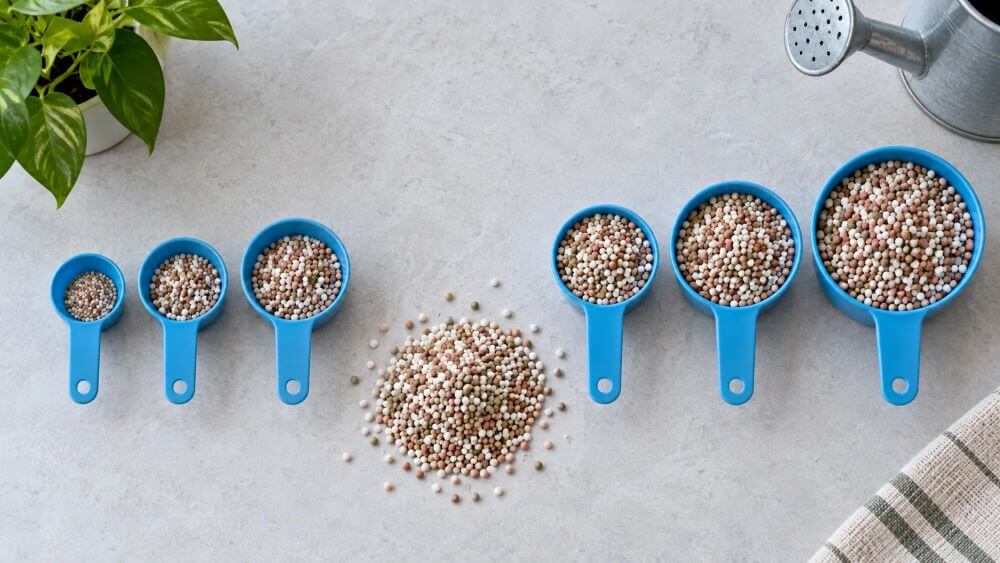
A fertiliser labelled 10-10-10 and one labelled 5-5-5 have the same N:P:K balance because all three nutrients are present in equal proportions. The 10-10-10 product has a higher nutrient concentration than the 5-5-5 product.
That does not mean the 10-10-10 fertiliser is automatically better. A more concentrated fertiliser may be used at a lower dose. The application rate determines how much nutrient the plant actually receives.
5-5-10 vs 10-10-20
Those two examples also share the same proportional pattern: potassium is double the nitrogen and phosphorus. The second product is simply more concentrated.
This is why NPK should be read in two stages. First, compare the ratio. Second, compare concentration and application rate.
How to Read Common NPK Patterns
Balanced-looking ratios
A fertiliser with similar figures across N, P and K is often positioned for general-purpose use. The balanced-looking ratio suggests that no one of the three primary nutrients dominates the formulation.
Nitrogen-heavy ratios
A noticeably larger first figure indicates a stronger nitrogen emphasis. Such products may suit lawns or foliage-focused growth where the product label confirms that use.
Potassium-heavy ratios
A noticeably larger third figure indicates a stronger potassium emphasis. Tomato feeds and other flowering or fruiting fertilisers often follow that pattern.
Why the pattern matters more than one number
A fertiliser can look “strong” because one figure is large, but the overall ratio tells you what the formulation is trying to favour. The safest comparison is the pattern across all three nutrients rather than the largest single number.
General-Purpose vs Specialist Fertilisers
General-purpose fertiliser
A general-purpose fertiliser is designed to provide broad nutrition across several suitable plant types. General-purpose products are useful when the aim is routine feeding rather than support for one specific growth stage.
Specialist fertiliser
Specialist fertilisers are formulated for particular plants or growing uses. Tomato feed is a good example because the nutrient balance commonly places more emphasis on potassium.
Other specialist products may be designed for lawns, roses, ericaceous plants, houseplants or other defined uses. The specialist name should still be checked against the NPK, dose and product instructions.
Worked Buying Examples
A lawn fertiliser
If the goal is dense green leafy growth, a fertiliser with a stronger nitrogen emphasis may be appropriate. The exact product should still be selected by season, lawn condition and label guidance.
A tomato feed
If tomatoes are flowering and fruiting, a product with a stronger potassium emphasis may be appropriate because potassium supports reproduction and fruit development.
A mixed border
Where several different garden plants need routine nutrition, a broadly balanced general-purpose fertiliser can be easier to manage than a highly specialist feed.
A container plant
For a container plant, the nutrient ratio is only part of the decision. The product format and application frequency matter because container plants have a limited root zone and feeding routines are usually more controlled.
How Fertiliser Format Changes the Decision
Liquid fertiliser
Liquid fertilisers are generally fast-acting and are often convenient for container plants. The NPK still matters, but the liquid format also affects how frequently the product is measured and applied.
Granular fertiliser
Granular fertilisers provide a dry application method. A granular product can be balanced, nitrogen-led or potassium-led. The word “granular” tells you the delivery format, not the nutrient balance.
Controlled-release fertiliser
Controlled-release products release nutrients gradually over time. A controlled-release fertiliser can still have a specific NPK ratio, so release method and nutrient balance should be treated as separate parts of the specification.
NPK Does Not Show Every Nutrient
NPK focuses on nitrogen, phosphorus and potassium, but fertiliser labels can also include other nutrients. Magnesium, iron and trace elements may matter for particular plants or growing situations.
A product should therefore not be rejected simply because the NPK looks modest. The wider formulation can still be well matched to the intended use.
If the label lists additional nutrients or micronutrients, read those alongside the NPK rather than treating them as an afterthought.
A Better Label-Reading Checklist
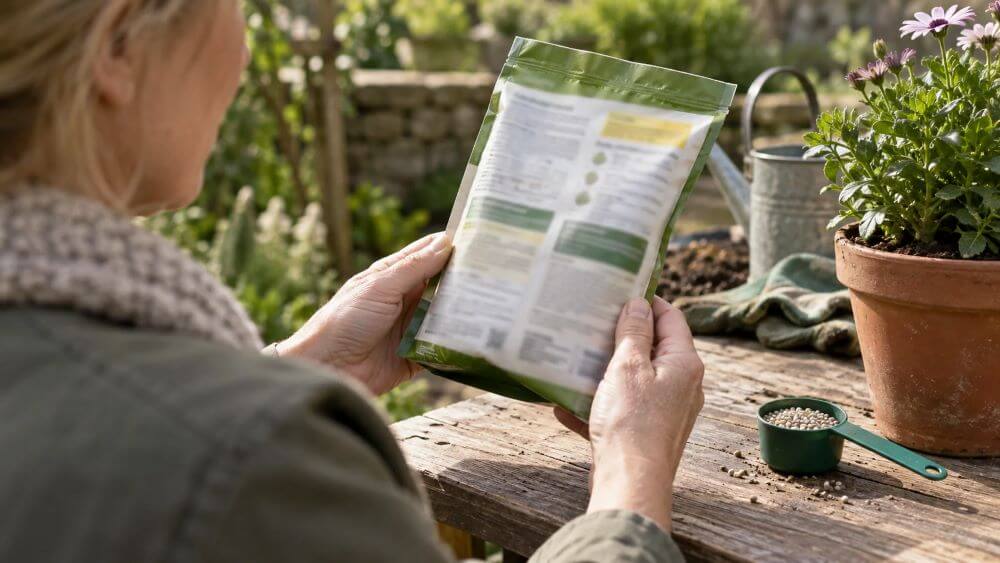
- 1. Identify the plant: lawn, tomato, border plant, houseplant, container plant or another specialist plant.
- 2. Identify the growth goal: leafy growth, establishment, flowering, fruiting or general maintenance.
- 3. Read the NPK pattern: compare the relative emphasis on nitrogen, phosphorus and potassium.
- 4. Check concentration: larger figures may indicate a more concentrated product rather than a better product.
- 5. Check product format: liquid, granular, soluble or controlled release.
- 6. Look beyond NPK: note any secondary nutrients or micronutrients listed on the label.
- 7. Confirm intended use: the label should name suitable plants or applications.
- 8. Check dose and frequency: do not copy application rates from another fertiliser.
- 9. Check existing nutrition: fresh compost or a previous fertiliser may still be active.
- 10. Pause if the plant problem is unclear: do not use NPK as a substitute for diagnosing watering, root, pest or disease issues.
Mistakes to Avoid
Reading NPK as a quality score
Higher figures do not automatically mean a better fertiliser. The figures describe nutrient analysis and concentration, not overall product quality.
Ignoring concentration
Two products can have the same nutrient balance but very different concentrations. 10-10-10 and 5-5-5 are proportionally similar but not equally concentrated.
Ignoring plant type
A high-potassium fertiliser can be useful for a fruiting crop but unsuitable as a routine choice for every plant in the garden.
Ignoring dose
Two products with similar NPK ratios can require different application rates. Always use the stated dose for the exact product.
Assuming the format determines the nutrient balance
Liquid, granular and controlled-release describe delivery methods. Any of those formats can be formulated with different NPK ratios.
Keeping Fertiliser Comparisons Simple
Compare products in the same order each time: plant type, growth goal, NPK pattern, concentration, format, intended use, dose and feeding frequency.
That sequence prevents one large number or one specialist product name from dominating the decision. It also makes it easier to compare two products that use different packaging or marketing language.
If the plant moves into a different growth stage, review the fertiliser again rather than assuming the same nutrient balance remains ideal throughout the season.
What to Buy and Where to Get It
Use the NPK figures to narrow the choice, then check the product against the plant and the job. A balanced feed can suit routine feeding, while a formulation weighted more heavily towards one nutrient may be intended for a more specific growth stage or plant group.
Suitable options can be compared in Path & Patio’s plant feed and fertiliser range.
For buyers who prefer to compare by manufacturer, the Doff garden feeding range and Eazifeed plant-feeding products provide two further routes into the category.
Summary
NPK labels become much easier to use once ratio and concentration are separated. The three numbers show the relative balance of nitrogen, phosphorus and potassium, but they do not tell the whole story on their own.
Compare the ratio, the overall strength, the intended plant or use, the product format and the application rate together. A product with larger numbers is not automatically the better choice, and equal ratios do not necessarily mean equal feeding strength.
The most useful label is the one that helps you match the fertiliser to the plant and the stage of growth rather than simply choosing the biggest NPK figures on the shelf.
Frequently Asked Questions
What does NPK stand for?
NPK stands for nitrogen, phosphorus and potassium, the three primary nutrients commonly shown on fertiliser labels.
What does a high first NPK number mean?
A higher first figure indicates a stronger nitrogen emphasis, which is associated with chlorophyll production and leafy growth.
What does a high third NPK number mean?
A higher third figure indicates a stronger potassium emphasis, which is associated with flowering and fruiting.
Is 10-10-10 stronger than 5-5-5?
Yes in nutrient concentration, but both products have the same balanced N:P:K relationship. The correct application rate still matters.
Is a higher NPK fertiliser better?
No. Higher figures can simply indicate a more concentrated nutrient analysis. Suitability depends on the plant, growth stage and application rate.
Why do tomato feeds often have more potassium?
Potassium supports flowering and fruiting, so tomato fertilisers commonly use a stronger potassium emphasis.
Does granular fertiliser have a different NPK from liquid fertiliser?
Not necessarily. Liquid and granular describe the application format. Either format can be made with different nutrient ratios.
How should I compare two fertilisers?
Compare plant suitability, NPK ratio, concentration, product format, additional nutrients, application rate and feeding frequency rather than relying on one number.

Path & Patio is a UK supplier of paving and landscaping products, sharing practical guidance, product expertise and installation advice for patios, paths and driveway projects.