
Low-Maintenance Garden Path and Patio Ideas for Small UK Gardens
Small gardens work best when maintenance is designed out from the start. A compact outdoor space can quickly become awkward to look after if the path is too narrow, the patio has too many small joints, water runs the wrong way, edging is weak, or weeds are allowed to establish in every gap.
Low-maintenance does not mean no maintenance. Every outdoor surface needs some cleaning, sweeping and inspection. The aim is to reduce avoidable work by choosing surfaces, jointing and edging that match the garden layout, drainage and everyday use.
For paving, path and road surface products, use Paving, Path and Road Products. Choose products after deciding whether the garden needs cleaner lines, better jointing, easier surface care, improved drainage or a simpler path layout.
Quick Answer: Best Low-Maintenance Ideas for Small Gardens
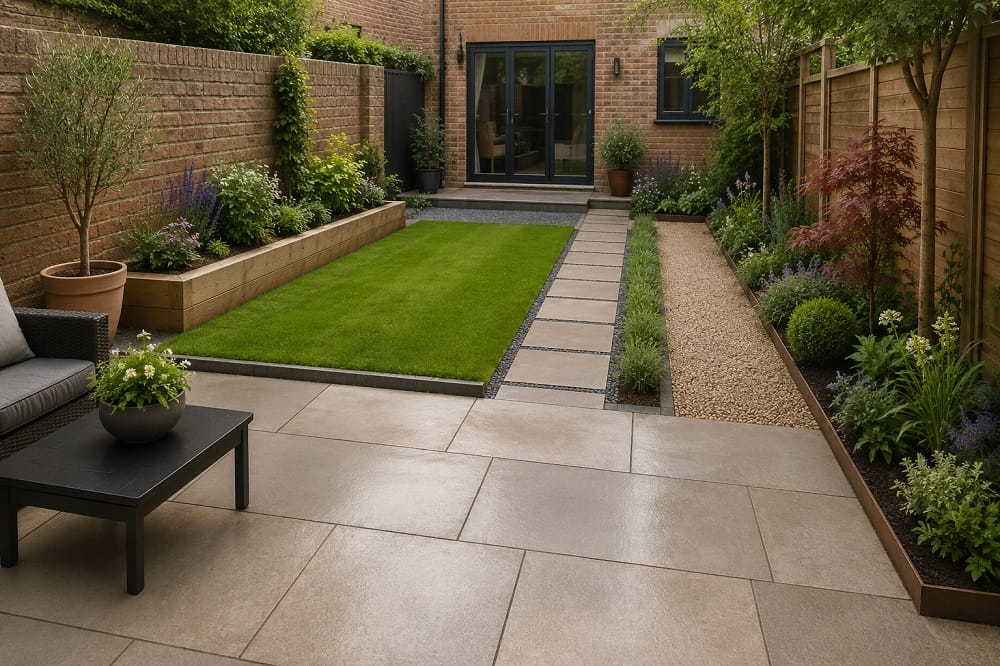
- Safest default: keep the layout simple, drain water away from the house and choose surfaces that are easy to sweep and weed.
- Use larger paving units or simple repeated patterns to reduce the number of joints and awkward cuts.
- Use clear edging between lawn, gravel, planting and paving to reduce trimming and migration.
- Choose permeable or drainage-aware surfaces where water could pool or run towards buildings.
- Use suitable jointing products where joints need stabilising and weed resistance.
- Pause before installing impermeable paving in a front garden, on a slope, or anywhere water may run towards walls, doors or air bricks.
What This Guide Does Not Solve
This guide does not fix failed drainage, unstable sub-bases, rocking slabs, sinking paving, retaining issues or water running towards a building. These are design or installation problems, not cleaning problems.
It also does not guarantee a maintenance-free garden. Gravel can collect leaves. Paving can grow algae. Joints can collect soil. Edges can move if poorly installed. The goal is lower maintenance through good design and suitable products.
This guide focuses on small UK gardens, patios, side paths, courtyard gardens and light-use domestic surfaces. It does not specify construction for driveways, public access routes, structural drainage systems or load-bearing hardstanding.
When to Pause or Escalate
Stop before choosing a surface if water already pools, runs towards the house, collects near air bricks, or sits against walls after rain. In those cases, surface choice alone will not solve the issue. Falls, drainage and surrounding levels need to be considered first.
Pause before paving a front garden with impermeable materials. The Planning Portal guidance on paving front gardens explains when permeable surfacing or drainage to a lawn or border matters for planning permission.
Escalate to professional help if the garden is steep, waterlogged, close to thresholds, affected by tree roots, or needs steps, retaining edges, wheelchair access or drainage correction. In a small garden, mistakes are highly visible because every edge and level is close to the house.
Why Small Gardens Need Simple Layouts
Fewer edges usually means less work
Every edge is a maintenance point. Grass edges need trimming. Gravel edges need controlling. Paving edges need support. Planting edges collect debris. In small gardens, too many edges can make the space feel busy and harder to maintain.
Joints decide future weeding
Small paving units can look attractive, but more joints usually mean more places for soil, moss and weeds to collect. Jointing choice is therefore part of the maintenance plan, not just the final finish.
Drainage affects cleaning
Water that sits on a patio or path encourages algae, staining and slippery surfaces. The RHS guidance on permeable paving warns that non-porous hard landscaping can increase rainwater runoff, so drainage should be considered before the surface is chosen.
Awkward shapes create awkward maintenance
Tight corners, thin paving cuts, narrow strips of lawn and small gravel pockets usually need extra attention. In a small garden, clean rectangles, gentle curves and simple zones are often easier to maintain than complicated patterns.
Low-Maintenance Path and Patio Ideas
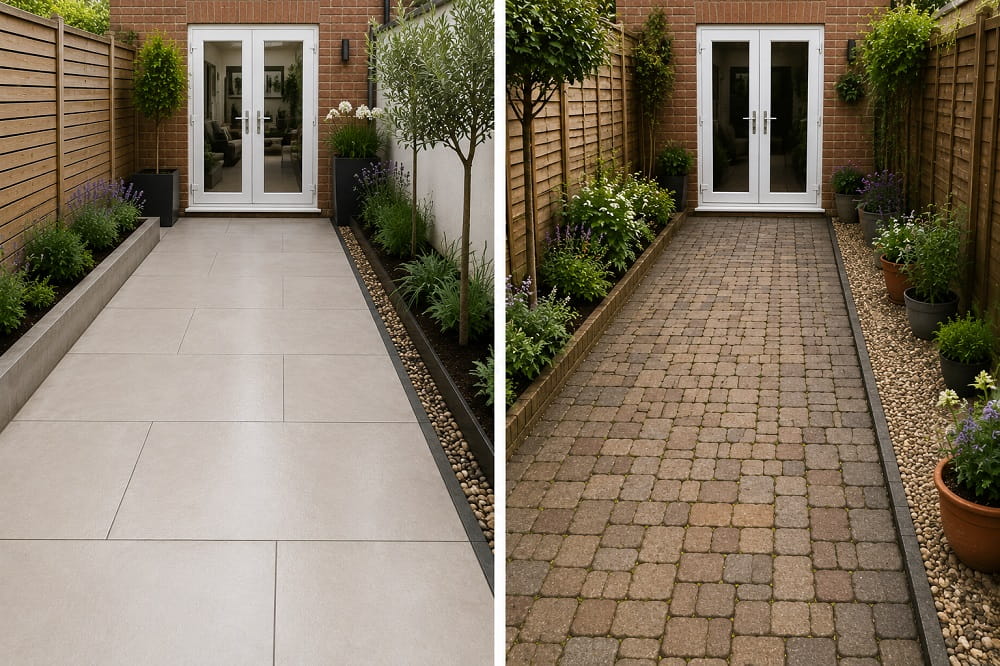
Large-format paving for cleaner lines
Large-format paving can reduce the number of joints and create a calmer look in a small garden. Fewer joints can mean less joint maintenance, fewer weed pockets and quicker sweeping. This can work well for compact patios, courtyard seating areas and simple paths.
The surface still needs the right base, falls and jointing. Large slabs on a poor base can rock, crack or hold water. Low-maintenance design depends on installation quality as much as surface choice.
Simple paving patterns
A simple running bond, stack bond or repeated slab layout is usually easier to install and maintain than complex patterns with many small cuts. Fewer cuts mean fewer vulnerable edges and a tidier finish.
In small gardens, simple patterns also make the space feel larger. Busy paving patterns can make a small patio feel cluttered, especially when combined with furniture and pots.
Gravel paths with proper edging
Gravel can be a low-maintenance option where drainage, informal design and easy shape changes are priorities. It works well for side paths, utility routes, cottage-style gardens and planted areas.
The key is edging. Without a firm edge, gravel migrates into lawns, planting beds and drains. Use gravel where movement is acceptable, or consider stabilising grids where the route needs regular access.
Permeable surfaces for drainage-aware design
Permeable paving, gravel and drainage-aware layouts can reduce standing water and runoff. This is especially useful in small gardens where hard surfaces sit close to walls, thresholds and fences.
Permeable does not mean maintenance-free. Joints, gravel and open-textured surfaces still need sweeping so silt and organic matter do not block the system.
Clean-edged planting pockets
Planting softens paving and helps small gardens feel less hard, but planting areas should be designed with clear edges. A simple border edge or raised planter line is easier to maintain than planting that spills into joints and path edges.
RHS low-maintenance advice supports making edges easier to manage, including using permanent edges around lawns and smoothing awkward corners. This principle applies just as strongly to patios and small paths.
Jointed paving for a stable finish
Good jointing helps reduce loose debris and makes surfaces easier to clean. For jointing, pointing and surface finishing products, use Patio Path and Driveway Pointing. Choose jointing based on paving type, joint width, joint depth and exposure.
Sealed or treated surfaces where suitable
Some patios and paths benefit from sealing or surface treatment, especially where staining, water absorption or algae growth is a recurring issue. The surface must be suitable, clean and dry, and the product should match the material.
For cleaning, sealing, surface protection and repair products, use Paving, Path and Driveway Treatments. Do not use treatment products to hide poor drainage or unstable paving.
Comparison Table: Low-Maintenance Surface Ideas
| Idea | Best for | Maintenance advantage | Main caution | Best Path & Patio route |
|---|---|---|---|---|
| Large-format paving | Small patios and clean modern layouts | Fewer joints and quicker sweeping | Needs a stable base and correct falls | Paving, Path and Road Products |
| Gravel with edging | Side paths, informal routes and drainage-friendly areas | Permeable and easy to reshape | Can migrate without proper edging | Path Patio and Driveway |
| Jointed paving | Patios, paths and neat paved zones | Stabilised joints are easier to clean and manage | Joint width, depth and preparation matter | Patio Path and Driveway Pointing |
| Surface treatments | Existing paths and patios with staining, algae or wear | Can make cleaning and protection easier where suitable | Surface must be compatible and prepared | Paving, Path and Driveway Treatments |
| Clean-edged planting pockets | Small gardens needing greenery without messy borders | Reduces trimming and keeps paths clear | Needs planned edging and plant choice | Path Patio and Driveway |
Decision Framework: Choose by Surface, Jointing and Edging
1. How will the space be used?
A small seating patio needs a stable, level surface. A side path needs easy access and drainage. A decorative route can be more informal. Choose the surface by use first, then appearance.
2. Where will water go?
Check the garden after rain. If water sits near the house, a new surface could make the problem worse. Design falls, permeable areas or drainage paths before choosing paving or gravel.
3. How many joints will the design create?
More joints mean more maintenance points. If you choose small pavers or setts, plan the jointing properly. If you want quicker cleaning, larger units or simpler patterns may be better.
4. How will the edges be controlled?
Edges stop surfaces moving. Gravel needs restraint. Paving needs supported edges. Lawns need clean boundaries. Planting needs containment. Weak edges are one of the fastest routes to a messy garden.
5. Is it a front garden or driveway-style area?
Pause before using impermeable surfacing in a front garden, especially over more than five square metres. Planning and drainage rules may apply where water cannot drain through the surface or into a lawn or border.
Step-by-Step: Plan a Low-Maintenance Small Garden Surface
Step 1: Mark the usable area
Use string, chalk or a hose to mark the patio, path or seating area. Walk around it and check whether the shape feels natural. In small gardens, awkward layout problems show quickly.
Step 2: Remove unnecessary edges
Simplify the design. Remove tiny lawn strips, narrow gravel pockets, sharp corners and small planting gaps that will be hard to clean.
Step 3: Choose the main surface
Choose paving for stable seating, gravel for informal drainage-friendly routes, pavers for modular repairability, or a mixed layout where each material has a clear purpose.
Step 4: Plan the joints
Decide how the joints will be filled, stabilised and maintained. Do not leave jointing as an afterthought. It strongly affects future weeds, cleaning and surface appearance.
Step 5: Plan the edges
Add firm edging wherever surfaces meet. This includes gravel-to-lawn, paving-to-border, patio-to-planting and path-to-soil transitions.
Step 6: Check drainage
Make sure water does not move towards the house, garage, shed, air bricks or thresholds. Add permeable areas or drainage routes where needed.
Step 7: Plan maintenance access
Leave enough width for sweeping, bins, furniture movement, pots and garden tools. A path that is too narrow becomes frustrating even if it looks neat.
Common Mistakes
Choosing too many materials
Small gardens can look cluttered when too many materials are used. Each extra material creates more edges, transitions and maintenance details.
Using small pavers everywhere
Small units create many joints. They can look good, but they need more joint care than larger paving units.
Skipping edge restraint
Gravel, pavers and block paving all need edge control. Without it, surfaces move and start to look untidy.
Ignoring weeds on hard surfaces
Weeds can establish in cracks and joints. The RHS guidance on weeds on hard surfaces notes that weeds in foot-traffic areas can make the ground uneven and slippery when wet.
Letting water sit in shaded corners
Small gardens often have shaded corners where surfaces dry slowly. These areas need drainage, airflow and regular sweeping to reduce algae and staining.
Designing for appearance only
A good small garden must work in wet weather, winter and everyday use. Surface grip, drainage, cleaning and access matter as much as colour.
Maintenance and Prevention
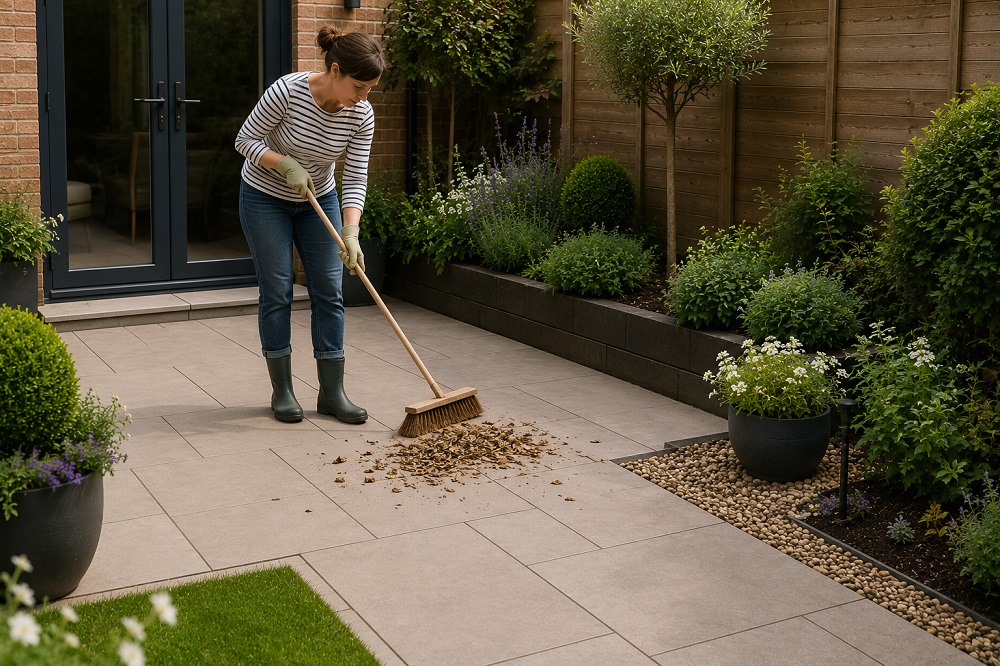
Low-maintenance gardens still need a simple routine. Sweep leaves before they break down. Remove moss and soil from joints. Keep gravel topped up and inside its edging. Check that water is not pooling near walls or thresholds.
Clean paving and patios before dirt becomes embedded. Treat stains early. Refill or repair failed joints before weeds establish. Keep planting trimmed back from paths and patio edges.
For wider surface cleaning, jointing, sealing and repair options, use the broader Path Patio and Driveway category where the issue is general maintenance rather than one specific product type.
Your Next Step: DIY or Professional
DIY planning is usually suitable for simple small patios, short garden paths, gravel routes and low-risk surface updates where drainage is straightforward.
Professional help is the safer route where the garden has standing water, level changes, steps, retaining edges, front garden compliance issues, expensive paving, or access needs for mobility aids, bins or regular heavy use.
The best next step is to simplify the layout before choosing products. Fewer awkward corners, fewer weak edges and fewer poorly planned joints usually mean less cleaning and weeding later.
Summary
Low-maintenance small garden paths and patios are designed, not achieved by one product alone. Surface choice, jointing, edging, drainage and layout all affect how much cleaning and weeding will be needed later.
Use larger or simpler paving layouts where easy cleaning matters. Use gravel only with proper edging. Use jointing products where joints need stabilising. Use treatments only on suitable, prepared surfaces. Keep water moving away from buildings and avoid complicated layouts that create extra maintenance points.
Frequently Asked Questions
What is the lowest-maintenance patio surface for a small garden?
A simple, well-laid paved surface with suitable falls, stable joints and clear edging is usually one of the easiest options to maintain. The exact material depends on budget, drainage and appearance preference.
Is gravel low maintenance in a small garden?
Gravel can be low maintenance when it has proper edging, suitable depth and regular sweeping. Without edging, it can spread into lawns, borders and drains.
How do I reduce weeds in patio joints?
Use suitable jointing, sweep regularly, remove soil and leaf debris, and repair failed joints early. Weed growth is easier to prevent than remove once established.
Are large paving slabs better for low maintenance?
They can be, because they usually create fewer joints. They still need a sound base, correct falls and suitable jointing.
Should I seal a small patio?
Only if the paving material and condition suit the sealer. Sealing can help some surfaces, but it is not a substitute for drainage, cleaning or repair.
Do I need planning permission for a small garden patio?
Most rear garden patios do not need planning permission, but front garden paving can be affected by drainage rules if impermeable surfacing is used over larger areas. Check before installation.
How do I make a small garden easier to clean?
Use simple shapes, firm edging, stable joints, sweepable surfaces and enough access width. Avoid tiny corners, loose edges and complicated material changes.
What should I avoid in a low-maintenance small garden?
Avoid poor drainage, too many materials, weak edging, narrow awkward paths, unstable gravel pockets and jointing that does not suit the paving.

Path & Patio is a UK supplier of paving and landscaping products, sharing practical guidance, product expertise and installation advice for patios, paths and driveway projects.