
Liquid vs Granular vs Controlled-Release Fertiliser: Which Should You Use?
Liquid, granular and controlled-release fertilisers can all supply the same core plant nutrients, but they deliver them in different ways. The format changes how quickly nutrients become available, how often feeding needs to be repeated, how evenly the product can be applied and how much control you have over timing.
That makes format a practical buying decision rather than just a packaging choice. Liquid feed suits fast, adjustable feeding, granular fertiliser can cover beds and borders efficiently, and controlled-release products are useful where longer intervals between applications matter.
Quick Answer
- Choose by feeding pattern: use liquid for fast and adjustable feeding, granular for practical area coverage, and controlled-release where fewer applications are the priority.
- Liquid fertiliser: suits gardeners who want regular control and relatively quick nutrient availability, particularly for containers.
- Standard granular fertiliser: useful where a dry, measured application suits the bed, border, lawn or container.
- Controlled-release fertiliser: useful when you want nutrients released gradually and fewer repeat feeding applications.
- Check existing nutrition first: compost or a previous fertiliser may already be supplying nutrients.
- Follow the exact label: application rate, dilution, timing and frequency are specific to the individual product.
What This Guide Does Not Solve
This guide compares fertiliser formats. It does not decide which NPK ratio every plant needs, diagnose nutrient deficiencies or replace the manufacturer’s instructions. Two liquid fertilisers can have very different nutrient balances, and two granular fertilisers can be designed for completely different jobs.
Poor growth, yellow leaves, weak flowering or wilting can also result from watering, drainage, root damage, pests, disease, light levels or temperature. Fertiliser is useful when nutrition is part of the problem. Fertiliser should not be used as a substitute for identifying a different cause.
When to Pause or Escalate
Pause before applying another fertiliser if you do not know what has already been added to the soil or compost. Fresh potting compost, recently purchased container plants and controlled-release products may already be supplying nutrients.
Stop and check the label if you are unsure whether granules should be incorporated into soil, applied to the surface or dissolved, whether a liquid concentrate needs dilution, or whether a controlled-release fertiliser is suitable for the plant and container size. Do not transfer an application rate from one product to another.
If a plant is declining despite normal care, is badly waterlogged, has damaged roots or shows signs of disease, further feeding may not solve the problem. Diagnose the underlying issue before increasing nutrient input.
The Three Fertiliser Formats Explained
Liquid fertiliser
Liquid fertiliser is supplied ready to use or as a concentrate that is diluted in water. RHS guidance describes liquid fertilisers as generally fast acting and particularly useful for container plants. Liquid feeding gives the gardener regular control because each application is a separate decision.
The main trade-off is maintenance. A liquid feeding programme usually requires repeated measuring, dilution and application. That routine can suit a small collection of containers, hanging baskets or fruiting plants, but it becomes less convenient when many plants need feeding.
Standard granular fertiliser
Dry fertilisers can be supplied as powders, pellets and granules. Standard granular fertiliser is useful where a measured dry application suits the growing situation. Depending on the product, granules may be applied to soil, mixed into growing media or used in another manufacturer-specified way.
The word “granular” does not tell you how quickly nutrients will be released. Some granular fertilisers release nutrients relatively quickly. Other granular products are specifically designed for controlled or slow release. The product description matters as much as the physical appearance.
Controlled-release fertiliser
Controlled-release fertiliser is usually supplied as coated granules or pellets. The coating regulates nutrient release into the surrounding compost over time. RHS guidance notes that controlled-release products can provide nutrients steadily over several months.
Controlled-release fertiliser is particularly useful in long-term container planting because it reduces the need for frequent repeat applications. The trade-off is reduced day-to-day flexibility after the product has been applied.
How Fast Does Each Format Work?
Liquid fertiliser
Liquid fertiliser is generally the quickest of the three formats to become available because the nutrients are already in solution or are dissolved during preparation. That makes liquid feeding useful where relatively rapid nutrient availability is part of the objective.
Faster availability does not mean liquid fertiliser is automatically better. The product still needs to match the plant, and frequent feeding can become unnecessary or excessive if another fertiliser is already active.
Standard granular fertiliser
Standard granular fertiliser normally needs moisture and contact with the soil or compost before nutrients become available. The actual release speed depends on the product formulation, so standard granules should not be assumed to behave like controlled-release granules.
Controlled-release fertiliser
Controlled-release fertiliser is designed for gradual nutrient release rather than rapid response. That makes controlled-release products useful when consistent feeding over time is more important than frequent adjustment.
When Liquid Fertiliser Makes Sense
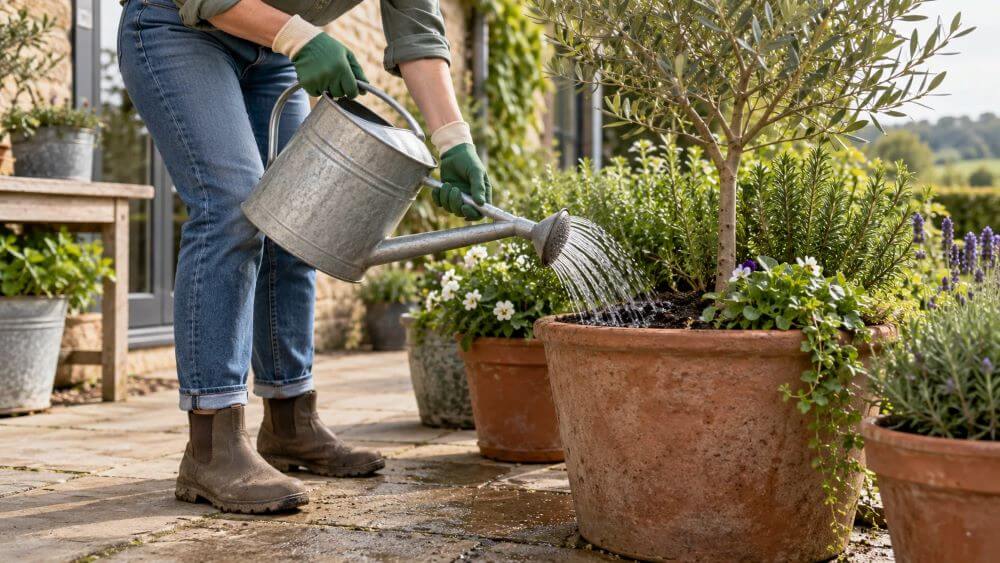
You want regular control
Liquid fertiliser suits gardeners who want to decide when each feed is applied. The feeding programme can be adjusted as the plant moves through different growth stages, and liquid feeding can be stopped without waiting for a long-release product to finish releasing nutrients.
You are feeding containers
Container plants have a limited root zone and can use the nutrients available in potting compost over time. Liquid fertiliser is practical because it can be incorporated into a normal watering routine when the product is designed for that use.
You are managing flowering or fruiting plants
Specialist liquid feeds can be useful when nutrient emphasis changes during flowering and fruiting. The advantage comes from combining a suitable nutrient formulation with a controllable feeding schedule, not simply from the fertiliser being liquid.
Liquid feeding may be less practical when
Liquid fertiliser is less convenient when many containers need frequent attention or when it is difficult to remember the previous application. A controlled-release product can be a better fit when reducing repeat feeding work is more important than frequent adjustment.
When Standard Granular Fertiliser Makes Sense
Beds and borders
Granular fertiliser can be practical for beds and borders where the label recommends dry application. A measured granular product can cover a defined area without preparing a liquid feed for each application.
Choose the formulation for the intended use. A lawn fertiliser, general garden fertiliser and specialist plant fertiliser should not be treated as interchangeable simply because all three are granular.
Soil preparation and top dressing
Some granular fertilisers are intended for incorporation into soil or growing media, while others are used as a top dressing. The application method depends on the individual product. Do not assume that every granular fertiliser belongs in a planting hole or should be spread on the surface.
You prefer a dry measured application
A granular product can simplify feeding when you prefer to measure a dry quantity rather than dilute a liquid concentrate. Accurate dosing still matters. Granular format does not remove the need to follow the stated rate.
When Controlled-Release Fertiliser Makes Sense
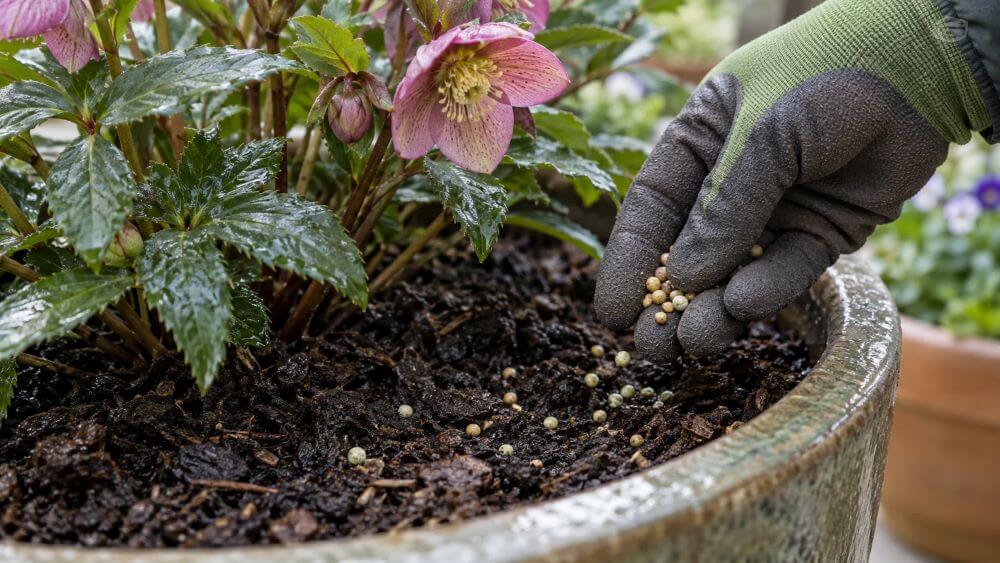
Long-term containers
Controlled-release fertiliser is well suited to containers that remain planted for an extended period. Nutrients are supplied gradually, which can reduce the need for repeated liquid feeding.
RHS guidance for container fruit illustrates the choice clearly: controlled-release pellets can be incorporated into compost, or an appropriate liquid feed can be applied regularly. Both methods can support container plants, but the maintenance pattern is different.
You want fewer repeat applications
Controlled-release fertiliser is useful when convenience is important. The fertiliser remains in the growing media and releases nutrients over time, reducing the number of separate feeding tasks.
You need less frequent intervention
A controlled-release approach can suit gardeners who manage many containers or who know that regular liquid feeding will be difficult to maintain consistently.
Controlled release may be less suitable when
Controlled-release fertiliser gives less immediate control after application. If you expect to change the nutrient emphasis during the season, or if the plant needs a highly adjustable feeding programme, liquid fertiliser may provide more flexibility.
Which Format Works Best in Different Situations?
Hanging baskets and seasonal containers
Liquid fertiliser can work well where plants are watered and inspected frequently during active growth. Controlled-release fertiliser can also suit hanging baskets and seasonal containers when the label confirms suitability and convenience is the priority.
Large patio containers
Controlled-release fertiliser can reduce repeat feeding work in large containers that remain planted for months. Liquid fertiliser may be better where close seasonal control is more important. The correct choice also depends on the nutrients already present in the compost.
Vegetable beds and growbags
Granular fertiliser can be useful for soil preparation or top dressing where the label allows that application. Liquid feeding can become useful later for crops in containers and growbags. Match the fertiliser to the crop and growth stage rather than using one format automatically throughout the season.
Houseplants
RHS guidance recognises both liquid and granular feeding for houseplants. Liquid feeding provides regular control during active growth. Slow-release granules can reduce repeat feeding work. Accurate dosing is particularly important because indoor plants are often confined to relatively small containers.
Lawns
Granular fertiliser is often practical for lawns because dry products can be applied across a measured area. The nutrient formulation and seasonal purpose still matter, so the lawn product should be selected by specification rather than format alone.
How Format and NPK Work Together
Fertiliser format and nutrient balance are separate decisions. A liquid fertiliser can be balanced, nitrogen-led or potassium-led. A granular fertiliser can use the same range of nutrient patterns. Controlled-release products can also be formulated for different plant needs.
This means the buying process should happen in the right order. First choose the nutrient purpose. Then choose the delivery format that best suits the gardening routine.
For example, a gardener may need a potassium-emphasised feed for fruiting plants. The next decision is whether a liquid specialist feed or a longer-duration product better matches the growing situation.
A Better Selection Framework
- 1. Identify where the plant is growing: container, hanging basket, growbag, bed, border or lawn.
- 2. Identify the nutrient objective: general feeding, leafy growth, flowering, fruiting or another specific need.
- 3. Decide how much control you want: frequent adjustment favours liquid feeding; fewer interventions favour controlled release.
- 4. Decide how often you can realistically feed: choose a routine you can maintain consistently.
- 5. Check existing fertiliser: fresh compost or a previous application may already be supplying nutrients.
- 6. Check nutrient formulation: format does not replace the need to choose a suitable NPK balance and product purpose.
- 7. Check the application method: dilution, top dressing, incorporation and controlled release require different handling.
- 8. Check duration: decide whether short-term adjustability or longer-duration feeding is more useful.
- 9. Check scale: a few containers and a large lawn create very different application workloads.
- 10. Pause if compatibility is unclear: do not combine two feeding programmes simply because the products use different formats.
Mistakes to Avoid
Assuming liquid fertiliser is always stronger
Liquid describes the delivery method, not the quality or nutrient concentration of the fertiliser. Compare the formulation and stated dose rather than assuming liquid feed is automatically more powerful.
Treating every granular fertiliser as controlled release
Standard dry granules and coated controlled-release granules are different product types. Check the product description and label rather than relying on appearance.
Adding liquid feed on top of active controlled-release fertiliser
Using liquid feed while controlled-release fertiliser is already supplying nutrients can create an overlapping feeding programme. Check what is already in the compost before adding another nutrient source.
Choosing convenience before suitability
A controlled-release fertiliser may save time, but convenience does not make the nutrient formulation suitable for every plant. Plant type, growth stage and product instructions still control the decision.
Choosing a routine you will not maintain
Product selection should reflect the way the garden is actually managed. Regular liquid feeding is only useful if the applications are made consistently. A longer-duration product may be more practical when frequent feeding is unlikely to happen.
Keeping the Feeding Programme Clear
Use one clear feeding strategy at a time. Record what has been applied to important containers, particularly when controlled-release fertiliser is used. Note the application date and the release duration stated on the product.
For liquid feeding, note the concentration and frequency. A simple record prevents accidental double feeding and makes it easier to change the programme when the plant enters a different growth stage.
Reassess before switching formats. Repotting into fresh compost, applying a controlled-release product or moving from vegetative growth into flowering can all change what the plant needs next.
What to Buy and Where to Get It
Pick the format that fits the way you want to feed. Liquid products suit regular, adjustable feeding; granular products are convenient for beds, borders and larger areas; controlled-release products are useful where longer intervals between applications matter.
Path & Patio lists suitable options within its plant feed and fertiliser range.
For manufacturer-specific browsing, the Doff garden feeding range and Eazifeed plant-feeding products offer further routes for comparing formats and intended uses.
Summary
The three formats solve different practical problems. Liquid fertiliser gives the most immediate control over timing and concentration, granular fertiliser is efficient for broader areas, and controlled-release fertiliser reduces how often feeding needs to be repeated.
No single format is best for every plant or garden. Containers, lawns, borders and fruiting crops can all favour different feeding patterns, and the product instructions still determine dose and frequency.
Choose the format that matches the plant, the area being treated and how often you realistically want to feed, then compare nutrient balance and application rate within that format.
Frequently Asked Questions
Is liquid fertiliser better than granular fertiliser?
No. Liquid fertiliser is generally fast-acting and useful where frequent control is valuable. Granular fertiliser can be more convenient for dry application. The better choice depends on the plant, product and growing situation.
What is controlled-release fertiliser?
Controlled-release fertiliser is usually supplied as coated granules or pellets that release nutrients gradually into the growing media over time. The release period depends on the individual product.
Can I use liquid feed with controlled-release fertiliser?
Do not combine the two automatically. If controlled-release fertiliser is already supplying nutrients, additional liquid feeding may be unnecessary. Check the plant’s needs and the product instructions first.
Is granular fertiliser the same as slow-release fertiliser?
No. Some granular fertilisers are standard dry products, while slow-release or controlled-release granules are specifically designed to release nutrients over time.
Which fertiliser format is best for pots?
Liquid and controlled-release fertilisers can both work well in containers. Liquid feeding offers more frequent control. Controlled release can reduce the number of separate feeding applications.
Which fertiliser format needs the least maintenance?
Controlled-release fertiliser generally needs fewer repeat applications because nutrients are released gradually. The exact duration depends on the product.
Can I change from granular to liquid fertiliser?
Yes, but first check whether the previously applied granular fertiliser is still supplying nutrients. Avoid overlapping feeding programmes without knowing what is already active.
How do I choose between liquid, granular and controlled-release fertiliser?
Compare the growing location, nutrient objective, desired level of control, feeding frequency, existing fertiliser, application method and duration. Then choose the format that best fits those requirements.

Path & Patio is a UK supplier of paving and landscaping products, sharing practical guidance, product expertise and installation advice for patios, paths and driveway projects.