
How to Clean, Store and Maintain Garden Tools to Prevent Rust and Damage
Cleaning garden tools is only half the job. Rust prevention depends on what happens after the mud, sap and plant residue have been removed. If tools are put away damp, left with soil on the blade, stored on a wet shed floor or ignored after pruning diseased material, they can become blunt, stiff, rusty or unsafe to use.
A good tool-care routine is simple: remove debris, clean the working surface, dry the tool fully, oil bare metal where appropriate, lubricate moving parts, sharpen cutting edges only when needed, and store everything in a clean, dry place. This routine helps keep garden tools working for longer, reduces unnecessary replacement costs and makes outdoor work easier.
For hand tools, cutting tools, sprayers, protection and general garden equipment, use Garden Tools and Equipment. Use the checks below first so you know whether a tool needs cleaning, sharpening, oiling, storage improvement or replacement.
Quick Answer: Best Garden Tool Care Routine
- Safest default: clean, dry and inspect tools after use before storing them.
- Remove soil, sap and plant residue from blades, forks, spades and cutting tools before they dry hard.
- Dry metal parts fully before storage to help reduce rust risk.
- Oil pivots, hinges and bare metal where suitable, but wipe away excess oil before the next use.
- Store tools off damp floors and away from standing water, leaking roofs and wet compost bags.
- Stop using any tool with a loose head, cracked handle, badly damaged blade, missing guard or unsafe powered component.
What This Guide Does Not Solve
This guide does not make unsafe tools safe. A cracked handle, loose axe head, badly damaged blade, unstable fork, broken sprayer or faulty powered tool should not be treated as a normal cleaning job. If the defect affects control, strength or safety, repair or replacement is the safer route.
It also does not replace manufacturer guidance for powered garden equipment. Petrol tools, cordless tools, mains-powered equipment and pressure sprayers all have specific storage, servicing and safety instructions. Follow the product manual where available.
This guide focuses on domestic garden tools and equipment: secateurs, pruners, shears, trowels, forks, spades, hoes, axes, saws, sprayers, lawn-care tools and general hand tools. It does not cover chainsaw servicing, arborist equipment, commercial machinery maintenance or professional workshop repair.
When to Pause or Escalate
Stop before using a garden tool if the handle is cracked, the head is loose, the blade is chipped or bent, the pivot is unstable, the guard is missing, or the tool no longer closes, locks or operates correctly. Cleaning and oiling will not fix a tool that is mechanically unsafe.
Pause before sharpening if you cannot hold the tool securely, identify the cutting bevel or protect your hands and eyes. A sharp edge is useful only when it is created safely. RHS guidance explains that garden knives and secateurs can be sharpened with tools such as a whetstone, diamond tool or sharpening steel, but the right method depends on the tool and edge type.
Escalate to professional servicing or replacement if a powered tool vibrates unusually, overheats, cuts unevenly, has a damaged cable or battery housing, leaks fuel, or has worn guards. HSE guidance for horticultural tool use highlights the importance of checking tools before use and maintaining them properly.
Why Garden Tool Care Matters
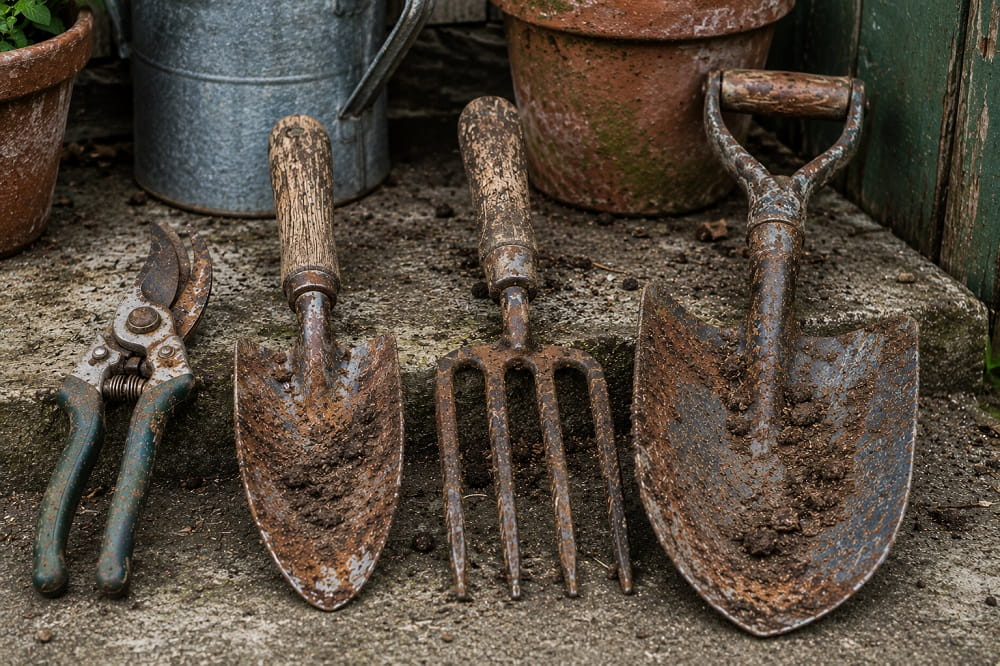
Rust starts when moisture is left behind
Most garden tools work in wet, dirty conditions. Soil, compost, sap and plant residue hold moisture against metal. If the tool is put away wet, rust risk increases. Rust can roughen the surface, weaken the edge, stiffen moving parts and make cleaning harder next time.
Sap and soil reduce cutting performance
Pruners, shears and secateurs quickly collect sap and fine plant residue. Dried sap can make blades sticky, force the user to squeeze harder and leave rougher cuts. RHS advises cleaning off dried-on sap and oiling central pivot points after cleaning, where appropriate.
Dirty tools can spread plant problems
Cutting tools that move from plant to plant can carry plant residue and disease risk. RHS advises cleaning and sterilising garden tools regularly to help prevent disease spread. This matters most after pruning diseased, infected or suspect plant material.
Sharp tools are easier to control
A sharp, well-maintained tool usually needs less force than a blunt one. That improves control and reduces strain. HSE guidance advises keeping cutting tools sharp so they remain efficient.
Tool Care by Tool Type
Secateurs, pruners and shears
These tools need the most regular attention because they touch live plant material and have moving parts. After use, remove sap and plant residue from the blades. Wipe the tool dry, check the pivot and apply a small amount of suitable oil to moving parts where needed.
If the blades crush stems instead of cutting cleanly, they may be blunt, dirty, misaligned or damaged. Clean first. If the edge is still poor, sharpen carefully or replace the blade where the tool allows it. Do not keep forcing a blunt tool through branches, as that increases strain and can damage plants.
Spades, forks, hoes and trowels
Soil tools should be cleaned before storage, especially after clay soil, wet compost or manure. Scrape off soil, rinse where needed, dry fully and wipe bare metal. If the cutting edge of a spade or hoe is dull, light sharpening may improve performance.
Check handles for cracks, looseness and splinters. Wooden handles can dry, split or absorb moisture if stored badly. Keep them off damp floors and away from water pooling near shed doors.
Saws, axes and log-splitting tools
Saws and axes are higher-risk tools because of sharp edges and impact use. Clean sap and dust from saw blades. Dry thoroughly and store with blade protection where available. Axes and splitting tools should be checked for head security, handle cracks and edge damage before use.
If an axe head is loose or a saw blade is bent or badly damaged, stop using it. These are safety defects, not cosmetic issues.
Sprayers and liquid application tools
Sprayers need cleaning after use because residue can block nozzles, damage seals or contaminate the next liquid used. Rinse according to the product used, depressurise safely, clean the nozzle and store dry. Keep sprayers used for weedkillers or chemicals separate from watering or edible-crop use unless the product guidance clearly allows safe cleaning and reuse.
For spray bottles, pump sprayers and controlled liquid application tools, use Hand and Pump Garden Sprayers as the relevant product route.
Lawnmower and petrol-tool accessories
Petrol-powered garden tools need different care from hand tools. Fuel, oil, filters, blades and storage conditions all matter. Use the product manual for servicing intervals and safe storage. For fuel mixing and garden machinery maintenance products, use Lawnmower Fuel and Maintenance.
Decision Framework: Clean, Sharpen, Oil, Store or Replace?
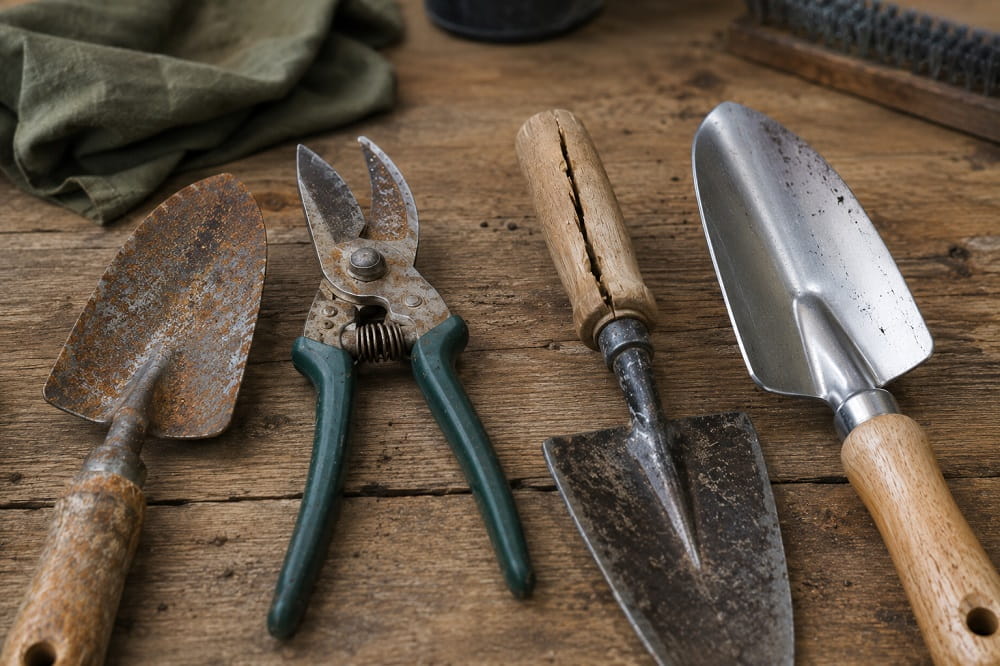
1. Is the tool safe to use?
Check the handle, head, blade, pivot, guard and lock. If anything is loose, cracked, bent or unstable, stop. Cleaning should not come before safety.
2. Is the tool dirty or contaminated?
If there is soil, sap, plant residue, rust, chemical residue or disease-risk material, clean it before storage. Cutting tools used on diseased plants should be cleaned and sterilised before they are used elsewhere.
3. Is the metal dry?
If the tool is wet, dry it fully before storage. Rust prevention starts with moisture control. Wiping a blade clean but leaving it damp is not enough.
4. Does the edge still work?
If a cutting tool crushes, slips or needs excessive force, clean it first, then assess the edge. Sharpen only if the tool type and blade condition suit sharpening. Replace damaged blades where needed.
5. Is the storage area causing the damage?
Pause before blaming the tool if it is stored in a damp shed, on a concrete floor, under a leak or beside wet compost, fertiliser or chemicals. Storage conditions often cause repeated rust and damage to the handles.
Step-by-Step: Clean and Store Garden Tools
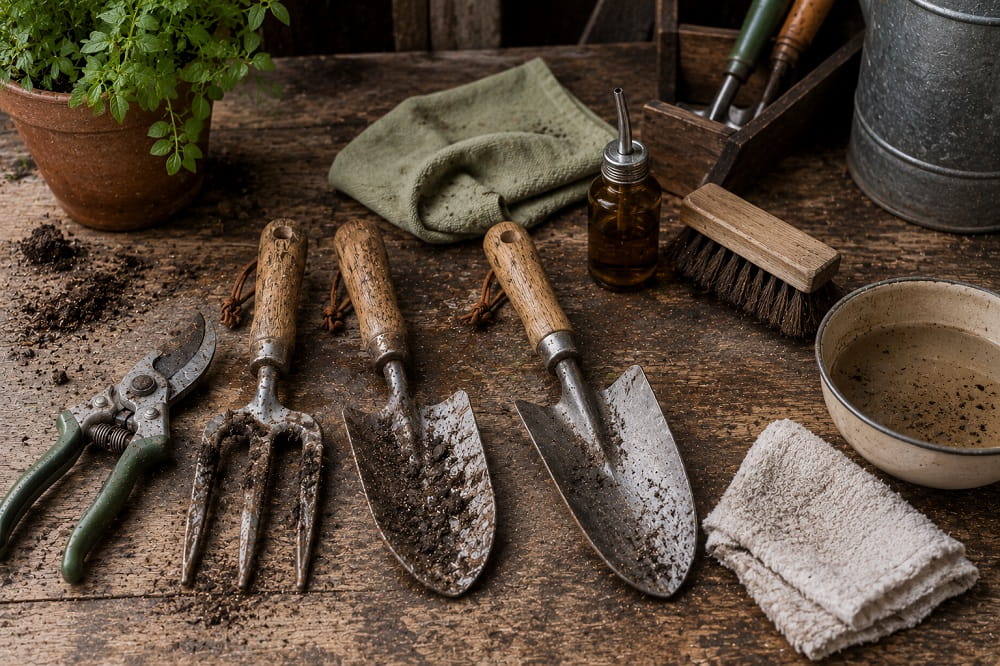
Step 1: Remove loose debris
Brush or scrape off soil, grass, compost, leaves and plant residue. Do this before washing where possible so debris does not turn into a slurry around hinges, handles and ferrules.
Step 2: Wash only where needed
Use water and a brush for soil tools. For sticky blades, use a suitable cleaning method for sap and residue. Avoid soaking wooden handles unnecessarily.
Step 3: Dry thoroughly
Dry metal parts, handles, joints and pivots before storage. Pay attention to hidden areas around bolts, springs and blade overlaps.
Step 4: Sterilise cutting tools when needed
Clean and sterilise tools after cutting diseased or suspect plant material, and before moving to vulnerable plants. Follow the sterilising product guidance and dry the tool afterwards.
Step 5: Oil moving parts
Apply a small amount of suitable oil to hinges, pivots and springs where appropriate. Open and close the tool to work the oil in, then wipe off excess.
Step 6: Protect bare metal
Lightly oil bare metal surfaces where suitable, especially before longer storage. Do not leave tools dripping with oil, and avoid contaminating soil or plants on the next use.
Step 7: Sharpen only when needed
Sharpen secateurs, knives, hoes, spades or blades only when the edge is dull and the tool can be held safely. Follow the tool’s existing bevel and do not grind away more metal than necessary.
Step 8: Store clean and dry
Hang tools where possible or store them in a dry rack, box or shelf. Keep blades covered where practical. Avoid leaving tools on damp floors or leaning where sharp edges can cause injury.
Common Mistakes
Putting tools away wet
This is the fastest route to rust. Even a clean tool can corrode if it is stored damp in a shed with poor airflow.
Only cleaning at the end of the year
End-of-season cleaning is useful, but it should not be the only maintenance. Tools used heavily or on diseased plants need attention sooner.
Ignoring sap on blades
Dried sap makes tools sticky and less efficient. Clean sap before it hardens, especially on secateurs, loppers and shears.
Over-oiling tools
Oil helps protect and lubricate, but excess oil attracts dirt and can transfer to soil, plants or hands. Use a light coating and wipe away surplus.
Sharpening without control
Loose tools, unstable benches and rushed sharpening create injury risk. Clamp or hold tools securely and work away from the body where possible.
Storing sharp tools unprotected
Sharp blades should not be left loose in buckets, bags or drawers where hands can contact them unexpectedly. Use covers, racks or dedicated storage.
Maintenance and Prevention
The best tool-care system is routine, not rescue. After ordinary use, remove soil and dry the tool. After pruning, clean sap from blades. After disease-risk work, clean and sterilise cutting tools. Before winter storage, inspect, oil and sharpen where needed.
After each use: remove soil, grass, sap and loose debris.
After wet work: dry metal and handles before storage.
Monthly during active use: inspect handles, pivots, blades, screws and guards.
After pruning diseased plants: clean and sterilise cutting tools before reuse.
Before long-term storage: clean, dry, oil, sharpen where needed and store in a dry, organised place.
Keep storage simple. A wall rack, dry shelf or dedicated tool box is usually better than a damp corner. Do not store sharp tools where children, pets or visitors can reach them.
Your Next Step: DIY or Professional
DIY maintenance is usually suitable for ordinary cleaning, drying, light oiling, basic sharpening and storage improvements. This covers most secateurs, spades, trowels, forks, shears and hand tools.
Professional servicing or replacement is safer where the tool is powered, structurally damaged, badly bent, cracked, missing guards, vibrating unusually or difficult to control. Do not keep using a tool because it can still “just about” do the job.
For replacements, protective equipment, cutting tools, sprayers and general maintenance equipment, use Garden Tools and Equipment as the main category route.
Summary
Garden tool care is not complicated, but it does need consistency. Clean off soil and sap, dry tools fully, oil bare metal and pivots where suitable, sharpen cutting edges only when needed, and store everything in a clean, dry place.
The main risks come from damp storage, blunt or sticky blades, cracked handles, loose heads and unsafe sharpening. A few minutes of cleaning and inspection after use can help prevent rust, reduce damage and keep tools easier to control.
Frequently Asked Questions
How often should I clean garden tools?
Remove soil and debris after each use. Clean cutting tools more carefully after pruning, and clean and sterilise them after contact with diseased or suspect plant material.
How do I stop garden tools from rusting?
Clean off soil, dry the metal fully, apply a light protective oil where suitable and store tools in a clean, dry place away from damp floors and leaks.
Should I oil garden tools?
Yes, where suitable. Use a small amount on bare metal and moving parts such as pivots or springs. Wipe away excess oil before storage or reuse.
How should I store garden tools over winter?
Clean, dry, inspect, oil and sharpen where needed, then store tools off the floor in a dry place. Keep sharp blades covered or safely organised.
Can dirty tools spread plant disease?
They can contribute to disease spread, especially cutting tools used on infected plant material. Clean and sterilise cutting tools before moving between suspect and healthy plants.
When should I sharpen garden tools?
Sharpen when the edge is dull, crushing plant material or requiring excessive force. Clean the tool first and use the correct sharpening method for the blade.
Should I keep using a tool with a cracked handle?
No. A cracked handle can fail during use. Replace or repair it properly before using the tool again.
What is the best product route for garden tool maintenance?
Start with the Garden Tools and Equipment category, then choose the relevant route for cutting tools, protection, sprayers, soil tools or lawnmower maintenance.

Path & Patio is a UK supplier of paving and landscaping products, sharing practical guidance, product expertise and installation advice for patios, paths and driveway projects.