
Decking Care Basics: How Often to Clean, Treat and Maintain Timber Decking
Timber decking lasts better and stays safer when it is maintained as a routine, not treated only when it turns green, slippery or weathered. Rain, shade, foot traffic, garden furniture, plant pots, leaves and changing UK weather all affect how quickly a deck becomes dirty, damp or worn.
The right approach is simple: inspect regularly, sweep often, clean thoroughly when needed, let the boards dry properly, and only treat the timber when the surface is clean, dry and compatible with the chosen product. More product is not automatically better. Cleaning, repairing and protecting are separate jobs.
For decking cleaners, oils, sealers and maintenance products, use Decking Care and Maintenance. Choose products based on the deck condition, not just the season.
Quick Answer: How Often Should You Maintain Timber Decking?
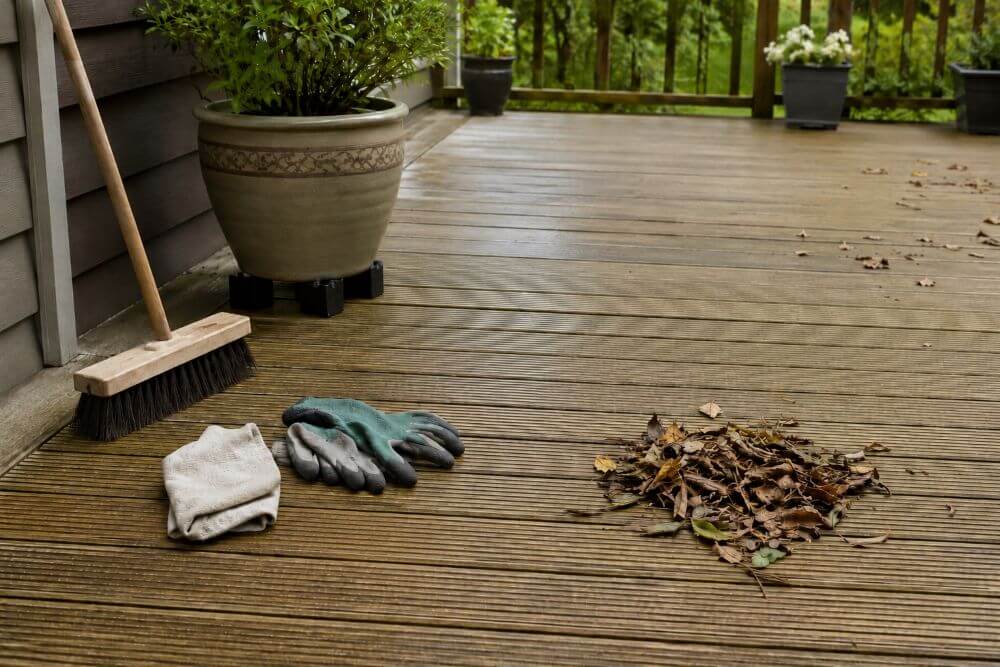
- Safest default: sweep regularly and remove leaves, soil and loose debris before using cleaners or treatments.
- Inspect decking monthly during active garden use, especially steps, shaded areas and high-use routes.
- Give timber decking a more thorough clean at least once a year, usually in spring.
- Assess timber treatment each year, but only oil, seal or coat when the deck is clean, dry and product-compatible.
- Consider water-repellent treatment only where appropriate for the timber and existing finish.
- Stop and get help if boards are loose, rotten, springy, badly splintered or still slippery shortly after cleaning.
What This Guide Does Not Solve
This guide does not repair rotten boards, weak joists, loose fixings, unstable steps, failed handrails or collapsed substructures. Cleaning and treatment can improve appearance and surface condition, but they do not make unsafe decking structurally sound.
It also does not replace product labels or timber-system guidance. Decking cleaners, oils, stains, sealers, water repellents and anti-slip products have different surface preparation, drying and compatibility requirements.
This guide focuses on routine care for timber decking. Composite decking, painted decking, specialist hardwood systems and heavily coated decks may need different methods and manufacturer guidance.
When to Pause or Escalate
Stop before cleaning, oiling or treating if boards are loose, rotten, soft, springy underfoot, badly splintered or if fixings are raised. These are repair and safety issues. A cleaner or oil may improve appearance, but it will not fix failed timber or a weak structure.
Pause before sanding if you cannot control the dust. Sanding and cutting timber can create fine wood dust, and HSE guidance highlights serious health risks from wood dust exposure. If sanding is needed, use suitable dust extraction, respiratory protection where required and safe cleanup methods rather than dry sweeping fine dust into the air.
Escalate to professional help if the deck remains slippery shortly after cleaning, if the frame feels unstable, if handrails move, if large areas of finish are peeling, or if boards need sanding, stripping or replacement.
Why Decking Needs Routine Care
Outdoor timber changes with the weather
Timber decking is exposed to rain, sun, frost, shade and everyday wear. Over time, boards can collect dirt, algae, moss, leaf residue, food marks and moisture. Some timber will also fade or grey as it weathers. That is not always a failure, but it should be monitored.
Slip risk is a safety issue
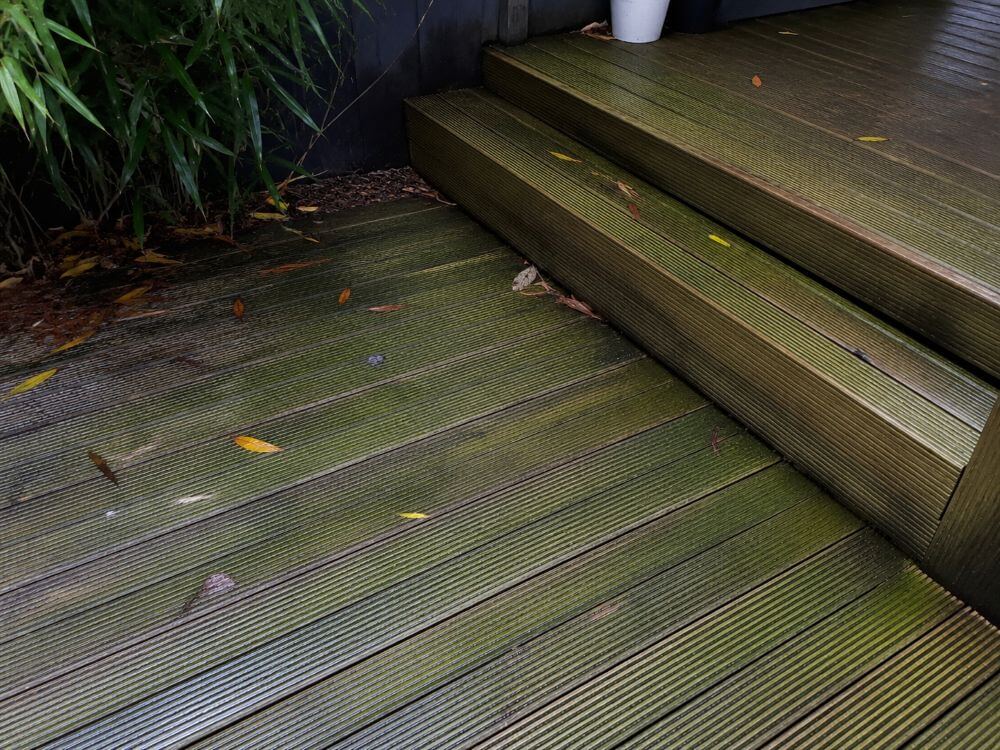
Green or slimy decking should not be treated as only cosmetic. Wooden surfaces, such as decking, can become slippery where algae grows. That matters most on steps, ramps, entrances, shaded sections and routes used daily.
Cleaning and treating are different jobs
Cleaning removes dirt, algae, mildew and surface contamination. Treating protects or enhances the timber. Treating dirty boards can trap the problem beneath a finish and create patchy results.
Airflow and drying are part of maintenance
Decking that stays damp for long periods is more likely to grow algae and moss. Pots, mats, furniture and dense planting can trap moisture. Better airflow, fewer wet leaf piles and regular sweeping reduce the conditions that allow green growth to return.
Decking Care Schedule
Weekly during heavy garden use
Sweep away leaves, food debris, soil, grass cuttings and grit. Pay attention to board grooves, corners, steps and spaces under furniture. If food, grease or drink is spilt, clean it promptly so it does not settle into the timber.
Move lightweight furniture and plant pots occasionally so water and dirt do not sit underneath them. Where planters stay on the deck, use suitable feet or spacers so air can move below them.
Monthly checks
Inspect fixings, boards, steps, rails, shaded walking routes and edges. Look for raised screws, splinters, soft patches, green growth, pooling water, loose boards and areas that stay wet after the rest of the deck has dried.
If a section is starting to turn green, deal with it early. A quick brush and clean at this stage is usually easier than treating a full slippery surface later.
Spring clean
Spring is the main reset point for most timber decking. Clear winter debris, brush thoroughly and clean the surface with a suitable decking cleaner if brushing and water are not enough.
TDCA guidance supports a more thorough cleaning at least once a year, preferably in spring. For most domestic decks, this is a sensible baseline. Shaded, damp or heavily used decks may need more frequent attention.
Late spring and summer checks
Once the deck is clean and fully dry, assess whether the timber needs treatment. If water no longer beads on previously treated timber, the surface looks dry or the finish has worn unevenly, a suitable oil, sealer or water-repellent treatment may be appropriate.
Do not treat simply because the calendar says summer. Treatment should follow the condition, product compatibility and weather window.
Late summer treatment window
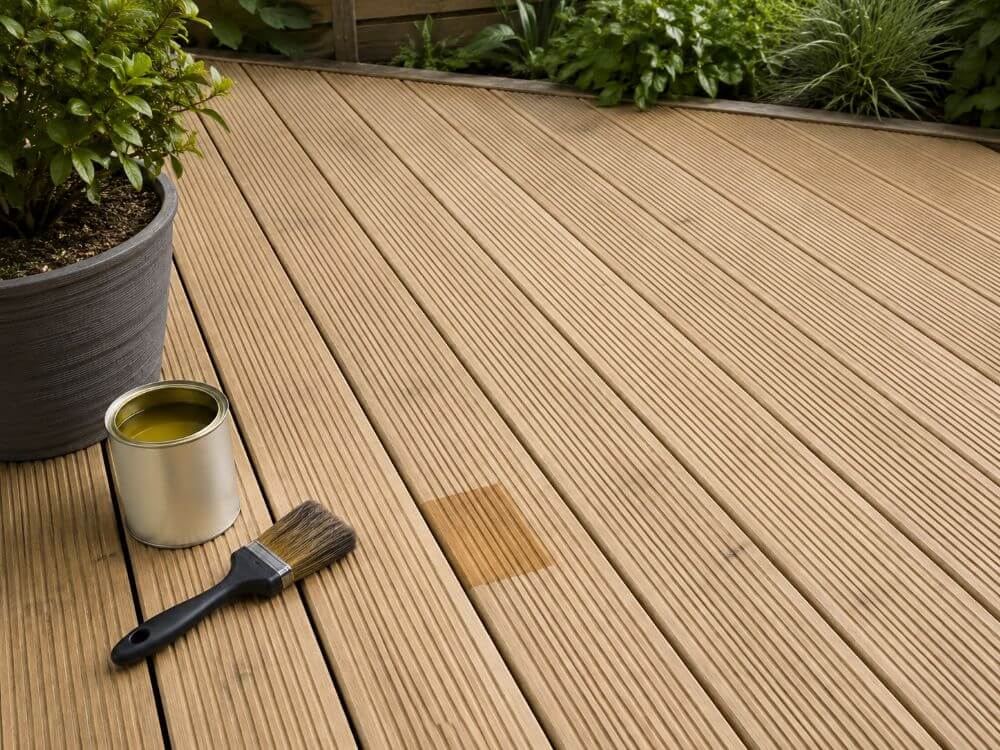
Late summer can be a practical time for protective treatment because timber is more likely to dry fully. TDCA guidance says a water-repellent coating may be used every other year, preferably at the end of summer. Treat this as conditional guidance, not a rule for every deck.
Before applying any treatment, check the label, the existing finish, timber condition and forecast. Do not apply to damp, dirty, frosty or incompatible surfaces.
Autumn preparation
Autumn leaves are one of the biggest avoidable decking problems. Wet leaves hold moisture, stain timber and encourage algae. Sweep regularly through leaf fall and keep board grooves clear.
Trim back plants where practical to improve light and airflow. Check that furniture, pots and mats are not trapping wet debris against the boards.
Winter safety checks
In winter, prioritise safe access. Focus on steps, entrances and shaded routes. Remove loose debris and deal with slippery areas only when conditions are safe.
Avoid unnecessary soaking when freezing conditions are likely. Water left on shaded boards, steps or grooves can increase slip risk.
Decision Framework: Clean, Treat, Repair or Replace?
1. Is the deck structurally sound?
Walk the deck slowly. If boards flex excessively, move, feel soft or have raised fixings, stop. Repair comes before cleaning, treating or coating.
2. Is the issue dirt, growth or timber damage?
Dirt, algae and light mildew are cleaning issues. Soft boards, rot, loose fixings, broken edges and unstable steps are repair issues. Do not confuse the two.
3. Is the deck slippery?
Slippery decking should be treated as a safety risk. Clean the surface and then address the conditions causing it: shade, wet leaves, poor airflow, trapped moisture or drainage issues.
4. Is the timber dry enough for treatment?
Timber treatment needs suitable conditions. If boards are damp, recently washed, shaded and slow to dry, or rain is likely before curing, wait.
5. Is the existing finish compatible?
Pause before applying oil, sealer, stain or water repellent if the old finish is unknown, peeling, patchy or incompatible with the new product. Patch testing and preparation are safer than assuming products will layer correctly.
Step-by-Step Basic Decking Care Routine
Step 1: Clear the deck
Remove furniture, pots, mats, barbecues and loose items where practical. This exposes hidden damp patches and lets you inspect the whole surface.
Step 2: Sweep thoroughly
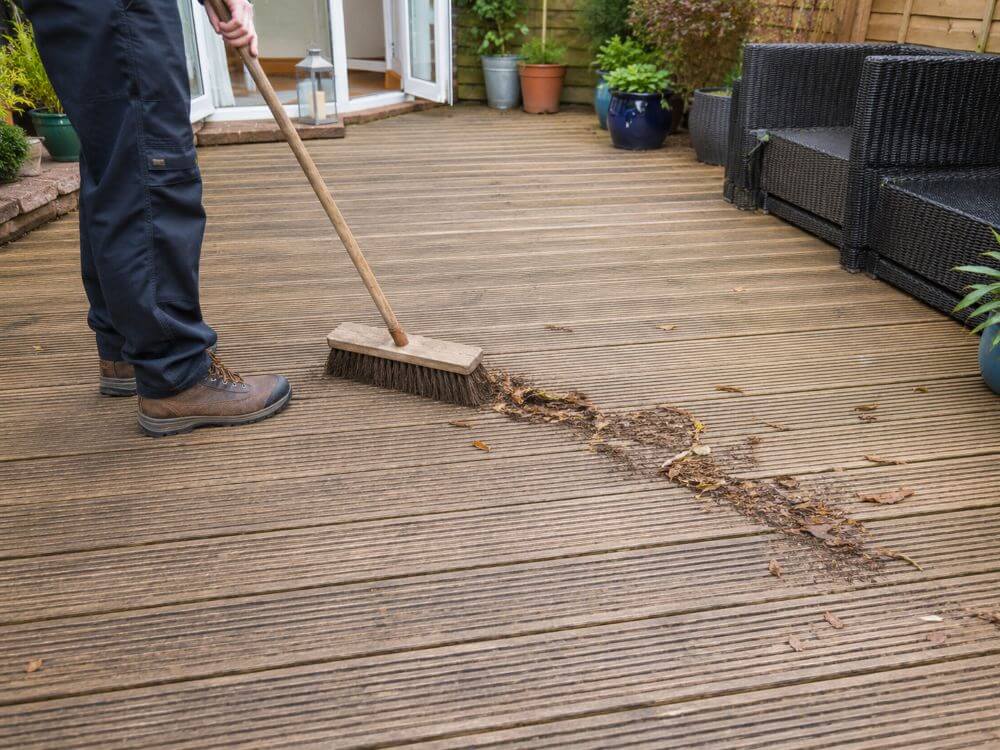
Use a stiff outdoor broom to remove leaves, soil, loose moss and grit. Brush along the board direction and clear corners and steps.
Step 3: Inspect for damage
Check boards, fixings, rails and steps. Look for movement, rot, splinters, raised screws and soft patches. Fix safety issues before wet cleaning.
Step 4: Start with water and brushing
Clean a small section with water and a brush. If the dirt lifts, continue manually. If algae, mildew or heavier grime remains, use a decking cleaner matched to the timber and existing finish.
Step 5: Use the cleaner only as directed
Follow dilution, dwell time, brushing and rinse instructions. Work in sections so the product does not dry unevenly. Do not mix cleaners.
Step 6: Rinse and let the deck dry
Rinse where the label requires it and allow the timber to dry fully. Drying depends on weather, shade, airflow and board condition.
Step 7: Decide whether treatment is needed
If the deck is clean, dry and suitable, apply an oil, sealer, stain or water-repellent treatment only where the product matches the timber and existing finish. If the previous finish is sound, cleaning alone may be enough.
Step 8: Keep moisture moving
Move pots and furniture occasionally, keep leaves off the surface and improve airflow where planting traps damp. Prevention is part of the care routine.
Common Mistakes
Using a pressure washer too aggressively
Pressure washing can be suitable in some cases, but high-pressure or close-range spraying can bruise or damage timber. Use a lower setting, keep the lance away from the surface and stop if the board roughens or splinters.
Treating before cleaning
Oil, stain, sealer or water repellent should not be used to cover dirt, algae or mildew. Clean first, let the deck dry and then decide whether treatment is needed.
Applying treatment to damp timber
Damp timber can prevent correct absorption or curing. Wait until the deck is dry enough for the product being used.
Leaving pots and mats in one place
Plant pots, mats and furniture can trap moisture. Move them periodically and use suitable feet or spacers where needed.
Ignoring shaded steps
Steps and shaded routes often become slippery first. Include them in monthly inspections and winter safety checks.
Sanding without dust control
Sanding can be part of refurbishment, but it creates wood dust. Use appropriate controls, PPE and cleanup methods. Do not dry-sweep fine sanding dust into the air.
Maintenance and Prevention
The best decking care routine is simple and repeatable. Sweep often, deep clean at least once a year, inspect monthly during active use, and treat only when the timber is clean, dry and suitable for the product.
Weekly in high-use periods: sweep leaves, soil and food debris.
Monthly: inspect fixings, steps, shaded routes and high-use areas.
Spring: deep clean and assess winter wear.
Summer: check whether the timber needs oil, sealer, stain or water-repellent treatment.
Autumn: clear leaf fall before it stains or feeds algae.
Winter: prioritise slip safety and avoid unnecessary soaking.
Your Next Step: DIY or Professional
DIY maintenance is usually suitable when the deck is structurally sound, the surface issue is light to moderate, the timber type is known and the product instructions are clear.
Professional help is the safer route if boards are rotten, loose, springy, badly splintered, persistently slippery, heavily coated, or if the work requires sanding, stripping, board replacement or structural repair.
For routine care, use Decking Care and Maintenance as the main product route. Choose products based on whether the deck needs cleaning, colour improvement, protection or slip-risk management.
Summary
Timber decking care is mainly about timing and restraint. Sweep regularly. Deep clean at least once a year, preferably in spring. Inspect boards, steps, fixings and shaded areas throughout the year. Treat timber only when it is clean, dry and suitable for the chosen product.
The most common problems come from small tasks being missed: leaves left to rot, pots trapping damp, algae building up on shaded steps, pressure washing too aggressively or applying treatment before boards are ready. A simple routine helps decking stay safer, cleaner and easier to maintain.
Frequently Asked Questions
How often should I clean timber decking?
Brush and sweep regularly, then give the deck a more thorough clean at least once a year, usually in spring. Shaded, damp or high-use decks may need more frequent attention.
How often should I oil or treat decking?
Assess the deck each year. Treat only when the timber is clean, dry and in need of protection or finish renewal. Some water-repellent treatments may be considered every other year where suitable.
Can I pressure wash timber decking?
Sometimes, but it must be done carefully. Use lower pressure, keep the lance away from the surface and stop if the timber roughens, splinters or marks.
Why is my decking slippery?
Slippery decking is often caused by algae, moss, wet leaves, shade, poor airflow or trapped moisture. Cleaning helps, but the conditions causing dampness should also be reduced.
Should I clean the decking before treating it?
Yes. Timber should be clean and dry before oil, stain, sealer or water-repellent treatment is applied.
Can I treat damp decking?
No. Damp timber can cause poor absorption, patchy results or curing problems. Wait until the deck has dried properly and check the product instructions.
What should I do if the boards are soft or rotten?
Stop treating the surface as a cleaning issue. Soft or rotten boards need repair or replacement, and the frame may need checking.
How do I stop decking from going green again?
Brush regularly, clear leaves, move pots, improve airflow and reduce shade where practical. If green growth returns quickly, check whether the boards are staying damp for too long.

Path & Patio is a UK supplier of paving and landscaping products, sharing practical guidance, product expertise and installation advice for patios, paths and driveway projects.