
Damp Proofing and Waterproofing Basics for External Walls and Hard Surfaces
Water damage is usually a system failure, not a single crack. A damp wall, wet patio edge or stained masonry surface may be caused by several linked issues: poor drainage, porous materials, trapped moisture, high ground levels, failed joints, cracked render, blocked gutters, standing water, condensation or an unsuitable previous coating.
The right treatment depends on the cause. A water repellent may help suitable porous external surfaces shed rainwater. A damp-proofing slurry may be suitable for certain masonry or concrete waterproofing jobs. A repair compound may be needed where water is entering through a specific defect. In other cases, the correct answer is not a coating at all, but drainage, repair, ventilation or professional diagnosis.
For damp proofing, waterproofing, water-repellent treatments, bonding agents, primers, coatings and related building products, use Building and Structural Treatments. Choose products only after checking the surface material, moisture source, breathability and whether the area needs repair before treatment.
Quick Answer: What Should You Do First?
- Safest default: identify where the water is coming from before applying any damp proofing or waterproofing product.
- Check gutters, downpipes, drainage, cracks, ground levels, joints, vents, surface coatings and areas where water pools.
- Use a water repellent only on suitable porous external surfaces where the wall or surface still needs to breathe.
- Use damp-proofing slurry, membranes or coatings only where the substrate and product guidance clearly support that use.
- Do not seal over active damp, trapped moisture, salt contamination, mould, loose render, failed pointing or unstable surfaces.
- Stop and get professional advice for historic buildings, listed buildings, widespread internal damp, active leaks, mould growth, structural cracks or repeated treatment failure.
What This Guide Does Not Solve
This guide does not diagnose every form of damp. Rising damp, penetrating damp, condensation, leaks, salt contamination and ground moisture can look similar to non-specialists. Treating the wrong cause can waste money and make the problem harder to fix.
It also does not replace a damp survey, structural assessment or product-specific technical guidance. Damp proofing and waterproofing products vary by substrate, moisture pressure, exposure, temperature, application method and drying requirements.
This guide focuses on external walls, masonry, concrete, patio edges, hard surfaces and general moisture-protection decisions. It does not provide a specification for basements, tanking systems, structural waterproofing design, heritage conservation or below-ground waterproofing.
When to Pause or Escalate
Stop before applying waterproof coatings or sealers if the surface is visibly damp, mouldy, salt-stained, crumbling, flaking, cracked, recently washed, or if water is actively entering. A surface treatment can trap moisture, hide the problem temporarily or fail early if the cause has not been corrected.
Pause before treating older, lime-based, solid-wall or traditionally constructed buildings. The Historic England guidance on damp in historic buildings is clear that older buildings need careful investigation and appropriate moisture management. In these buildings, breathability is not a small detail; it is part of how the structure manages moisture.
Escalate to a qualified professional if damp appears internally, returns after treatment, follows heavy rain, affects structural timber, appears around chimney breasts, spreads across several rooms, or is linked to cracking, subsidence, drainage failure or basement water ingress. Product choice should come after diagnosis, not before it.
Damp Proofing and Waterproofing Are Not the Same
Damp proofing manages moisture risk
Damp proofing usually refers to measures that resist or reduce moisture movement through walls, floors or surfaces. It can include membranes, damp-proof coatings, slurries, primers and moisture barriers. These products can be valuable where the substrate and moisture conditions match the product specification.
Damp proofing does not automatically solve the cause of damp. If water is entering because of a blocked gutter, leaking downpipe, failed flashing, bridged damp proof course or high ground level, the source still needs fixing.
Waterproofing resists water ingress
Waterproofing is usually a stronger term. It is used where the surface or structure needs to resist water penetration more directly, often in concrete, masonry, subfloors, basements, water-retaining structures or exposed areas.
Waterproofing products may include slurries, liquid membranes, admixtures, tanking systems and specialist coatings. These products are not automatically right for every external wall. Suitability depends on pressure, substrate, breathability and whether the structure needs to dry through that surface.
Water repellents shed rain but may still allow vapour movement
Water repellents are often used on porous external masonry, brick, stone, concrete or timber where the aim is to reduce rain penetration while keeping the surface appearance relatively unchanged. Some products are designed to create an invisible water-shedding barrier on suitable surfaces.
Penetrating damp can also come from wider maintenance, detailing or design issues, not only obvious cracks. Check the whole wall, roofline, openings, pointing, render and drainage path before choosing a treatment.
For external water-repellent options, use Water Repellents and Waterproofing Products. Match the product to the surface, porosity, exposure and drying requirements.
Common Moisture Sources Around External Walls and Hard Surfaces
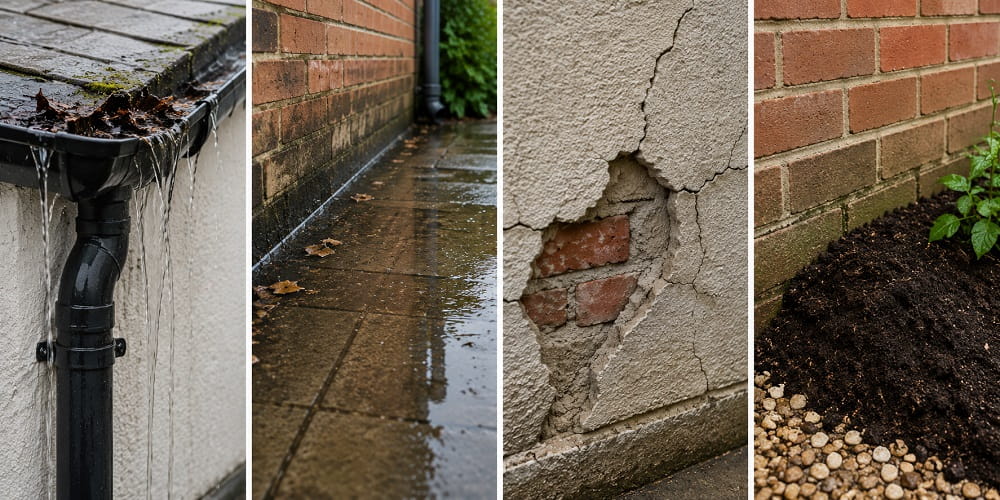
Rain penetration
Rain penetration can occur through porous brickwork, cracked render, failed pointing, open joints, defective copings, window surrounds or exposed masonry. A water repellent may help in some cases, but defects should be repaired first.
Standing water
Standing water near walls, patio edges or hard surfaces can increase moisture pressure. Water that sits against masonry for long periods can stain surfaces, encourage algae and increase the risk of penetrating damp.
High ground levels
External paving, soil, gravel or raised beds can bridge protective details if they sit too high against a wall. Before applying any treatment, check whether ground levels are forcing moisture into the wall.
Blocked gutters and downpipes
Overflowing gutters and leaking downpipes are common causes of damp patches on external walls. Coating the wall without fixing the water source is a short-term cosmetic response, not a repair.
Condensation and ventilation
Not all damp-looking problems start outside. Condensation can create internal damp, mould and moisture staining. The Energy Saving Trust explains that excess moisture can damage the building fabric and mould can affect health, so ventilation, heating and moisture control may need to be part of the solution.
Treatment Types Explained
Water-repellent treatments
Water-repellent treatments are used to reduce water absorption on suitable porous external surfaces. They are commonly considered for brick, stone, concrete, render and timber where rain penetration or surface wetting is the issue.
For a Path & Patio product example, Thompsons Water Seal is positioned for masonry, stone, concrete and wood surfaces. It should be used only where the surface is suitable, clean, prepared and compatible with the product guidance.
Damp-proofing slurries
Damp-proofing slurry is usually a cementitious coating mixed and applied to suitable masonry or concrete substrates to form a moisture-resistant or waterproofing barrier. It can be used in more demanding waterproofing situations than a simple water repellent, but it still needs correct surface preparation.
For a Path & Patio product example, Sika Damp Proof Slurry is described for concrete, brickwork and blockwork waterproofing applications. It should not be treated as a universal external wall fix.
Liquid damp proof membranes
Liquid membranes are designed to create a barrier against moisture on suitable floors, walls or structural surfaces. They may be used in construction or renovation work where the substrate is compatible and the system design is correct.
These products are more system-dependent than many DIY users expect. Surface cleanliness, dryness, curing, adhesion and compatibility with following layers all matter.
Primers and bonding agents
Primers and bonding agents are not waterproofing products by themselves in every situation. They prepare or improve adhesion between surfaces and treatments. Used correctly, they help coatings and repair materials perform more reliably.
Rapid repair compounds
Rapid-setting repair compounds may be used for specific cracks, holes or active leak points where the product is designed for that task. They do not replace diagnosis of the wider water source.
Decision Framework: Diagnose Before Treating
1. Where is the moisture coming from?
Start with observation. Does the wall become wet after rain? Is the damp low-level, high-level, patchy or around openings? Does water pool near the base? Are gutters leaking? Is the issue internal only? The Property Care Association guidance says the first step in controlling damp is to understand the root cause.
2. Is the surface sound?
Do not treat loose, dusty, flaking, salt-contaminated, cracked or crumbling surfaces without preparation or repair. A coating or sealer can only perform properly if it bonds to a suitable substrate.
3. Does the wall need to breathe?
Breathability matters, especially in older buildings. Some waterproof coatings, membranes and sealants can trap moisture in traditional walls. Historic England warns that methods suitable for modern buildings can cause decay and moisture problems in traditional construction when used inappropriately.
4. Is the product a surface treatment or a system?
A water repellent, slurry, primer and membrane do different jobs. Do not choose by strength alone. A stronger waterproofing system can be the wrong choice if the wall needs vapour movement or if the water source has not been corrected.
5. Has the cause been fixed?
Pause before treating if gutters, cracks, drainage, pointing, ground levels, vents or water pooling have not been checked. A product applied over an unresolved cause may fail, peel, trap moisture or move the problem elsewhere.
Step-by-Step: Assess an External Damp or Waterproofing Problem
Step 1: Record where and when damp appears
Note whether damp appears after rain, during winter, near the ground, around openings, next to hard surfaces or inside only. Patterns help separate penetrating rain, ground moisture, condensation and defects.
Step 2: Check water routes
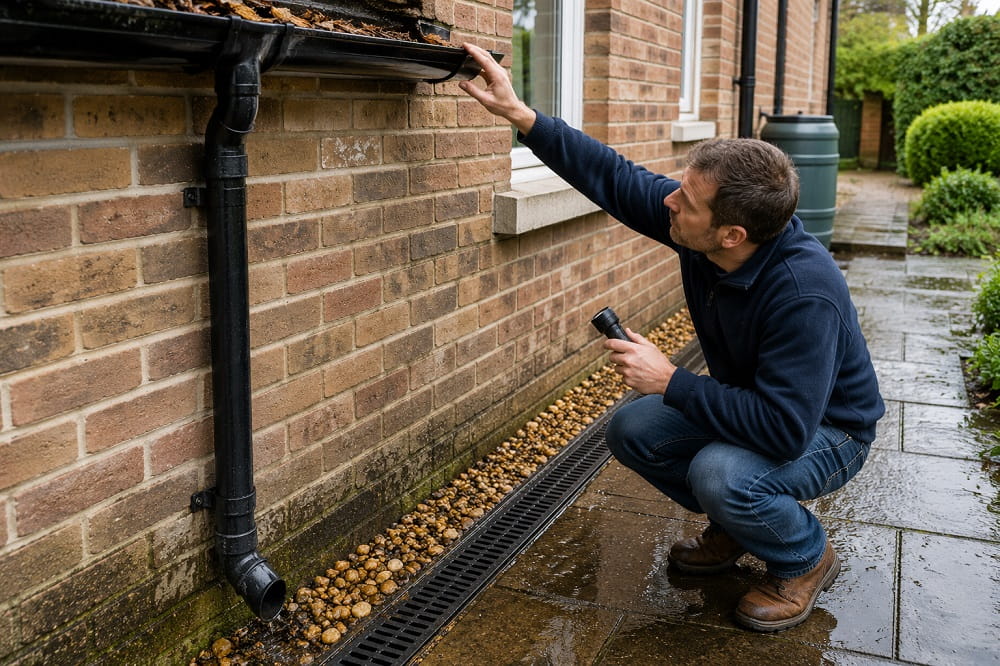
Inspect gutters, downpipes, drains, gullies, patio falls, pointing, cracks, thresholds, render and wall bases. Look for anything directing water towards the wall or holding water against it.
Step 3: Check the surface material
Identify whether the surface is brick, stone, concrete, render, timber, blockwork, paving or a coated surface. Product suitability depends on material and porosity.
Step 4: Check whether the building is traditional or modern
Solid-wall, lime-based, historic and listed buildings may need breathable repair methods rather than modern waterproof coatings. Get specialist advice before applying non-breathable membranes or sealers.
Step 5: Repair obvious defects first
Fix cracked pointing, open joints, leaking downpipes, failed edges and water traps before applying surface treatments. Products perform better when defects are corrected first.
Step 6: Choose the lightest suitable treatment
Use the least aggressive product that fits the diagnosis. A water repellent may suit suitable external porous surfaces. A slurry or membrane may suit a specific waterproofing task. A repair compound may suit a crack or active leak point.
Step 7: Patch test
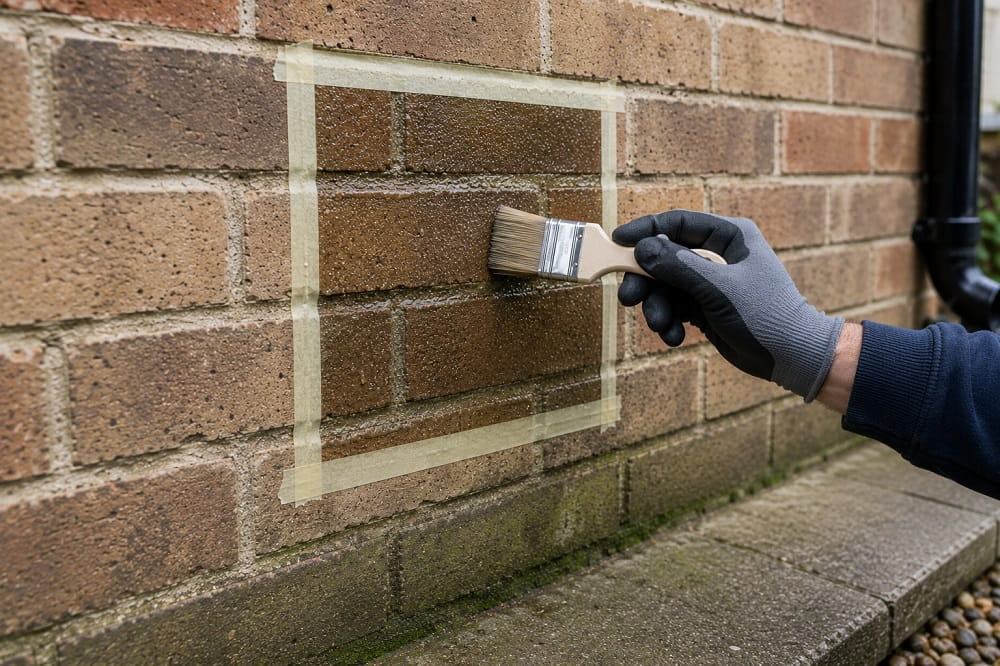
Always test a small area where appearance, staining, darkening or compatibility matters. Some products change surface appearance or affect later coatings.
Step 8: Maintain the system
After treatment, keep gutters clear, check drainage, monitor cracks, clean surface growth and inspect areas after heavy rain. Waterproofing is not a substitute for maintenance.
Common Mistakes
Sealing over damp
Sealing over active damp can trap moisture and cause early product failure. The source should be identified and corrected first.
Assuming the strongest product is best
A strong waterproof coating may be wrong for a breathable wall. Product choice should match the building, substrate and moisture path.
Ignoring ground levels
High paving, soil, gravel or beds can hold moisture against walls. Reducing water contact may do more than applying another coating.
Treating mould as an external waterproofing issue
Mould may be linked to condensation, ventilation or internal moisture. External wall treatment may not solve the cause.
Using water repellent on dirty or unstable surfaces
Water repellents need suitable, clean and prepared surfaces. Loose material, algae, grease, salt and dust can reduce performance.
Ignoring previous coatings
Old paint, sealers, bitumen coatings, render, tanking and membranes can affect compatibility. Do not apply new products over unknown systems without checking.
Maintenance and Prevention
The best damp prevention is often routine maintenance. Keep gutters clear. Repair downpipes. Maintain pointing. Keep drains free-flowing. Prevent water from pooling at wall bases. Trim planting where it traps damp against walls.
For hard surfaces, check falls and drainage. Patio edges, paving joints and concrete surfaces should not send water towards walls or thresholds. If water collects repeatedly, surface treatment alone is unlikely to solve the issue.
Inspect treated surfaces after heavy rain and after winter. Look for dark patches, peeling, salt deposits, algae, cracks or water tracks. Early correction prevents larger failures later.
In older buildings, favour breathable maintenance and specialist advice. In modern masonry and concrete, choose product systems that match the substrate and exposure.
Your Next Step: DIY or Professional
DIY treatment may be suitable for simple external surface protection where the wall or hard surface is sound, clean, dry, modern, correctly identified and not showing signs of internal damp or active water ingress.
Professional help is the safer route where damp appears internally, the building is old or listed, the surface is deteriorating, water is actively entering, mould is present, ground levels are high, or the problem returns after treatment.
The correct sequence is diagnosis, repair, preparation, product selection and maintenance. Do not start with the strongest-looking waterproofing product. Start with the water source.
Summary
Damp proofing and waterproofing are not quick cosmetic fixes. Water damage usually comes from a system issue: drainage, cracks, high ground levels, surface porosity, failed joints, condensation, unsuitable coatings or poor maintenance. The right treatment depends on the source and the surface.
Water repellents may help suitable porous external surfaces shed rain. Damp-proofing slurries and membranes may suit specific masonry, concrete or construction tasks. Repair compounds may help with localised defects. None of these should be used to hide active damp, structural movement, mould, trapped moisture or unresolved water paths.
Frequently Asked Questions
What is the difference between damp proofing and waterproofing?
Damp proofing usually manages or resists moisture movement. Waterproofing usually aims to resist water ingress more directly. The right choice depends on the surface, water source and building type.
Can I waterproof an external brick wall?
Sometimes, but only if the wall is suitable and the cause of damp has been checked. Some walls need breathable treatment, and older buildings may be harmed by inappropriate waterproof coatings.
Should I seal a damp wall?
No, not without diagnosis. Sealing over damp can trap moisture and cause coating failure. Find the water source first.
When should I use a water repellent?
Use a water repellent on suitable porous external surfaces where the aim is to reduce rain penetration while allowing the surface to behave correctly. Check product compatibility before use.
When should I use damp-proofing slurry?
Damp-proofing slurry is more suitable for specific masonry or concrete waterproofing tasks where the substrate and product guidance support that use. It is not a general cure for every damp wall.
Can waterproofing fix poor drainage?
No. Waterproofing may protect a surface, but poor drainage still needs correcting. Water should be directed away from walls and thresholds.
Are breathable treatments important?
Yes, especially for older, solid-wall or lime-based buildings. Trapping moisture inside a breathable wall can create decay and damp problems.
When should I get professional damp advice?
Get professional advice if damp appears inside, mould is present, the building is historic or listed, water is actively entering, surfaces are failing, or previous treatments have not worked.

Path & Patio is a UK supplier of paving and landscaping products, sharing practical guidance, product expertise and installation advice for patios, paths and driveway projects.