
How to Clean Decking Properly Without Damaging Timber or Composite Boards
Decking is easy to damage when it is cleaned the wrong way. Excessive pressure, harsh scrubbing, unsuitable cleaners, sanding without dust control, or cleaning over loose boards can turn a simple maintenance job into a repair problem. Timber boards can roughen, splinter or raise their grain. Composite boards can mark, streak or lose surface finish if the cleaning method is too aggressive.
The safest approach is to start gently. Clear the deck, sweep away debris, brush the boards, use a suitable decking cleaner only where needed, and treat pressure washing as a controlled method rather than the default. The right method depends on whether the deck is timber or composite, how dirty it is, whether algae or moss are present, and whether the boards are already worn, loose or damaged.
For suitable cleaning and care products, use Decking Care and Maintenance. Choose products based on board material, surface condition and the product label.
Quick Answer: The Safest Way to Clean Decking
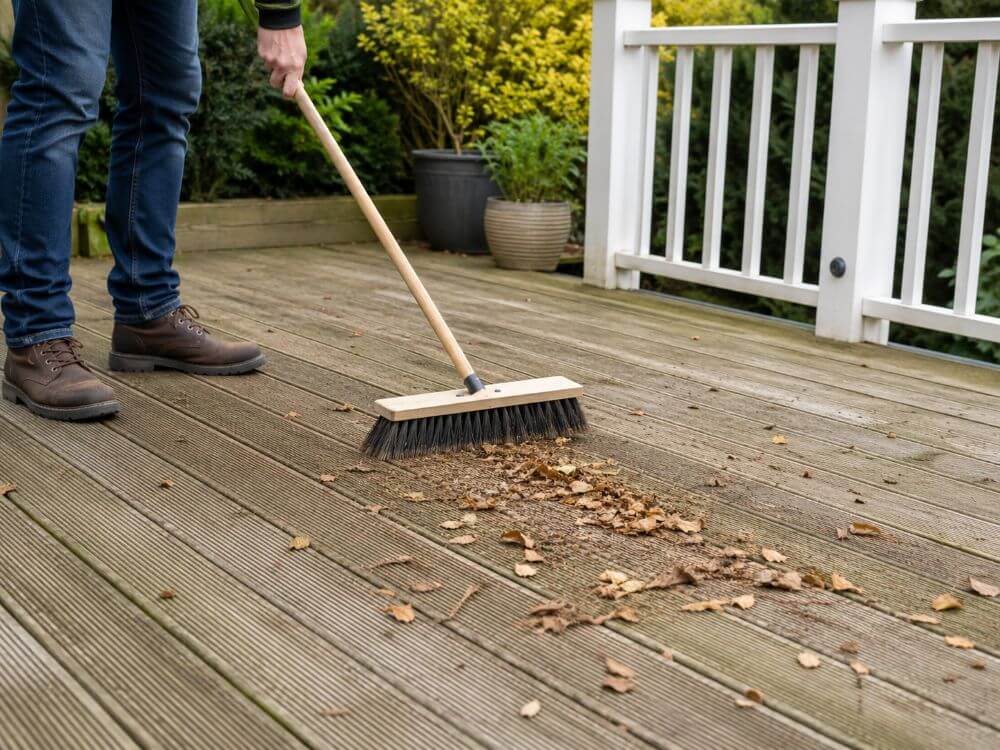
- Safest default: sweep and brush first, then use water and a suitable decking cleaner only where needed.
- Do not pressure wash as the first step, especially on older timber, softwood boards, splintering boards or unknown composite boards.
- If you use a pressure washer, use low pressure, keep the lance away from the surface and stop if the boards roughen, mark or splinter.
- Clean timber and composite decking differently because they respond differently to pressure, cleaners and abrasion.
- Pause before cleaning if boards are loose, rotten, springy, badly splintered or coated with an unknown failing finish.
- Let the decking dry properly before applying oil, stain, sealer or any protective treatment.
What This Guide Does Not Solve
This guide does not repair rotten boards, unsafe joists, loose fixings, failed handrails, collapsing substructures or boards that are no longer sound. Cleaning may improve appearance and reduce surface slipperiness, but it does not make an unsafe deck structurally safe.
It also does not replace product instructions. Decking cleaners, composite board manufacturers, timber treatments and anti-slip coatings all have specific compatibility requirements. A cleaner that is suitable for one timber deck may not be suitable for a capped composite board, painted decking or a previously coated surface.
This guide is for routine cleaning and damage prevention. If the deck needs sanding, stripping, board replacement, anti-slip upgrades or structural repair, treat that as a separate job.
When to Pause or Escalate
Stop before cleaning if boards are loose, rotten, badly splintered, springy underfoot, or if fixings are sticking up. These are repair and safety issues. Cleaning can make them more visible, but it will not fix the underlying problem.
Pause before pressure washing if the timber is old, soft, dry, heavily weathered, already splintering or has a peeling coating. The TDCA pressure-washing guidance for timber decking warns that timber can be damaged or bruised if the pressure is too high, and advises lower pressure with the lance kept away from the deck surface.
Escalate to professional help if the deck stays slippery shortly after cleaning, the surface is heavily contaminated, the old coating is failing across the whole area, or the job requires sanding. Sanding timber can create hazardous wood dust, and the HSE wood dust guidance highlights serious health risks from wood dust exposure.
Why is Decking Easy to Damage
Timber grain can lift or roughen
Timber decking has surface fibres that can be raised by aggressive washing, harsh brushing or excessive pressure. Once the grain is raised, the boards can feel rough, hold dirt more easily and may need sanding or refinishing. That is why cleaning should start with the gentlest effective method.
Composite decking is lower-maintenance, not indestructible
Composite boards are often easier to maintain than timber, but they still have surface limits. Some composite boards can be marked by high pressure, abrasive tools or unsuitable cleaners. Always check the board manufacturer’s cleaning guidance, especially if the boards are capped, textured or dark coloured.
Green growth is a safety issue
Algae, moss and wet leaves can make decking slippery, especially on shaded steps and walkways. The RHS guidance on algae and moss on hard surfaces notes that wooden surfaces such as decking can become slippery where algae grows. Cleaning decking properly is therefore partly about safety, not just appearance.
Decking Cleaning Methods Compared
Manual brushing and water
Manual brushing is the lowest-risk starting point. Sweep the deck, remove leaves, clear loose moss and brush along the board direction. This removes surface debris and helps you see whether the deck actually needs a cleaner.
Manual cleaning is best for regular maintenance, light dirt, pet-used areas, older timber, unknown finishes and decks where pressure washing feels risky. It takes longer than using power equipment, but it gives you better control.
Decking cleaner
A suitable decking cleaner can help remove algae, mildew, general grime and weathering where brushing alone is not enough. Choose the cleaner based on the board material, existing finish and type of dirt. Do not assume that any outdoor cleaner is suitable for every timber or composite surface.
Use the cleaner exactly as directed. Follow dilution, dwell time, rinse and safety instructions. Work in manageable sections so the product does not dry unevenly on the boards.
Pressure washing
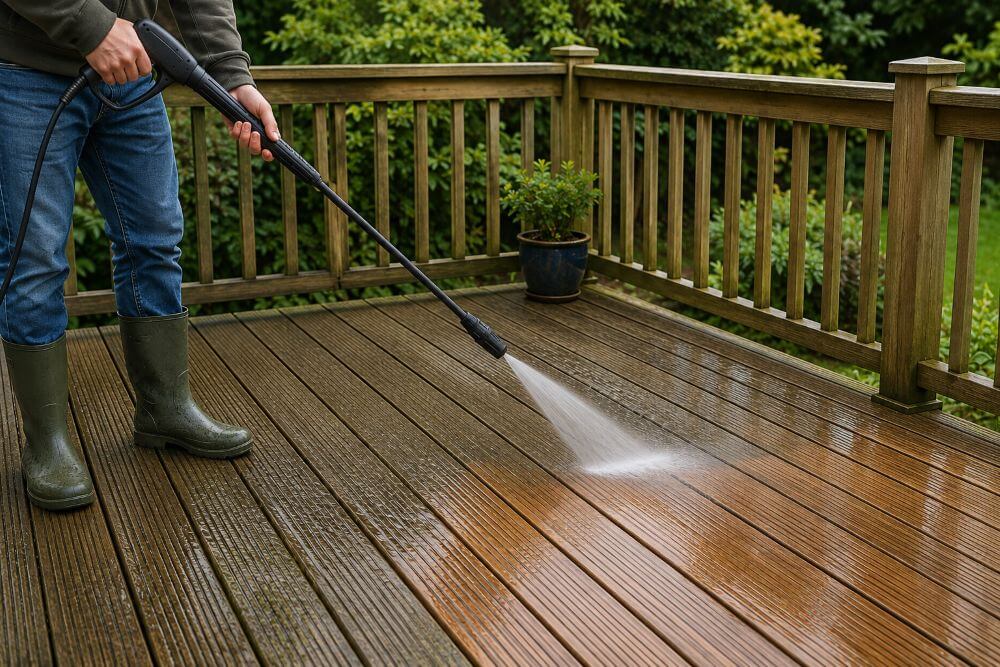
Pressure washing can clean quickly, but it is also the method most likely to cause avoidable damage. If you choose to pressure wash, test an inconspicuous area first. Use low pressure, keep the lance away from the boards, keep the spray moving and work with the board length where practical.
Stop immediately if timber fibres lift, the finish strips unevenly, water cuts into the board surface, or composite boards show streaking or marks. If the pressure washer is causing visible change to the surface, it is no longer cleaning safely.
Decision Framework: Timber or Composite?
1. What type of decking is it?
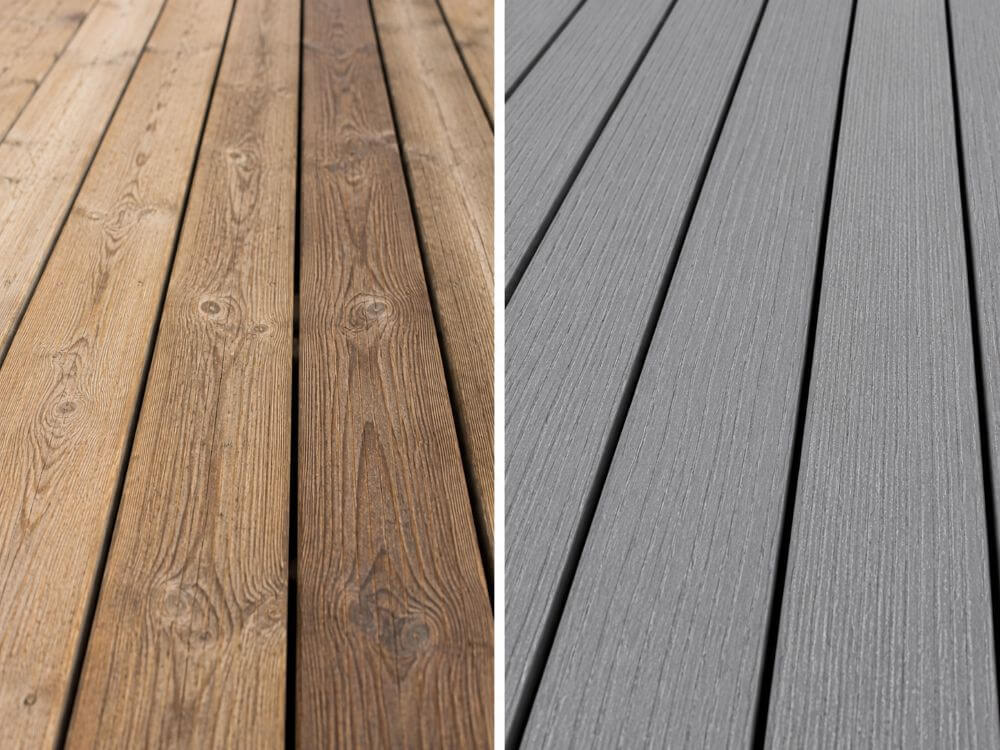
Timber decking, softwood decking, hardwood decking and composite decking need different assumptions. Timber can absorb water and treatments. Composite boards may be capped, textured or colour-stabilised, and may not need oils, stains or sealers. If you do not know the board type, start with brushing and water only.
2. What problem are you cleaning?
Loose dirt, green algae, moss, mildew, barbecue grease, food stains, bird droppings and old coating failure are different problems. A general decking cleaner may help with organic growth and grime, but oil, rust or failed coating may need a different approach.
3. Is the surface already damaged?
If timber is splintering, cupping, cracking or soft, avoid aggressive cleaning. If composite boards are scratched, stained, delaminating or discoloured, avoid abrasive scrubbing and check manufacturer guidance before applying products.
4. Is pressure washing justified?
Pressure washing should only be considered after sweeping, brushing and cleaner selection. If the deck is lightly dirty, pressure washing is often unnecessary. If the deck is heavily slippery, pressure washing may be useful, but only with care and a test area.
5. Is the deck ready for treatment after cleaning?
Pause before oiling, staining or sealing if the deck is still damp, dirty, slippery, coated with residue or showing surface damage. Treatment should follow cleaning and drying, not hide unresolved problems. If the deck needs protection after cleaning, choose a suitable product from Decking Sealers and Oils.
Step-by-Step: Clean Decking Without Damage
Step 1: Clear the area
Remove furniture, pots, mats, toys and loose items. This prevents trapped dirt patches and lets you inspect the full surface. Lift planters rather than dragging them, especially on composite boards.
Step 2: Sweep thoroughly
Use a stiff broom to remove leaves, loose soil, grit, moss and debris. Brush along the board direction. Pay attention to corners, steps, gaps and areas under furniture.
Step 3: Inspect before wet cleaning
Look for loose boards, raised screws, splinters, soft timber, broken edges, failing coatings and movement. Repair safety issues before applying water or cleaner.
Step 4: Try water and brushing first
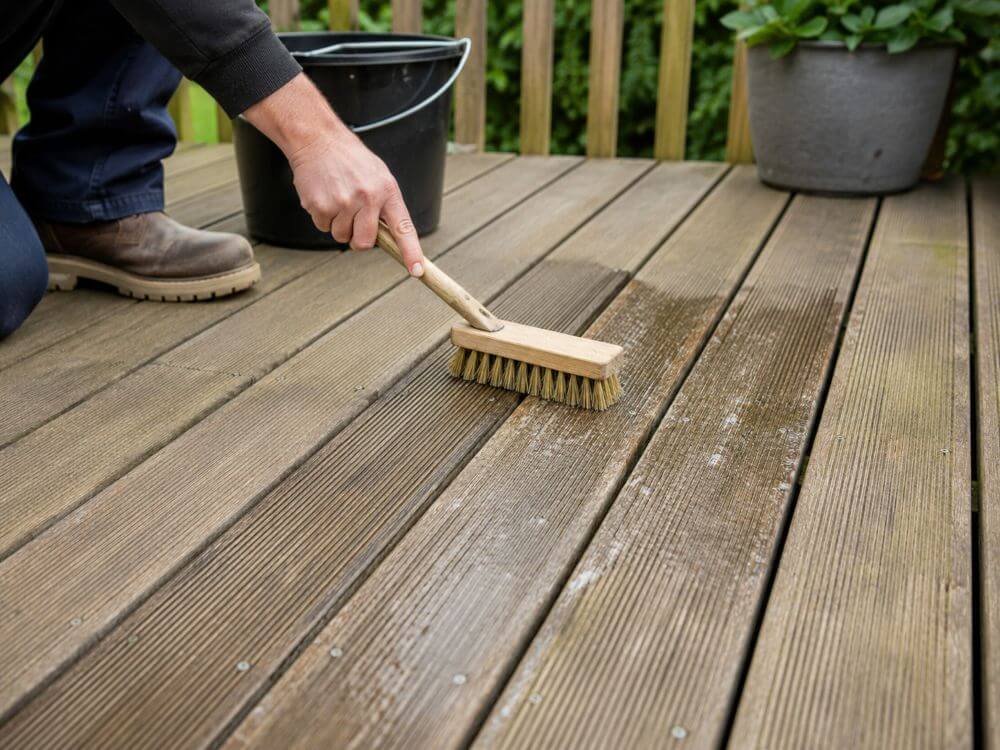
Wet a small area with clean water and brush it. If the dirt lifts easily, continue manually. If algae, mildew or heavier grime remains, move to a suitable decking cleaner.
Step 5: Apply decking cleaner carefully
Patch test first in a discreet area. Apply according to the label. Keep the product within the working area, avoid letting it dry unevenly, and do not mix it with other cleaners.
Step 6: Agitate gently
Use a suitable brush and work with the grain or board direction. Avoid wire brushes on composite boards and avoid harsh scrubbing on soft, weathered timber.
Step 7: Rinse in a controlled way
Rinse according to the cleaner instructions. A garden hose is often enough. If using a pressure washer, keep the pressure low, keep the lance away from the boards and keep the spray moving.
Step 8: Let the deck dry fully
Allow the deck to dry before replacing furniture or applying any finish. Drying time depends on weather, shade, airflow and board condition. Do not apply treatments to damp decking.
Step 9: Re-check the finish
Once dry, inspect the boards. If timber feels rough, fibres may have lifted. If composite boards show streaking, check whether residue remains or whether the surface has been marked. Avoid repeating the same aggressive method.
Common Mistakes
Using maximum pressure straight away
This is the main damage risk. High pressure can raise timber grain, strip finishes and leave visible marks. Start low, test first and stop if the surface changes texture.
Cleaning across the grain aggressively
Scrubbing across timber grain or board direction can make marks more visible and may roughen the surface. Work with the board direction where practical.
Using the wrong cleaner
Patio, masonry or household cleaners are not always suitable for decking. Use a cleaner intended for decking or one clearly compatible with the board material.
Letting the cleaner dry on the boards
If the cleaner dries before rinsing, it can leave residue or uneven results. Work in smaller sections and follow dwell-time instructions.
Putting furniture back too soon
Putting pots, mats or furniture back onto damp boards traps moisture. Let the deck dry properly and use pot feet or spacing where possible.
Sanding without dust control
Sanding can be part of refurbishment, but it creates wood dust. Use dust extraction, respiratory protection where needed and safe cleanup. Do not dry sweep fine sanding dust into the air.
Maintenance and Prevention
Decking is easier to clean when it is maintained regularly. Sweep leaves and soil before they break down. Move plant pots so moisture does not sit underneath. Trim back plants that keep boards damp. Check shaded steps and entrances more often because these areas usually become slippery first.
A practical routine is:
- Weekly in heavy-use periods: sweep leaves, food debris and soil.
- Monthly: inspect steps, fixings, shaded areas and high-use routes.
- Spring: deep clean and assess winter grime.
- Summer: check whether timber needs treatment after cleaning and drying.
- Autumn: keep leaf fall under control.
- Winter: prioritise safe access and avoid unnecessary soaking.
Your Next Step: DIY or Professional
DIY cleaning is usually suitable when the deck is structurally sound, the boards are not rotten or splintering, the surface problem is light to moderate, and you can match the cleaner to the board type. Start with sweeping and brushing, then use a decking cleaner where needed.
For routine DIY cleaning and care products, use Decking Care and Maintenance as the main product route. Choose products based on the deck material, surface condition and product label.
Professional help is the safer route if boards are rotten, joists feel weak, handrails move, the deck is persistently slippery, composite boards are badly marked, or the job requires sanding, stripping, board replacement or structural repair.
Summary
The safest way to clean decking is to start gently and escalate only when needed. Sweep first, brush thoroughly, use a compatible decking cleaner where required, rinse in a controlled way and let the surface dry before replacing furniture or applying treatment.
Pressure washing is not always wrong, but it is the easiest way to damage decking if used carelessly. Timber can roughen or splinter, and composite boards can mark or streak. Use low pressure, keep a distance from the surface and stop if the board surface changes.
Frequently Asked Questions
What is the safest way to clean decking?
Start with sweeping, brushing and water. If that is not enough, use a decking cleaner matched to the board type and follow the label. Pressure washing should be controlled and used only where needed.
Can pressure washing damage timber decking?
Yes. Excessive pressure or cleaning too close to the boards can bruise timber, raise the grain, strip finishes and cause visible marks.
Can I pressure wash composite decking?
Sometimes, but check the board manufacturer’s guidance first. Use low pressure, keep a distance from the surface and test in a hidden area before cleaning the whole deck.
What cleaner should I use on decking?
Use a cleaner intended for decking or clearly compatible with your board type. Avoid assuming that patio, masonry or household cleaners are suitable.
Should I clean the decking before treating it?
Yes. Timber should be clean and dry before oil, stain, sealer or water-repellent treatment is applied.
Why does my decking stay slippery after cleaning?
Recurring slipperiness often points to shade, poor airflow, wet leaves, trapped moisture or growth returning quickly. Cleaning helps, but the cause also needs managing.
Can I use a wire brush on composite decking?
Usually no. Wire brushes can scratch or mark composite boards. Use a softer brush and follow the board manufacturer’s cleaning guidance.
When should I get professional help?
Get help if the deck is structurally weak, rotten, badly splintered, persistently slippery, heavily coated, or if cleaning requires sanding, stripping or board replacement.

Path & Patio is a UK supplier of paving and landscaping products, sharing practical guidance, product expertise and installation advice for patios, paths and driveway projects.