
How to Choose Quality Garden Tools That Last: Materials, Build Quality and Warranties
Not all garden tools last the same length of time. Two tools can look similar on a shelf but behave very differently after a season of digging, pruning, scraping, cutting, lifting, wet soil and storage in a shed. The difference usually comes down to material, construction, handle quality, moving parts, replaceable components and whether the tool is suitable for the job.
Choosing quality garden tools is not about buying the most expensive item every time. It is about buying the right tool for repeated use, the right material for the pressure it will face, and the right level of support if something goes wrong. A good tool should feel controlled in the hand, match the task, resist avoidable damage and be maintainable.
For garden hand tools, cutting tools, sprayers, lawn-care equipment and outdoor maintenance products, use Garden Tools and Equipment. Use this guide first so the tool choice matches the job, not just the product image or price.
Quick Answer: How Do You Choose Better Garden Tools?
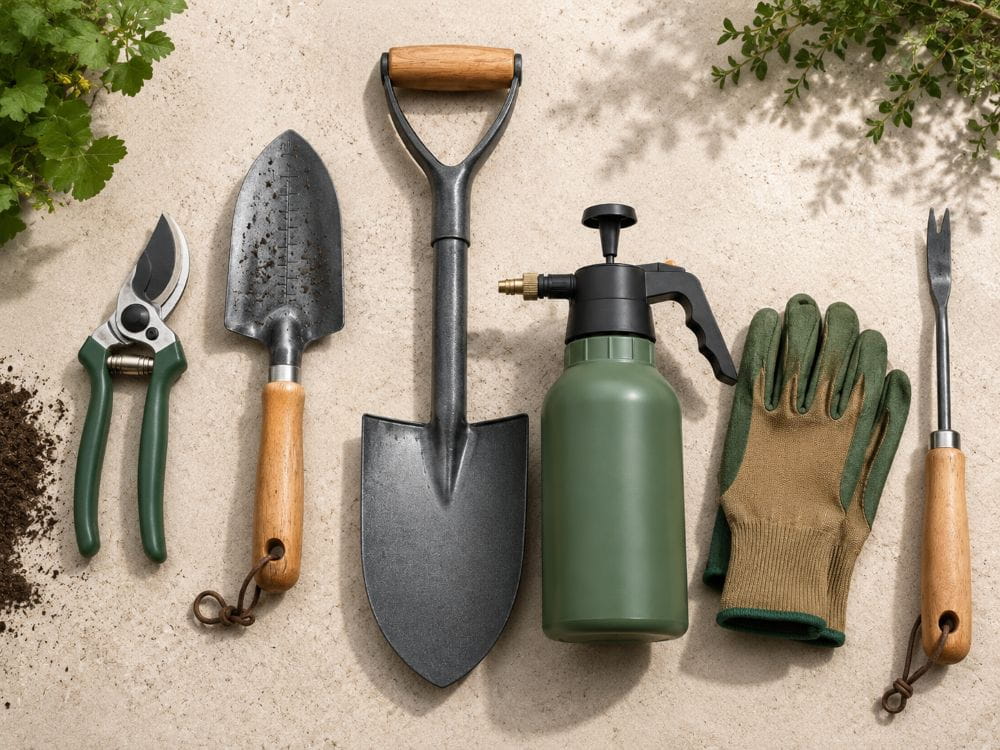
- Safest default: choose the correct tool for the task, then check material, handle strength, grip, weight and safety before price.
- For digging tools, look for strong heads, secure sockets, durable handles and enough leverage for the soil type.
- For cutting tools, prioritise blade quality, clean action, safe locking and replaceable or serviceable parts where possible.
- For sprayers and liquid tools, check seals, nozzles, pressure control and whether the tool can be cleaned after use.
- Read the warranty and guarantee terms, but do not treat them as proof that the tool suits every job.
- Stop before buying or using a tool if it feels unstable, badly balanced, poorly fixed, too heavy to control or unsuitable for the intended task.
What This Guide Does Not Solve
This guide does not make an unsuitable tool safe. A cheap spade will not become a groundworks tool because it has a long handle. A pair of light secateurs will not become loppers because the branch is nearby. A sprayer used for weedkiller should not be casually reused for plant feeding unless the product and cleaning guidance clearly support that use.
This guide also does not cover professional machinery specification, chainsaw selection, commercial landscaping fleets, battery-platform comparisons or heavy plant. Powered tools and cutting machinery require their own safety and maintenance checks.
Finally, this guide does not guarantee a fixed lifespan. Tool life depends on material, use frequency, soil conditions, cleaning, drying, storage, sharpening, impact damage and whether the tool is used within its intended limits.
When to Pause or Escalate
Stop before using or buying a tool if the handle is cracked, the head is loose, the blade is chipped, the pivot feels unstable, the lock does not hold, or the tool needs excessive force to work. These are safety and suitability issues, not minor buying details.
Pause before choosing sharp cutting tools if the user cannot operate them comfortably with one hand, lock them safely, or keep fingers clear of the blade path. RHS safety guidance supports using appropriate protective clothing and equipment to reduce gardening hazards.
Escalate to a specialist tool or professional-grade equipment where the work is frequent, heavy, woody, compacted, commercial or safety-critical. If the task involves thick branches, hard ground, high hedges, powered cutting, large-scale clearance or repeated contractor use, a light domestic tool may be a false economy.
What Makes a Garden Tool Last?
Task suitability comes first
A durable tool is only durable within the job it was designed to do. A border fork is not a breaking bar. A hand trowel is not a lever for lifting paving. Secateurs are not loppers. When a tool is used beyond its intended task, handles bend, pivots loosen, blades chip, and warranties may not help.
RHS tool-safety guidance includes choosing the correct tool for the task and using tools correctly and safely. That principle is just as important for buying decisions as it is for using the tool in the garden.
Material affects durability
Metal quality matters. Stainless steel can resist rust better, but may not always hold an edge as well as some carbon-steel tools. Carbon steel can be strong and sharpenable, but needs drying and oiling to reduce rust. Aluminium can keep tools light but may not suit heavy levering or impact work. Plastic can be useful for lightweight handles and sprayers, but stress points and UV exposure matter.
There is no single best material for every garden tool. The right choice depends on the task, exposure, maintenance routine and how often the tool will be used.
Build quality shows at joints and stress points
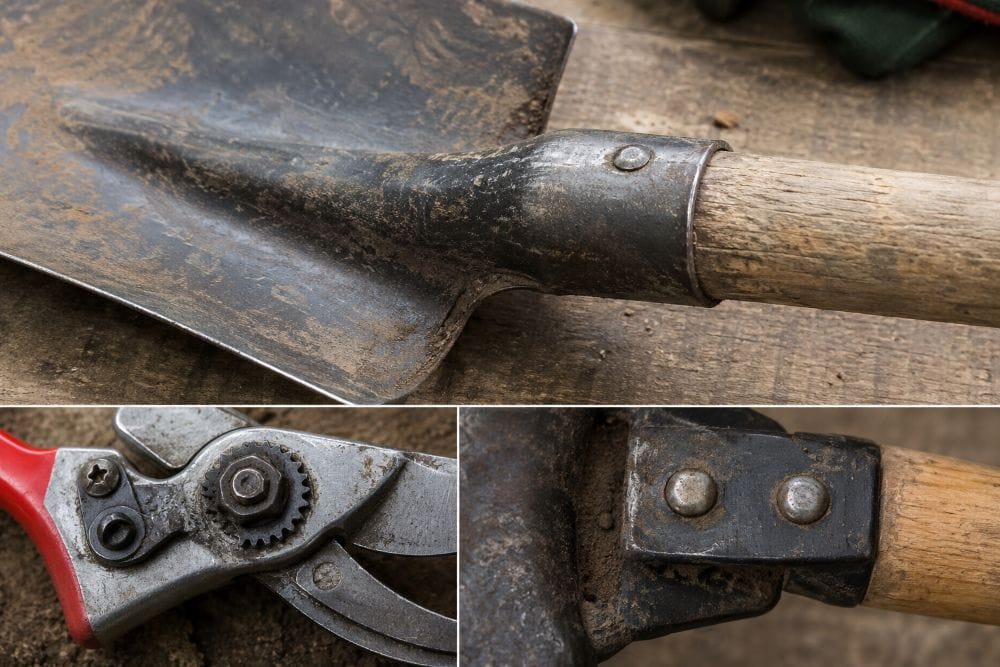
Weak garden tools often fail where materials meet: the handle socket, rivets, welds, pivot bolts, blade join, ferrule, spring or hinge. When comparing tools, look closely at these points. A tool that looks solid from a distance may still have a weak joint where the force is highest.
Comfort affects control
A tool that is uncomfortable is harder to use safely. Handle length, grip texture, weight, balance and hand size all matter. A heavier tool may feel durable, but if it is too heavy to control, it can cause strain or poor technique. A lighter tool may be better for regular domestic use if it remains strong enough for the task.
Maintenance affects lifespan
Even a good tool can fail early if it is put away wet, left covered in sap, stored on a damp floor, used as a lever or never sharpened. Quality and maintenance work together. A well-made tool still needs cleaning, drying, oiling and safe storage.
Garden Tool Quality Factors Explained
Digging tools: spades, forks and trowels
For digging tools, inspect the head, socket and handle. A quality spade or fork should feel rigid under normal pressure and should not twist easily where the handle meets the head. The shaft should feel secure, with no movement at the socket.
For clay soil, compacted ground or regular use, stronger construction is more important than low weight alone. For light borders and raised beds, a lighter tool may be easier to use and store.
Cutting tools: secateurs, loppers and shears
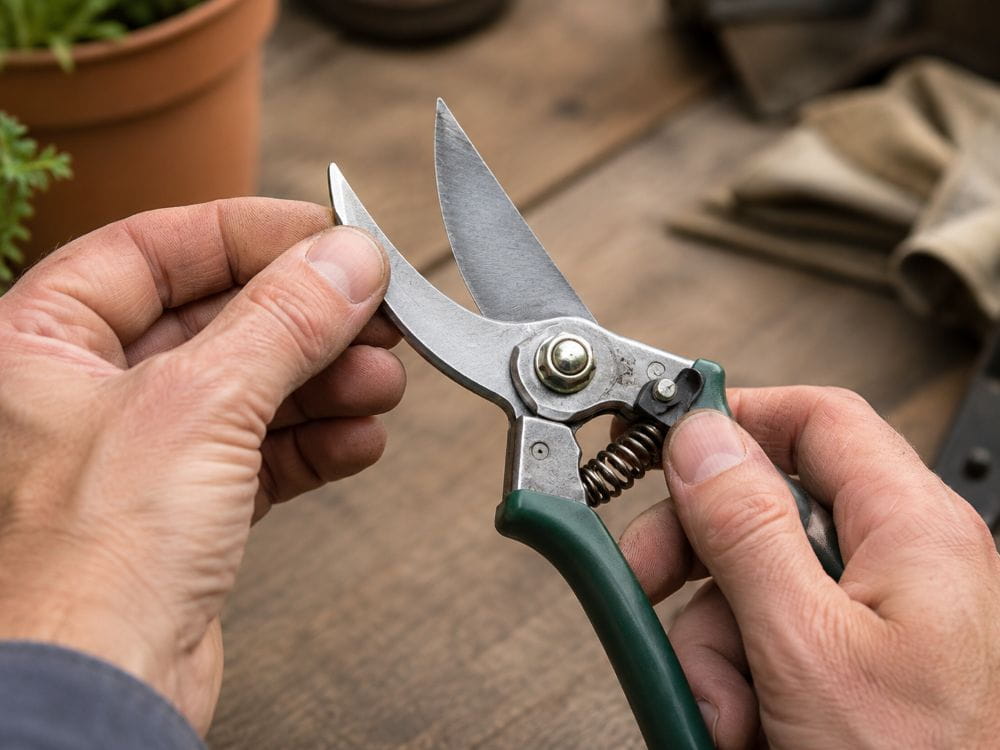
Cutting tools should open and close smoothly. Blades should meet cleanly without wobble. The lock should engage securely. Springs, pivots and replacement blades matter because these are the parts that often wear first.
Blade material matters, but so does the cut capacity. Using small secateurs on oversized branches can twist the blade, damage the pivot and leave rough cuts. Choose the cutting tool by stem size, plant type and how often it will be used.
Pruning saws and heavier cutting tools
For pruning saws, look for secure blade fixing, safe folding or sheath protection, a comfortable grip and a blade type suited to green or dry wood. For axes or splitting tools, head security and handle strength are critical. Do not use tools with loose heads or cracked handles.
Sprayers and liquid application tools
Sprayers should be judged by seal quality, nozzle control, pressure handling, ease of cleaning and whether they can be stored safely after chemical use. A cheap sprayer that clogs, leaks or cannot be cleaned properly can create waste and safety risk.
If a sprayer is used for weedkiller or chemical products, keep it clearly labelled and separate where necessary. Do not assume one sprayer can safely move between weedkiller, plant feed and edible-crop use without correct cleaning and product guidance.
Handles and grips
Wooden handles can be strong, comfortable and repairable, but they need dry storage and inspection for cracks or splinters. Fibreglass handles can resist weathering and may be strong, but damaged fibres or cracks should not be ignored. Metal handles can be durable but may feel cold, heavy or uncomfortable depending on grip design.
The best handle is not just the strongest. It is the handle that the user can control repeatedly without strain.
Warranties and guarantees
A warranty can be useful, but it should not be the only buying signal. Citizens Advice explains that warranties and guarantees add to legal rights and that each one is different.
When reviewing a warranty, check what it covers, how long it lasts, whether it excludes wear, misuse, rust, poor maintenance or commercial use, and whether you need proof of purchase. A long warranty is helpful only if the terms match how the tool will actually be used.
Comparison Table: Quality Signals by Tool Type
| Tool type | Best quality signals | Weak signals | Maintenance need | Buying priority |
|---|---|---|---|---|
| Spades and forks | Strong head, secure socket, rigid handle, good leverage | Loose socket, thin metal, flexing under normal pressure | Clean soil off, dry fully, store off damp floors | High for digging, planting and soil preparation |
| Secateurs and pruners | Clean blade action, strong pivot, secure lock, replaceable parts | Blade wobble, sticky action, weak spring, poor lock | Clean sap, oil pivot, sharpen where suitable | High for regular pruning |
| Loppers and shears | Stable handles, sharp blades, smooth cutting action, and correct capacity | Over-flexing, rough cuts, and an uncomfortable grip | Clean, dry, oil moving parts, store safely | High where woody pruning is frequent |
| Sprayers | Good seals, adjustable nozzle, stable pressure, easy cleaning | Leaks, clogging, poor nozzle control, weak pump | Rinse, depressurise, clean nozzle, store dry | High where liquids are used regularly |
| Rakes, hoes and weeders | Strong head fixing, comfortable handle, task-specific shape | Loose head, poor balance, thin working edge | Clean, dry, and sharpen the edge where suitable | Medium to high, depending on garden size |
| Powered garden equipment | Guarding, service support, clear manual, safe controls | Missing guards, damaged cables, poor battery housing, vibration | Follow manufacturer servicing and storage guidance | High-risk purchase, check carefully |
Decision Framework: Which Garden Tool Is Worth Buying?
1. How often will you use it?
For tools used weekly, quality matters more. Secateurs, hand forks, trowels, gloves, weeders and sprayers often justify better construction because they are used repeatedly. For a tool used once a year, hiring, borrowing or buying a simpler version may be more sensible.
2. How much force will it face?
Tools used for compacted soil, woody stems, heavy pruning or leverage need stronger construction. If the tool will be twisted, pushed, cut with force or used repeatedly, weak joints and handles will show quickly.
3. Can it be maintained?
Look for tools that can be cleaned, dried, oiled, sharpened or repaired. Replaceable blades, springs, handles, seals and nozzles can make a tool more economical over time.
4. Does it fit the user?
A quality tool for one person may be awkward for another. Check weight, handle length, grip size and hand strength. A tool that is too heavy or too large can be unsafe even if it is well-made.
5. Does the warranty match the use?
Pause before relying on a warranty if the tool will be used commercially, heavily, outside its stated purpose, or stored in damp conditions. Warranty terms may exclude misuse, normal wear, rust, poor maintenance or commercial use.
Step-by-Step: How to Check Tool Quality Before Buying
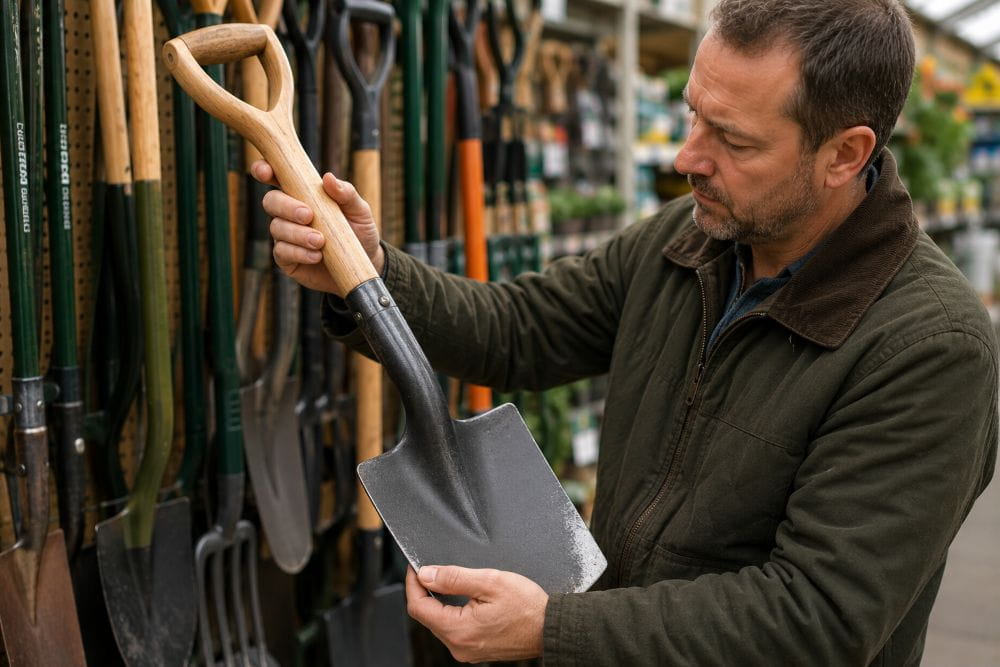
Step 1: Define the job
Decide what the tool must do: dig, cut, prune, scrape, spray, weed, rake, edge, lift, spread or maintain. Avoid buying a tool because it looks versatile if it does not solve the actual task.
Step 2: Check the working part
Inspect the blade, head, fork tines, nozzle, edge or cutting surface. It should match the job and feel strong enough for normal use.
Step 3: Check the connection point
Look at where the handle meets the head, where blades meet pivots, and where pressure parts connect. Most tool failures happen at joints and fixings.
Step 4: Test comfort and control
Hold the tool as you would use it. Check weight, balance, grip and reach. If it feels awkward in the shop, it will usually feel worse after an hour in the garden.
Step 5: Look for maintenance support
Check whether blades, springs, seals, handles or nozzles can be replaced. A repairable tool can be a better value than a sealed tool that must be replaced after one small failure.
Step 6: Read the warranty terms
Look beyond the headline. Check what is covered, what is excluded, whether proof of purchase is needed and whether the warranty applies to domestic or trade use.
Step 7: Buy for long-term use, not one awkward job
If a job is unusual, heavy or risky, the right answer may be a specialist tool, hire equipment or professional help rather than forcing a domestic tool beyond its design.
Common Mistakes
Buying by price only
The cheapest tool is not automatically poor, and the most expensive is not automatically best. Price should be judged against material, build, task suitability, comfort and repair support.
Ignoring handle comfort
Handles affect control. A strong tool with an uncomfortable grip may cause strain and poor technique.
Choosing cutting tools without checking the capacity
Secateurs, loppers and saws all have different cutting roles. Using a smaller tool on material that is too thick can damage the tool and produce poor cuts.
Confusing rust resistance with no maintenance
Rust-resistant materials still need cleaning and drying. Stainless steel, coated steel and treated metal all last better when stored properly.
Assuming warranties cover everything
Warranties often have exclusions. Misuse, wear, poor storage, rust or commercial use may not be covered. Keep proof of purchase and read the terms.
Buying a set when only one tool is needed
Tool sets can be a good value, but only if the included tools match real tasks. A smaller number of better-matched tools is often more useful than a large set of weak ones.
Maintenance and Prevention
Choosing quality tools is only the start. Tools last longer when they are cleaned, dried, oiled, sharpened and stored correctly. Soil, sap and moisture are the main causes of avoidable damage.
After use: remove soil, sap and plant residue.
Before storage: dry metal parts fully and store tools off damp floors.
For cutting tools: clean blades, oil pivots where suitable and sharpen only when needed.
For sprayers: rinse, depressurise, clean nozzles and store dry.
Before buying replacements: check whether a blade, spring, handle, seal or nozzle can be replaced.
Good storage protects good tools. A dry wall rack, shelf, box or tool station is usually better than a damp shed corner.
Your Next Step: DIY or Professional
DIY users should start with fewer, better-matched tools: a good pair of secateurs, a comfortable digging tool, a reliable trowel or hand fork, a suitable weeding tool, gloves and any sprayer or cutting tool needed for the garden’s real maintenance tasks.
Professional or frequent users should prioritise repairable tools, replaceable parts, robust handles, strong pivots, reliable warranty support and storage systems that protect tools between jobs.
Use Garden Tools and Equipment as the main buying route, then narrow choices by task: cutting, digging, spraying, lawn care, soil preparation or maintenance.
Summary
Quality garden tools last longer when they match the task, use suitable materials, have strong construction and can be maintained. The key checks are material, handle strength, moving parts, blade quality, user comfort, repairability and warranty terms.
Do not buy by price alone. A better tool is the one that performs the job safely, holds up under normal use, can be maintained and suits the person using it. Warranties and guarantees are useful buying signals, but they do not replace correct tool choice, safe use or routine maintenance.
Frequently Asked Questions
What makes a garden tool good quality?
A good-quality garden tool has suitable material, strong construction, a secure handle, controlled weight, task-specific design and parts that can be cleaned, sharpened or replaced where appropriate.
Are stainless steel garden tools better?
Stainless steel can resist rust better, but it is not automatically best for every tool. Carbon steel, aluminium, fibreglass and wood can all be suitable depending on the task and maintenance routine.
Should I buy expensive garden tools?
Buy based on task, frequency of use and build quality. Expensive tools can be worthwhile for repeated or demanding work, but price alone does not prove suitability.
What should I check before buying secateurs?
Check blade alignment, pivot stability, cutting capacity, lock security, grip comfort, spring action and whether replacement parts are available.
What garden tools are worth upgrading first?
Upgrade the tools used most often or under the most force, such as secateurs, digging tools, weeders, sprayers and cutting tools.
Do warranties matter for garden tools?
Yes, but read the terms. Warranties and guarantees add to legal rights, but coverage varies and may exclude misuse, wear, rust or commercial use.
How do I make garden tools last longer?
Use the right tool for the job, clean after use, dry before storage, oil moving parts where suitable, sharpen cutting edges when needed and store tools in a dry place.
When should I replace a garden tool?
Replace or repair a tool if the handle is cracked, the head is loose, the blade is badly damaged, the pivot is unstable or the tool no longer operates safely.

Path & Patio is a UK supplier of paving and landscaping products, sharing practical guidance, product expertise and installation advice for patios, paths and driveway projects.