
Essential Garden Hand Tools for Beginners: The 10 Tools That Cover Most Jobs
Most garden jobs do not require a shed full of tools. A beginner can usually cover everyday outdoor maintenance with a small, well-chosen set of hand tools: something to protect the hands, something to cut, something to dig, something to weed, something to move soil or debris, and something to water or clean up.
The aim is not to buy the largest set. The aim is to choose tools that match the garden and the jobs you actually do. A small courtyard does not need the same kit as a large lawn with hedges and vegetable beds. A patio-heavy garden needs weeding and sweeping tools. A border-heavy garden needs digging, planting and pruning tools.
For beginner garden tools, hand tools, cutting tools, sprayers and general maintenance equipment, use Garden Tools and Equipment. Use this guide first so you buy for real tasks rather than filling a shed with tools you rarely use.
Quick Answer: The 10 Essential Garden Hand Tools
- Safest default: choose the correct tool for the task and check it is safe before use.
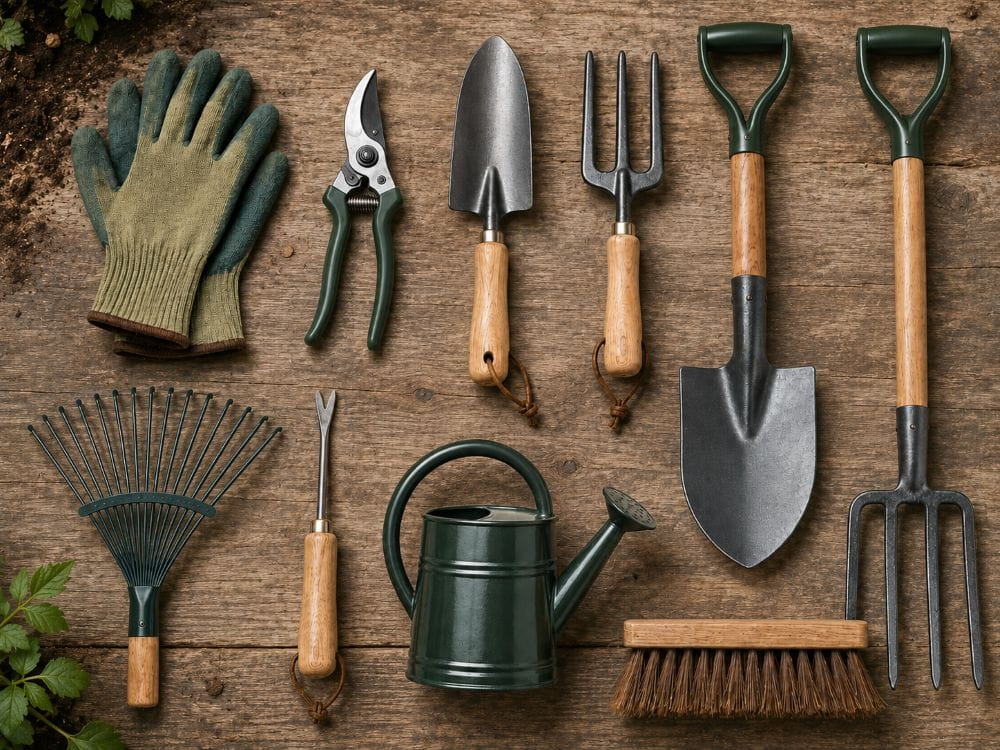
- Start with gloves, secateurs, a hand trowel, a hand fork, a spade, fork, rake, a hoe or weeder, a watering can or sprayer, and a stiff broom.
- Buy fewer tools at better quality where they will be used often.
- Choose handle size, weight and grip based on the person using the tool.
- Clean and dry tools after use so they last longer and stay safer to handle.
- Stop using any tool with a cracked handle, loose head, damaged blade, unstable pivot or unsafe grip.
What This Guide Does Not Solve
This guide does not cover powered garden machinery. Mowers, hedge trimmers, chainsaws, brush cutters and scarifiers need separate safety checks, maintenance and user guidance. Hand tools are the safest starting point for beginners, but they are not a substitute for training where powered tools are required.
This guide also does not cover professional landscaping, tree surgery, large-scale clearance, structural paving work, heavy groundworks or work at height. If the job needs cutting large branches, lifting heavy materials, working near services or using powered cutting equipment, get suitable training or professional help.
Finally, this guide does not mean every beginner must buy every tool immediately. The 10-tool list is a practical starting point. You should adapt it to your garden size, soil type, planting, hard surfaces, storage and physical comfort.
When to Pause or Escalate
Stop before using any garden hand tool if the handle is cracked, the head is loose, the blade is chipped, the pivot is unstable, the lock does not hold, or the tool needs excessive force to work. Damaged tools can slip, break or cause injury.
Pause before cutting branches that are too thick for secateurs or loppers. Using a small tool on oversized material can damage the tool and increase hand strain. Choose the correct tool for the task and use tools safely; this is a core RHS tool-safety principle.
Escalate to professional help for large trees, high hedges, heavy branches, repeated powered-tool use, unstable ground, or any job where you cannot control the tool safely. Powered tools can introduce vibration and other risks, which is why HSE treats hand-held and guided power tools as a specific safety issue in horticulture.
Why Beginners Need a Small Tool Kit, Not a Full Shed
Most jobs repeat
Beginner gardening usually involves a small group of repeated tasks: planting, watering, pruning, weeding, sweeping, clearing leaves, loosening soil, moving compost and tidying borders. A compact set of reliable tools covers these jobs better than a large kit of weak or rarely used items.
Correct tools prevent damage
Using the wrong tool often causes the damage beginners are trying to avoid. Secateurs used on branches that are too thick can twist or blunt. A hand trowel used as a lever can bend. A rake used for heavy digging can break. Tool choice matters because each tool is shaped for a different kind of pressure.
Comfort matters
A good beginner tool should feel controlled. Weight, handle length, grip texture and hand size all affect how safely and comfortably the tool can be used. A tool that is too heavy or too large may look stronger, but feel awkward after ten minutes of work.
Safety equipment is part of the kit
Gloves, sturdy footwear and eye protection where needed, are not optional extras. RHS guidance on garden safety covers protective clothing and equipment because garden tasks can involve sharp tools, soil, dust, thorns, splinters and debris.
The 10 Essential Garden Hand Tools Explained
1. Gardening gloves
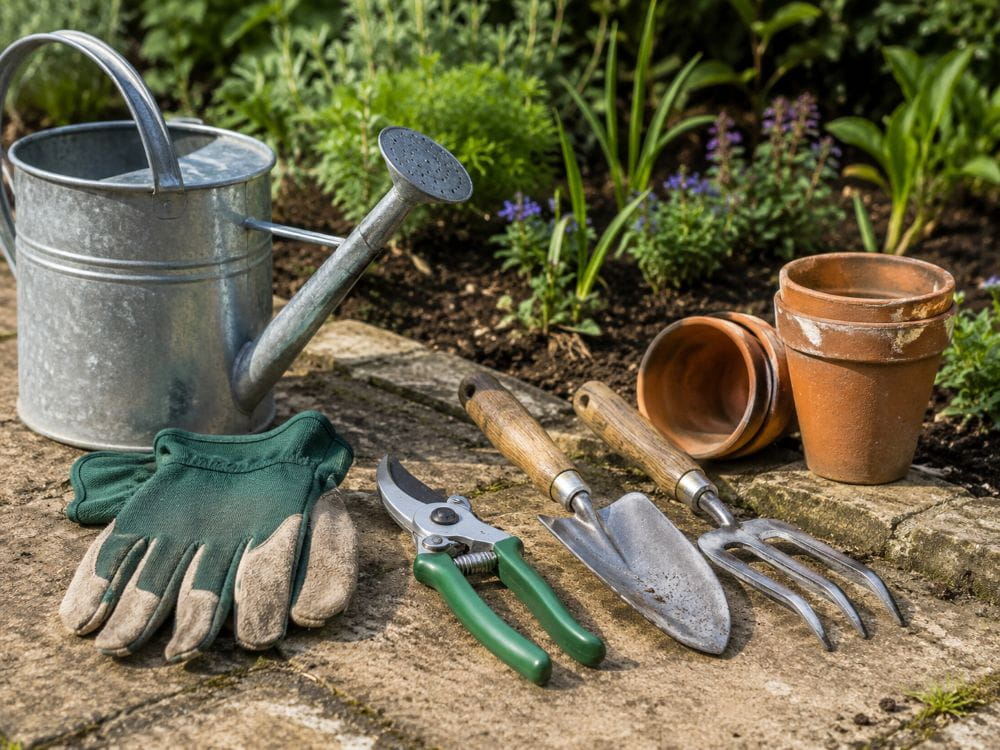
Gloves are the first tool because they protect the hands during almost every garden task. They help when handling soil, compost, weeds, thorny plants, rough timber, pots, damp leaves and tools. Choose gloves that fit well and still allow grip and control.
Use different levels of protection for different tasks. Thin gloves can work for light planting. Tougher gloves are better for brambles, roses, rough materials and repeated tool use. RHS advice also supports wearing gloves when handling soil or compost.
2. Secateurs
Secateurs are the basic cutting tool for pruning small stems, deadheading, cutting back soft growth and tidying plants. For beginners, comfort and clean action matter more than buying the largest pair available.
Check that the blades close cleanly, the pivot feels stable and the safety lock works. Do not use secateurs for thick branches. If you need to twist, force or use both hands, the material is too large for the tool.
3. Hand trowel
A hand trowel is used for planting small plants, filling pots, moving compost and working in borders or containers. It is one of the most-used tools in small gardens and patios.
Look for a strong blade, secure handle and comfortable grip. A cheap trowel can bend quickly if used in compacted ground, so choose one suited to the soil and container work you expect to do.
4. Hand fork
A hand fork loosens soil, lifts small weeds, breaks up compost and works around plants more gently than a large fork. It is useful in raised beds, pots and borders.
Choose a hand fork with strong tines and a handle that does not twist under pressure. Avoid using it as a lever for stones, roots or paving edges.
5. Spade
A spade is useful for planting, edging, cutting into soil, moving small amounts of earth and creating clean lines in beds or borders. It is not only for large gardens; even small gardens often need a proper digging tool at some point.
For beginners, check the handle length, weight and foot tread. The tool should feel stable and controlled, not oversized.
6. Garden fork
A garden fork is better than a spade for loosening soil, lifting plants, turning compost and breaking up compacted areas. It can be more useful than a spade where the soil is heavy or full of roots.
Choose a fork with strong tines and a secure shaft. Stop if the handle flexes, cracks or the head feels loose. A damaged fork can fail under load.
7. Rake
A rake helps level soil, collect leaves, clear grass cuttings and prepare beds. The best type depends on the job. A soil rake is useful for levelling and seedbed preparation. A leaf rake is lighter and better for leaves and grass.
Beginners with lawns and trees may need a leaf rake. Beginners with beds and soil preparation may need a soil rake. Some gardens benefit from both, but not every beginner needs both on day one.
8. Hoe or hand weeder
A hoe or weeder tackles weeds before they become established. A hoe works well in open soil where weeds are small. A hand weeder is better for individual weeds, roots, paving gaps or tight spaces around plants.
Choose based on your garden. Beds and borders suit a hoe. Patios, paths and pots may need a hand weeder or joint tool. Weed control is easier when done a little and often.
9. Watering can or sprayer
A watering can is simple, controlled and useful for pots, new planting and small gardens. A sprayer can be useful for controlled liquid application, but should be chosen carefully where feeds, cleaners or weed-control products are involved.
If a sprayer is used for weedkiller or chemical products, keep it labelled and separate where needed. Do not reuse it for edible plants unless the product and cleaning guidance clearly allow that use.
10. Stiff broom or garden brush
A stiff broom is essential for patios, paths, steps, decking edges, driveways and garden clean-up. It removes loose debris before it becomes staining, moss or slippery sludge.
Beginners often underestimate how useful a brush is. It supports everyday maintenance and reduces the need for stronger cleaning later.
Comparison Table: The 10 Beginner Garden Hand Tools
| Tool | Main use | Best for | Quality check | Safety point |
|---|---|---|---|---|
| Gardening gloves | Hand protection | Soil, thorns, compost and general handling | Good fit, grip and task-appropriate protection | Use stronger gloves for thorns or rough materials |
| Secateurs | Light pruning and deadheading | Small stems and routine plant care | Clean blade action, stable pivot, secure lock | Do not force through oversized branches |
| Hand trowel | Planting and compost handling | Pots, borders and small planting jobs | Strong blade and secure handle | Do not use as a lever |
| Hand fork | Loosening soil and small weeding | Raised beds, pots and borders | Strong tines and a comfortable grip | Avoid forcing under stones or paving |
| Spade | Planting, edging and moving soil | Borders, planting holes and bed edges | Secure shaft, comfortable weight, strong blade | Use controlled lifting, not twisting force |
| Garden fork | Loosening and turning soil | Heavy soil, compost and plant lifting | Strong tines and secure handle | Stop if the handle or head moves |
| Rake | Levelling and clearing | Leaves, grass, soil and bed preparation | Firm head and correct rake type | Store so tines do not cause trips |
| Hoe or hand weeder | Weed control | Open soil, roots, joints and tight spaces | Sharp enough edge or strong weeding tip | Keep fingers clear when working close to plants |
| Watering can or sprayer | Watering and liquid application | Pots, seedlings, feeds or controlled treatments | No leaks, good rose or nozzle control | Keep chemical sprayers separate where needed |
| Stiff broom | Surface clean-up | Paths, patios, decking edges and driveways | Strong bristles and a comfortable handle | Clear wet debris before it becomes slippery |
Decision Framework: What Should You Buy First?
1. What type of garden do you have?
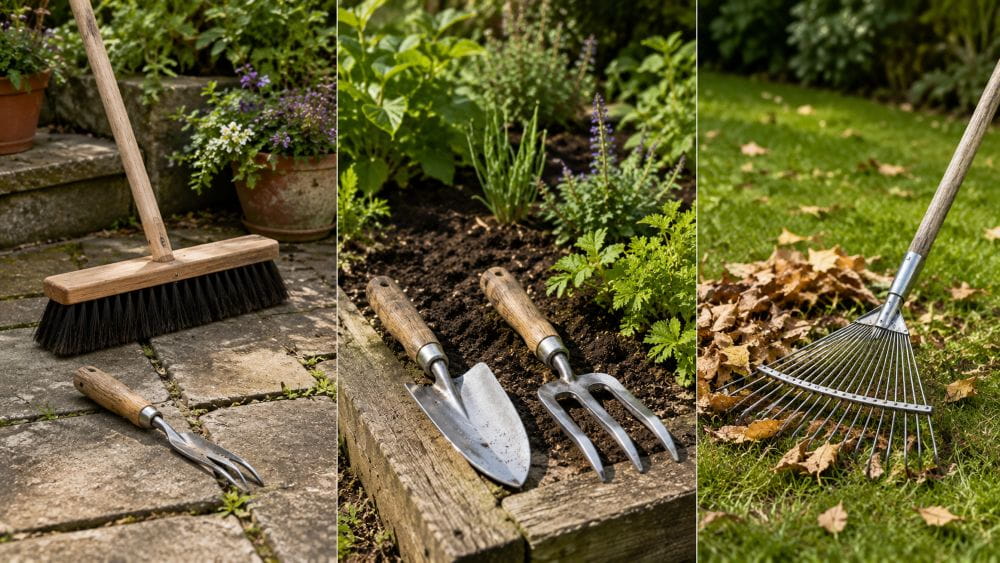
A patio garden needs gloves, secateurs, hand tools, a broom, watering equipment and a weeder. A lawned garden may also need a rake and lawn-care tools. A border-heavy garden needs digging, planting and pruning tools. A container garden can start smaller.
2. What jobs happen every week?
Buy first for repeated tasks. If you water pots every day, watering equipment matters. If you prune and deadhead weekly, secateurs matter. If leaves and dirt collect on paths, a broom matters.
3. What tools reduce strain?
Beginner tools should be comfortable enough to use safely. Choose tools with a suitable handle length, grip and weight. A tool that is awkward to control will not be used properly.
4. Can you store and maintain the tool?
Tools last longer when they are cleaned, dried and stored properly. RHS cleaning guidance says regular cleaning helps tools last longer and work better, and recommends storing them in a clean, dry place.
5. Is the job beyond hand tools?
Pause before buying hand tools for jobs involving large branches, heavy excavation, high hedges, powered cutting, hard landscaping or unsafe access. A beginner hand tool kit is for everyday maintenance, not specialist work.
Step-by-Step: Build a Beginner Garden Hand Tool Kit
Step 1: List your main garden areas
Write down whether you have pots, borders, lawn, hedges, trees, paths, patios, raised beds or a driveway. Each area creates different tool needs.
Step 2: List the jobs you actually do
Common beginner jobs include watering, weeding, pruning, planting, sweeping, clearing leaves, potting and moving small amounts of soil or compost.
Step 3: Buy the safety basics first
Start with gloves and suitable footwear. Add eye protection where debris, cutting or brushing creates risk. A tool kit is not complete if it ignores protection.
Step 4: Buy tools by frequency
Buy secateurs if pruning or deadheading is regular. Buy a broom if you have hard surfaces. Buy a hand trowel and fork if you plant in pots or borders. Buy a spade or fork when soil work becomes regular.
Step 5: Check comfort before buying
Hold the tool in the position you would use it. Check weight, grip, handle length and balance. The right tool should feel controllable, not just strong.
Step 6: Create a simple storage area
Use a dry shelf, rack, box or wall hook. Keep sharp tools locked, covered or stored safely. Avoid leaving tools loose on the floor.
Step 7: Clean after use
Remove soil, sap and wet debris after use. Dry metal parts before storage. Oil moving parts where suitable and follow manufacturer instructions where available.
Common Mistakes
Buying a large cheap set
Large sets can look good value, but weak tools that do not match your garden will not save money. A smaller set of better-matched tools is usually more useful.
Using secateurs as loppers
Secateurs are for small stems. Oversized branches need loppers, a pruning saw or professional help depending on size and position.
Using hand tools as levers
Trowels, forks and spades can bend or break when used to pry stones, roots or paving. Use the correct tool for force-heavy jobs.
Ignoring tool weight
A heavy tool is not always better. If it is too heavy to control, it can cause strain and poor technique.
Putting tools away wet
Wet tools rust and wooden handles can suffer. Dry tools before storage and avoid damp shed floors.
Leaving sharp tools loose
Secateurs, knives and cutting tools should not be loose in bags, drawers or buckets where someone can grab them by accident.
Maintenance and Prevention
The best beginner tool kit is easy to maintain. Clean tools after use, especially after wet soil, compost, sap or diseased plant material. Dry metal parts before storage. Store tools in a clean, dry place and keep cutting tools safely closed or covered.
After every use: remove soil, leaves and plant residue.
After pruning: wipe sap from blades and check the lock and pivot.
After diseased plant contact: clean and sterilise cutting tools before using them elsewhere.
Before storage: dry metal parts and handles.
Monthly during active use: check handles, heads, blades, pivots and tool storage.
A basic maintenance habit makes even a small tool kit more effective. It also prevents beginners from replacing tools early because they were stored dirty, damp or blunt.
Your Next Step: DIY or Professional
DIY tool buying is suitable for ordinary garden maintenance: planting, pruning small stems, watering, weeding, sweeping, edging, light soil work and seasonal tidying.
Professional help is safer for large trees, high hedges, heavy branches, large-scale clearance, hard landscaping, unstable ground, powered cutting or any task where you cannot safely control the tool.
Use Garden Tools and Equipment as the main route for beginner tools, then choose by task: cutting, digging, weeding, watering, spraying, sweeping or storage.
Summary
Most beginner garden jobs can be covered by 10 core hand tools: gloves, secateurs, hand trowel, hand fork, spade, garden fork, rake, hoe or weeder, watering can or sprayer, and a stiff broom. The exact mix should match your garden, not a generic tool set.
The safest approach is to buy fewer tools, choose them by task, check comfort and build quality, then clean and store them properly. Avoid using hand tools beyond their design limits. Stop when tools are damaged, the job is too heavy, or powered or professional equipment is needed.
Frequently Asked Questions
What garden tools does a beginner really need?
Most beginners need gloves, secateurs, a hand trowel, hand fork, spade, fork, rake, hoe or weeder, watering can or sprayer, and a stiff broom. Adapt the list to your garden.
Do I need a full garden tool set?
No. A smaller set of well-chosen tools is usually better than a large set with weak or unnecessary items.
What is the most useful garden hand tool?
It depends on the garden. For borders and pots, a hand trowel and secateurs are used often. For hard surfaces, a stiff broom and weeder may be more useful.
Should beginners buy cheap or expensive tools?
Buy based on task, comfort and build quality. Cheap tools can be fine for light occasional use, but tools used often should be strong and comfortable.
What tool should I use for weeds?
Use a hoe for open soil and a hand weeder or joint tool for individual weeds, roots, patio gaps or tight spaces.
Can I use secateurs for thick branches?
No. Use secateurs only within their cutting capacity. Thick branches need loppers, a pruning saw or professional help depending on size and position.
How should beginners store garden tools?
Clean and dry tools first, then store them in a clean, dry place. Keep sharp tools closed, covered or out of reach.
When should I replace a garden hand tool?
Replace or repair a tool if the handle is cracked, the head is loose, the blade is badly damaged, the pivot is unstable or the tool cannot be used safely.

Path & Patio is a UK supplier of paving and landscaping products, sharing practical guidance, product expertise and installation advice for patios, paths and driveway projects.