
Autumn and Winter Surface Prep: How to Prevent Slippery Paths, Patios and Driveways
Autumn and winter surface problems usually start quietly. Leaves sit in corners, joints collect soil, moss spreads in shaded areas, drains slow down, and water starts sitting where it should run away. By the time a path or patio feels slippery, the problem has usually been building for weeks.
This guide is not a general seasonal checklist. It focuses specifically on preparing paths, patios and driveways for colder, wetter months. The goal is to reduce slip risk, staining, blocked drainage, weed regrowth and avoidable surface damage before winter conditions make small problems harder to manage.
For cleaning, jointing, sealing, treatment and repair products, use Path Patio and Driveway. Use the checks below first so any product choice follows the surface condition, not guesswork.
Quick Answer: What Should You Do Before Winter?
- Safest default: sweep, inspect and clear drainage before using pressure washers, chemical cleaners, weedkillers or sealers.
- Remove wet leaves before they break down into staining, slippery debris.
- Check shaded paths, steps, slopes and driveway edges for moss, algae and standing water.
- Repair open joints before winter debris, soil and water settle into them.
- Use cleaners or treatments only where the product label clearly matches the surface and problem.
- Stop and get help if paving moves, water pools near buildings, drainage fails, or the surface remains slippery shortly after cleaning.
What This Guide Does Not Solve
This guide does not repair failed drainage, poor falls, sinking block paving, rocking slabs, unstable driveway edges or surfaces that have been laid incorrectly. Cleaning and treatment can improve appearance and grip, but they cannot correct structural movement or water running the wrong way.
It also does not replace product labels, safety data sheets or professional advice. Patio cleaners, moss removers, sealers, jointing compounds and weedkillers vary by surface, temperature, application method and drying requirements.
This guide focuses on domestic external hard surfaces: paths, patios, paving, block paving and driveways. It does not specify commercial surfaces, public access routes, structural drainage systems or new driveway construction.
When to Pause or Escalate
Stop before cleaning or treating if slabs rock, blocks sink, edges spread, joints are empty, water pools for long periods, or water drains towards walls, air bricks, thresholds or garages. These are not routine cleaning problems. They are surface, level or drainage problems.
Pause before using any weedkiller, moss remover or hard-surface chemical if the label does not clearly support the surface and use case. HSE guidance explains that products used to control weeds may be classed as plant protection products, so product use must be treated carefully and label-led.
Escalate to a professional if the surface remains slippery shortly after cleaning, if drainage is blocked or failing, if previous sealing has gone white or patchy, if high-value natural stone is involved, or if front garden surfacing sends water into the wrong place.
Why Autumn and Winter Surface Prep Matters
Wet debris becomes a slip risk
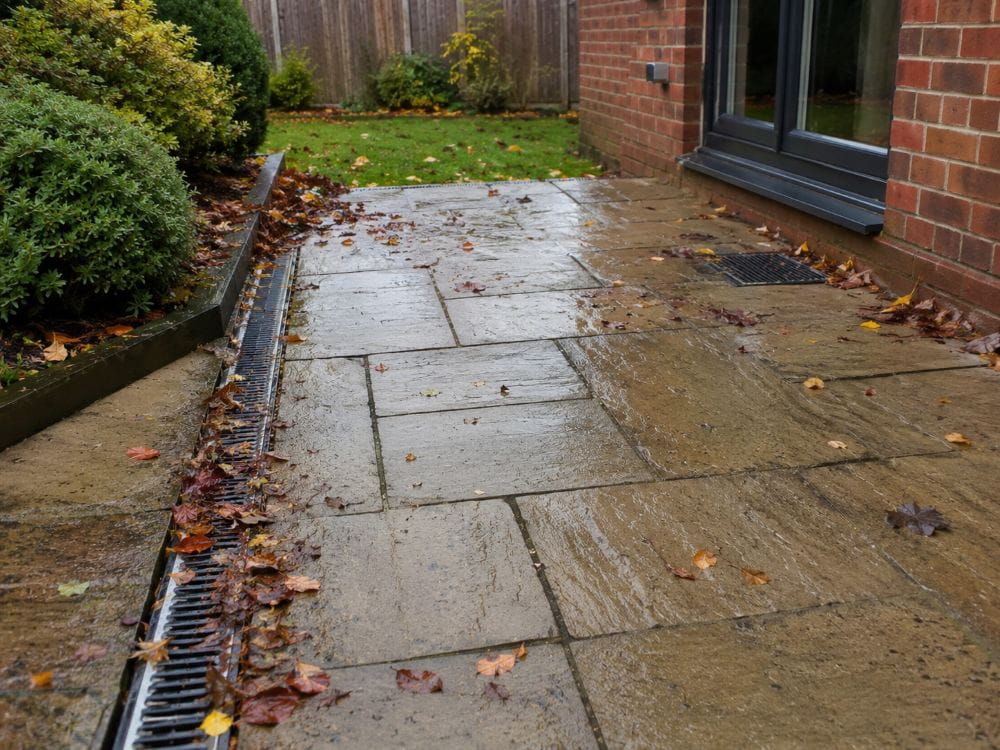
Wet leaves, moss, algae and soil create slippery layers on hard surfaces. The risk is highest on shaded paths, steps, slopes, narrow walkways, driveway entrances and routes used daily for bins, sheds, gates and back doors.
The RHS explains that algae, lichens, liverworts and mosses can make patios, drives, paths, decking and steps slippery. That makes autumn and winter surface prep a safety task, not just a cosmetic clean-up.
Blocked drainage makes surface growth worse
Water that cannot escape increases damp surface conditions. Damp surfaces encourage green growth, staining and frost-related risks. Leaves and silt can block gullies, channel drains, driveway edges and low points quickly during autumn.
Open joints collect winter problems
Open paving joints act like narrow traps for soil, leaf fragments and seeds. During wet months, they hold moisture for longer. That encourages weeds, moss, joint washout and surface staining.
Cold weather limits repair windows
Many sealers, cleaners and jointing products need suitable temperature, surface condition and drying time. Waiting until the surface is already saturated or freezing can reduce the safe options available.
The Autumn and Winter Surface Prep Checklist
1. Clear leaf fall before it breaks down
Leaves are easier to sweep when fresh. Once they break down, they become staining sludge that settles into textured paving, joints and driveway edges. Start clearing leaves regularly as soon as they begin to fall.
Focus on corners, steps, gullies, channel drains, shaded boundaries, plant pot areas and places where wind pushes leaves into piles.
2. Check high-risk walking routes
Inspect routes that people use every day: front paths, bin routes, side passages, steps, sloped drives and the route from back door to garden. These areas matter more than decorative corners because slip risk is higher where people walk regularly.
If an area already feels slimy or slick, stop using it as a main route until loose growth and debris have been removed.
3. Brush before using stronger methods
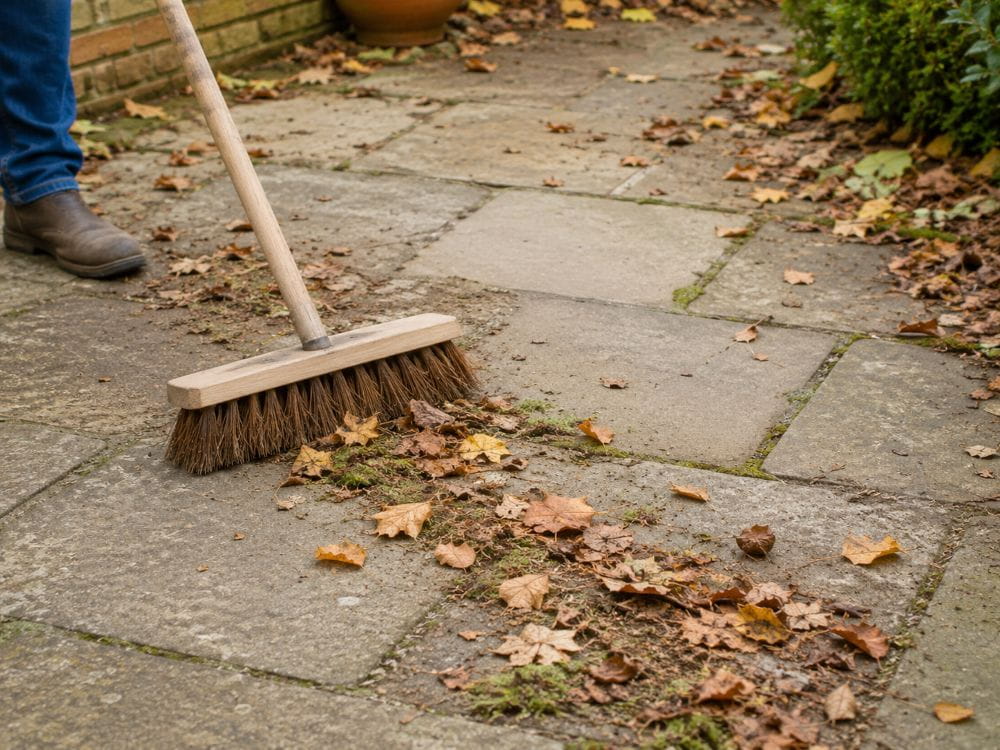
A stiff outdoor broom is the safest first tool for most surfaces. It removes loose growth and shows whether a deeper clean is really needed. Brushing also avoids flooding joints during cold or wet conditions.
Pressure washing may be useful on stable surfaces, but it should not be the first move on weak joints, loose slabs, soft stone or areas that drain towards buildings.
4. Clear drainage routes
Check channel drains, gullies, driveway edges, low points and areas where rainwater collects. Remove leaves, moss, grit and soil. If drainage is blocked, cleaning the visible surface will only give a short-term improvement.
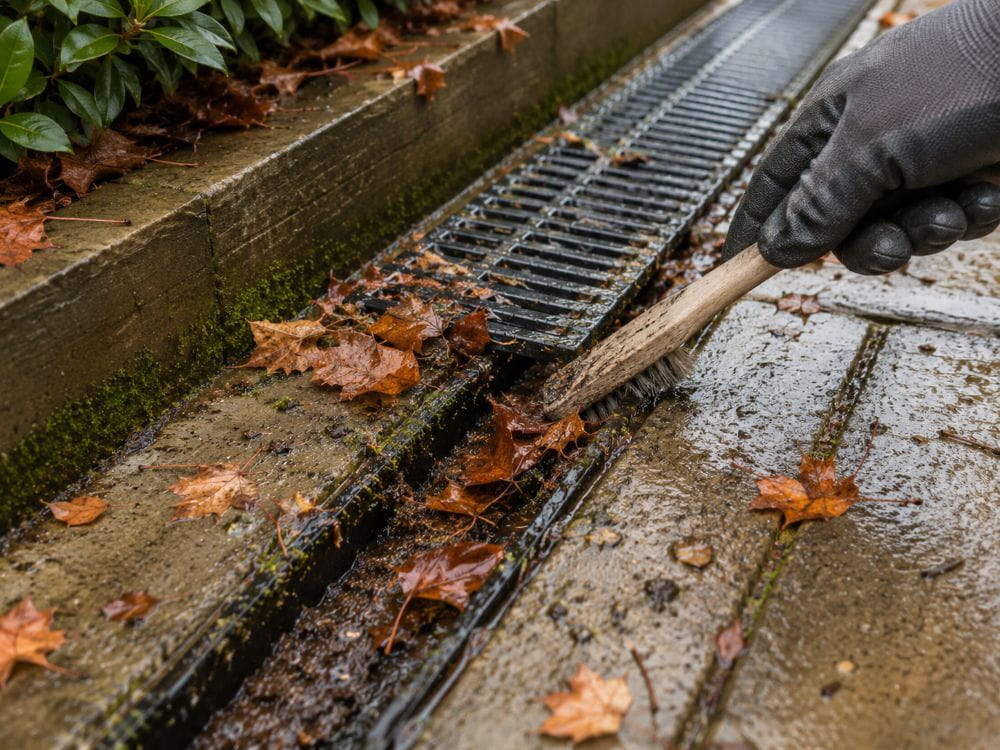
RHS guidance on permeable paving states that non-porous hard landscaping can increase rainwater runoff, so managing water movement is part of hard-surface care.
5. Inspect joints and edges
Look for missing joint sand, cracked pointing, loose edging, open gaps and joints full of soil. These areas collect winter debris and often become weed or moss problems later.
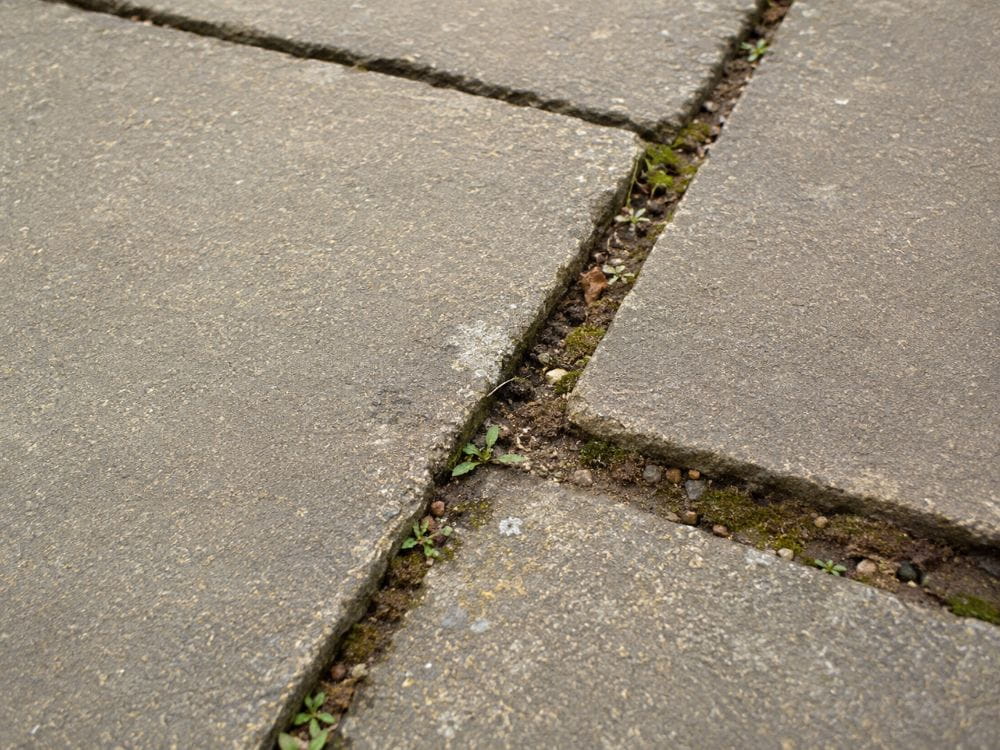
For jointing and pointing products, use Patio Path and Driveway Pointing. Choose a product only after checking joint width, joint depth, surface material and whether the paving is stable.
6. Remove weeds before wet weather locks them in
Autumn is a good time to remove weeds from joints before they trap more moisture and debris. Scrape, brush and clear the joint material around them. If weedkiller is needed for persistent regrowth, use only a product labelled for the intended hard-surface use.
7. Treat stains before they settle
Leaf tannins, barbecue grease, oil marks, rust marks and plant pot stains can become harder to remove once winter moisture and dirt settle over them. Treat stains early with a surface-compatible method.
For cleaning, sealing and surface-treatment options, use Paving, Path and Driveway Treatments. Do not use a treatment product to hide poor drainage, loose paving or dirty joints.
8. Delay sealing if the surface is not ready
Some surfaces benefit from sealing or treatment, but timing matters. Do not seal damp joints, dirty paving, unstable surfaces, failed old coatings or surfaces with unresolved drainage. In autumn and winter, drying time can be limited, so sealing should only happen when the surface and product conditions are right.
Surface-Specific Autumn and Winter Checks
Concrete paving
Concrete can hold algae in shaded areas and show staining from leaves, plant pots and metal furniture. Brush first, then clean only where needed. Avoid aggressive pressure if the surface is already worn or pitted.
Natural stone
Natural stone varies. Sandstone, limestone, slate and granite do not all respond the same way. If the stone is porous, pale, honed, dark or expensive, patch test any cleaner or treatment first. Avoid guessing with stronger products.
Porcelain paving
Porcelain usually resists surface absorption well, but joints and grout lines still collect dirt. Focus on edges, joint lines, slippery shaded routes and residue that can make the surface feel slick.
Block paving
Block paving needs joint checks before winter. If joint sand is low, weeds, movement and water tracking become more likely. After cleaning, let the surface dry and top up joint sand where appropriate.
Tarmac-style driveways
Check for oil, edge crumbling, standing water and worn areas. Do not treat surface wear as a simple cleaning problem if the driveway is breaking up or holding water.
Decision Framework: Clear, Clean, Repair, Treat or Get Help?
1. Is there a safety issue?
If the route is slippery, uneven or loose, safety comes first. Clear loose debris, restrict access if needed and avoid using aggressive cleaning methods that may worsen the surface.
2. Is the problem loose debris or established growth?
Loose leaves and dirt need sweeping. Established moss, algae or weeds may need brushing, scraping or a compatible cleaner. Do not jump to chemical treatment before removing loose material.
3. Are the joints and edges sound?
If joints are open, cracked or full of soil, repair should come before surface protection. Open joints make winter maintenance harder because they collect debris and water.
4. Is water draining correctly?
Check after rain. Water should not sit near walls, thresholds, air bricks or garages. If water pools or runs towards the house, drainage needs attention before sealing, jointing or repeated cleaning.
5. Is the product suitable for the surface and season?
Pause before using any cleaner, sealer, weedkiller or jointing product if the label does not clearly match the surface, temperature, weather window and use case. A product used in the wrong conditions can create staining, poor adhesion, surface damage or unsafe residue.
Step-by-Step: Pre-Winter Surface Prep Routine
Step 1: Walk the surface after rain
Inspect the surface when problems are visible. Look for pooling water, green patches, slick areas, blocked drains and dirt collecting in joints.
Step 2: Sweep dry debris first
Remove leaves, grit, loose moss, soil and weeds before adding water. Wet cleaning before sweeping turns debris into sludge and pushes it into joints.
Step 3: Clear drains and edges
Remove debris from drainage channels, gullies and driveway edges. If water cannot leave, cleaning will not last.
Step 4: Brush high-risk areas
Brush steps, slopes, shaded walkways and entrance routes. Treat these as priority zones because they affect daily safety.
Step 5: Clean only where needed
Use a compatible cleaner where brushing is not enough. Follow the product label and avoid mixing products. Keep pets and children away until the area is safe to use again.
Step 6: Check and repair joints
Once the area is clean and dry enough to assess, check joint depth, width and stability. Repair gaps before they collect winter debris.
Step 7: Review surface protection
Only consider sealing or treatment if the surface is stable, clean, dry and compatible with the product. If the season is too wet or cold, postpone protection and focus on cleaning and drainage.
Common Mistakes
Leaving leaves until spring
Leaves left over winter create staining, algae and blocked drainage. Clearing them early is easier than removing set-in winter staining later.
Using pressure washing as the first answer
Pressure washing can strip joints, mark some surfaces and push water into places it should not go. Sweep and brush first.
Sealing damp surfaces
Sealing damp joints or dirty paving can cause patchy results, whitening, peeling or poor protection. Dryness and preparation matter.
Ignoring drainage
If water keeps pooling, moss and algae will return. Cleaning the surface does not fix the water path.
Using one product on every surface
Concrete, porcelain, limestone, sandstone, block paving and tarmac-style driveways do not all need the same cleaner or treatment.
Forgetting front garden drainage rules
For front gardens and driveway-style areas, drainage is not only practical. It can also be a planning issue where impermeable surfacing is used over larger areas.
Maintenance and Prevention
Weekly during leaf fall: sweep paths, patios, steps and driveway edges.
After heavy rain: check where water sits and whether drains are blocked.
Monthly through autumn and winter: brush shaded routes, steps, slopes and high-use paths.
After any deep clean: check for joint loss, surface marking and blocked drainage.
Before using treatment products: confirm surface type, product compatibility, temperature range and drying conditions.
Your Next Step: DIY or Professional
DIY preparation is usually suitable when the surface is stable, the issue is debris, light moss, early staining or minor joint checking. Start with sweeping, brushing and drainage clearance.
Professional help is the safer route where surfaces move, drainage fails, the area remains slippery after cleaning, front garden drainage is unclear, high-value stone is involved, or the work requires lifting, re-bedding, cutting or extensive re-jointing.
The practical next step is to inspect the surface after rain, clear debris, then choose the least aggressive action that deals with the actual risk.
Summary
Autumn and winter surface prep is about preventing small problems from becoming safety issues. Wet leaves, moss, algae, open joints and blocked drainage can turn paths, patios and driveways into slippery or high-maintenance surfaces.
The safest approach is simple: sweep early, check drainage, brush high-risk areas, repair joints where needed and use cleaners or treatments only when the product and surface are compatible. Do not pressure wash weak joints, do not seal damp surfaces and do not ignore pooling water.
Frequently Asked Questions
How do I stop paths and patios becoming slippery in winter?
Sweep leaves early, brush shaded areas, keep drains clear, remove moss and algae before they build up, and avoid allowing debris to sit in joints.
Should I pressure wash before winter?
Only if the surface is stable, joints are sound and the pressure can be controlled. For many surfaces, brushing and targeted cleaning are safer.
Why does my patio turn green every winter?
Common causes include shade, poor airflow, wet leaves, standing water and debris trapped in joints. Cleaning helps, but the cause also needs reducing.
Can I seal a patio before winter?
Only if the surface is clean, dry, stable and compatible with the sealer, and the product conditions can be met. Do not seal damp or poorly drained surfaces.
What should I do about leaves on block paving?
Sweep regularly and check the joints. Leaf debris can stain the surface and collect in joints, encouraging weeds and moss.
How do I prepare a driveway for winter?
Clear drains, remove leaves, clean oil marks early, check joint sand or surface damage, and make sure water does not pool or run towards buildings.
Are moss and algae dangerous on paths?
They can be. Moss, algae and similar growths can make hard surfaces slippery, especially when wet.
When should I get professional help?
Get help if paving moves, drainage fails, water pools near buildings, the surface remains slippery after cleaning, or the surface is expensive natural stone that could be damaged by the wrong method.

Path & Patio is a UK supplier of paving and landscaping products, sharing practical guidance, product expertise and installation advice for patios, paths and driveway projects.