
Choosing a Tool Bag Around the Tools You Actually Carry
The screwdriver you need is at the bottom, the tape measure has slipped behind a case, and a long tool prevents the zip from closing. A tool bag can have plenty of room and still be awkward to use.
When choosing a bag for household repairs or moving between work areas, look at the tools you actually carry together. Their shape, storage cases and frequency of use matter as much as the size printed on the bag.
If the packed bag is awkward to lift, cannot close properly or leaves sharp tools unsecured, stop and change the arrangement. More storage space is not a reason to carry more than you can manage.
Four checks before choosing a bag
- Check the actual contents: include protective covers and cases when assessing tool size.
- Check access: decide which items need to be visible and which can remain in a separate compartment.
- Check the closed bag: tools must fit the intended carrying arrangement, not just an open display.
- Check the journey: consider the loaded bag, the route and where you will put it down.
A useful bag lets you find, remove and return the tools needed for the job without repeatedly emptying the main compartment. That is a more practical starting point than choosing the largest bag within your budget.
Keep the tools protected while carrying them
Choose a bag intended for the way you will use it. Ordinary tool storage does not establish suitability for lifting equipment, working at height or carrying hazardous materials.
Follow the instructions for the bag and the tools inside it. Where a tool requires its own protective cover or case, include that protection in the fit check rather than removing it to save space.
Lay out the tools before looking at pockets
Choose one realistic type of job and lay out the tools you would take for it. You are checking the bag against a useful working selection, not trying to fit every tool you own into one carrier.
Keep the longest item, the widest handle and any rigid accessory case in view. A narrow shaft might fit into a sleeve while its handle prevents neighbouring tools from sitting properly. A compact set in a hard case may use more space than its individual tools suggest.
Separate items by how you want to retrieve them:
- Frequent access: tools you want to identify and remove without disturbing others.
- Occasional access: items that can remain in the main compartment until needed.
- Small accessories: pieces that need a suitable closed pocket or their own container.
- Protected items: tools that should remain in the cover or case specified for them.
Arrange the tools around your own jobs and how often you need each item.
What a framed opening changes
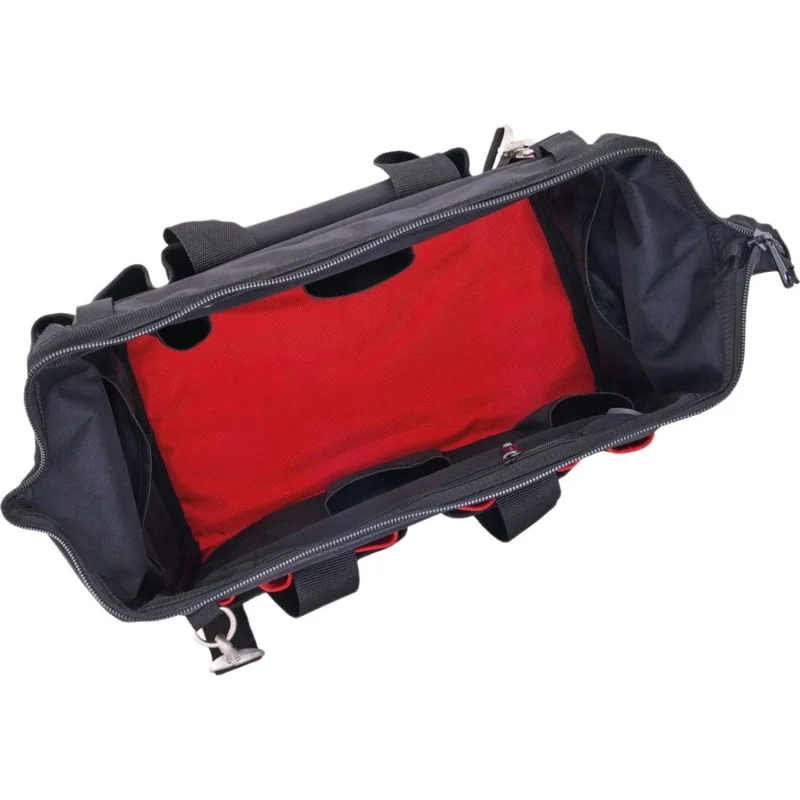
The Hultafors 50cm framed wide-mouth tool bag is an example of a carrier designed to stay open while you select tools. It has internal tool holders, two zipped pockets for smaller items, handles and an adjustable shoulder strap.
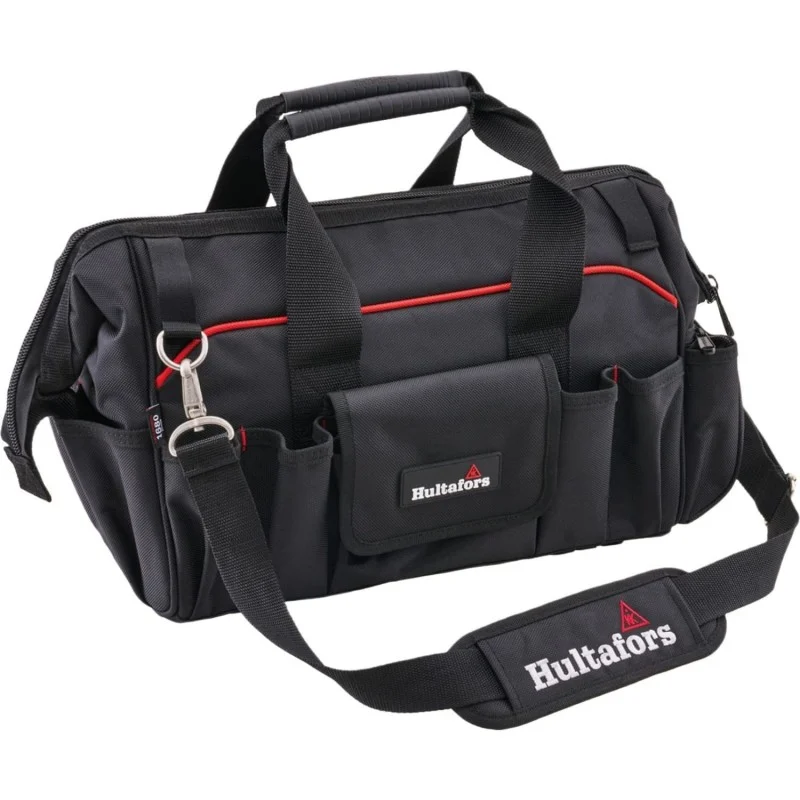
A framed opening is worth considering when a soft bag that folds inwards makes finding tools difficult. Look at whether bulky cases or handles would still hide the smaller tools you need.
Hultafors lists the bag’s dimensions as 50 × 27 × 30cm. Treat that as the stated bag size, not proof that a 50cm tool will fit inside and allow the zip to close. Ask about usable internal space and opening dimensions if your longest item is close to the limit.
Match the compartments to your retrieval habits
Tools you want to see at a glance
Individual holders can give frequently used tools a recognisable place. Check whether the tool sits at a useful height: a short item can become difficult to retrieve from a deep sleeve, while a long one may interfere with closure.
You do not need to fill every holder. Leaving a suitable space empty may make the neighbouring tools easier to grasp than packing every slot simply because it is available.
Small items that should stay together
A zipped pocket can keep suitable small items separate from the main compartment. For an existing bit set, consider keeping its supplied case if the case makes the pieces easier to identify and return.
Check the space taken by the complete case before buying. A case described as “compact” may still be too wide for a particular pocket. Keep a useful existing case if it fits the bag and keeps its contents organised.
Items stored outside the main compartment
External pockets may be convenient while working, but consider how the contents will stay in place during the actual journey. Bending, setting the bag down and passing through a doorway can change its position.
Use the manufacturer’s intended storage arrangements and keep sharp items appropriately protected. If an item cannot be retained securely, change where or how it is carried rather than relying on it remaining upright.
Choose for the trip as well as the job
A bag that travels from a cupboard to a nearby table has different practical demands from one carried along a corridor, through doors and into a vehicle. Think through the route you will normally use.
Include the bag’s own weight in the loaded total. Handles and a shoulder strap provide different carrying options, but neither removes the need to assess whether the packed bag is manageable for you.
If the load or shape makes the journey awkward, reduce or divide the contents, reconsider the carrier, or use a suitable alternative method. Do not force the bag closed or turn a manufacturer’s material-strength claim into a personal carrying target.
Also identify where the bag will sit while you work. It needs an appropriate position where the opening can be used and the bag does not obstruct access. If you must repeatedly move it out of the way, the available floor space belongs in the buying decision.
A short fit-and-access check
Before ordering, record the dimensions of your longest and bulkiest items, including their cases. Compare those measurements with confirmed product information. Where the listing is unclear, ask for the missing detail instead of estimating from a photograph.
When you can inspect the bag, assess it in the intended arrangement:
- Can the selected tools sit in their intended places with protection retained?
- Can the main compartment close normally without forcing a handle or case against the zip?
- Can you reach a frequently used tool without removing several others?
- Can that tool be returned without rearranging the whole bag?
- Are the contents retained appropriately for carrying?
- Is the complete loaded bag manageable over the route you need to use?
Resolve any important fit or carrying question before buying. For online orders, read the retailer’s return conditions before using the bag for work.
When a different format may suit you better
A smaller bag may be worth considering if the tools for a typical job occupy only a small part of the carrier you are comparing. The aim is enough usable space, not spare capacity that encourages unnecessary loading.
A purpose-made hard case may be more appropriate for an item requiring a particular protective fit. A separate carrier may also make sense for a bulky tool that disrupts access to everything else. Check the protection and carrying requirements of the equipment itself.
If your existing bag already passes the fit, access and carrying checks, keeping it is a valid decision. A different pocket arrangement is useful only when it solves an identifiable problem.
Keep the layout useful after the first job
Return tools to consistent positions so missing items are easier to notice. Remove debris and inspect the handles, strap attachments, zip and pockets according to the maker’s care instructions. Stop using a damaged carrying component until it has been assessed or resolved.
After a few jobs, move hard-to-reach tools to more useful positions and leave behind items you do not need. That can improve access without buying another carrier.
What to Buy and Where to Get It
The linked Hultafors carrier at Path & Patio is worth comparing when a framed opening and separated hand-tool storage match the way you work. Check the current product details, availability and price, and confirm any internal measurement that matters to your tools.
Choose the bag if it gives your regular tools a more accessible home and is practical to carry on your usual route.
Summary
Choose a tool bag around a realistic selection of tools, including their protective cases. Check how the contents fit, how you reach them and how the closed bag will be carried. Nominal size and pocket count are useful details, but neither replaces those practical checks.
Frequently Asked Questions
Does a tool bag’s product photograph show what is included?
Not necessarily. A photograph may demonstrate the layout using tools or accessories. Check the contents description for the exact offer and ask the retailer if anything is unclear.
Should I choose a bag with spare room for future tools?
Allow for a specific likely addition if it makes sense for your work. Avoid buying a much larger carrier for an undefined future collection, especially if the extra size makes storage or carrying less convenient.
Is a zipped tool bag waterproof?
A zip alone does not establish waterproof protection. Check the manufacturer’s stated protection for the exact bag before relying on it in wet conditions. Do not assume the featured bag is waterproof unless the manufacturer confirms it.

Path & Patio is a UK supplier of paving and landscaping products, sharing practical guidance, product expertise and installation advice for patios, paths and driveway projects.